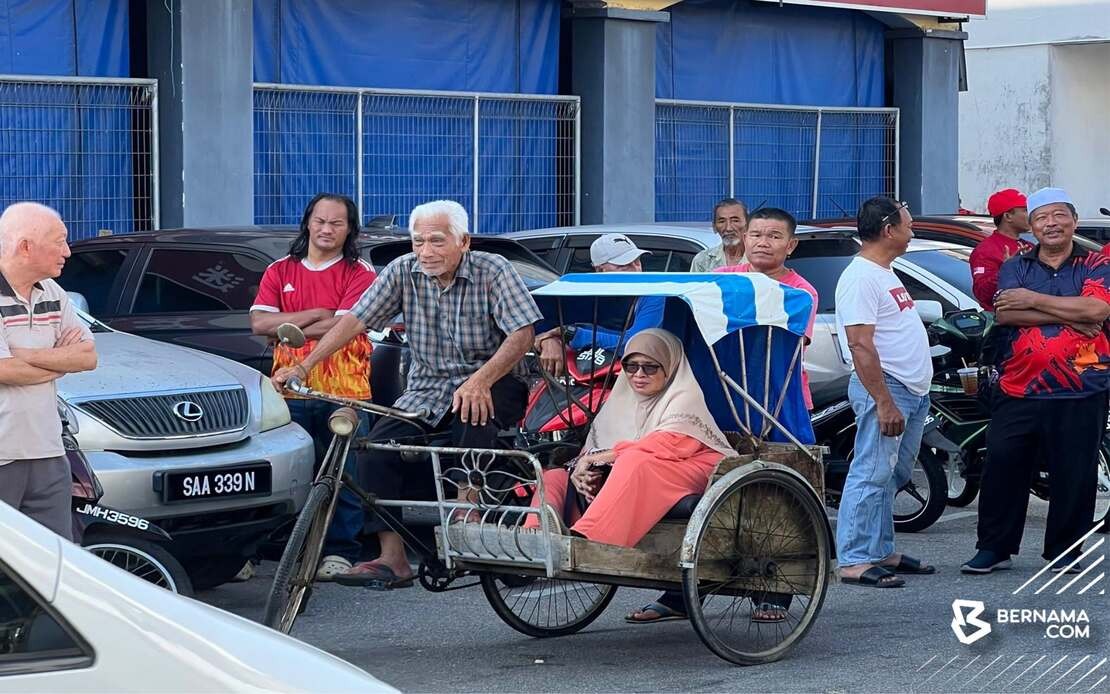
Prime Minister Datuk Seri Anwar Ibrahim has conveyed his appreciation towards an octogenarian resident from Johor who made an extraordinary effort to catch a glimpse of him during a campaign swing through the state. The gesture, which involved an elderly couple's determination to travel by trishaw across a considerable distance, has moved the country's top leader to publicly acknowledge their dedication and support.
Abdul Razak Pelangga, aged 86, made the decision to transport his wife, Jamilah Samsudin, 64, aboard his trishaw from their residence in Kampung Parit Bugis after learning that Anwar would be visiting the area. The journey covered nearly a kilometre to reach Kedai Kopi Hailam Sri Medan, a modest coffee shop in Senggarang, Batu Pahat. Rather than choosing more conventional transportation options available to him, the elderly man deliberately selected the trishaw as his mode of conveyance, driven by practical considerations regarding the constraints of finding parking in the busy town centre.
Anwar, who serves as imam at Masjid Raudhatul Jannah Parit Bugis, was faced with multiple choices for transport but ultimately settled on the trishaw to spare his wife the inconvenience of searching for a parking spot in the congested area. This thoughtful decision, undertaken solely to facilitate his wife's expressed desire to see the Prime Minister in person, underscores the kinds of personal sacrifices that ordinary Malaysians undertake to participate in national events and demonstrate their connection to their political leadership.
During his visit to Senggarang, Anwar allocated approximately 50 minutes for his breakfast engagement at the coffee establishment while participating in a formal meet-and-greet session with members of the local community. The stop formed part of a broader campaign programme organised in conjunction with the Johor State Election, during which the Prime Minister sought to connect directly with constituents and gather their feedback on pressing issues affecting their daily lives.
In a subsequent Facebook post, Anwar expressed sincere regret that scheduling constraints prevented him from encountering the couple in person during his stop at the eatery. He conveyed his genuine dismay at having missed the opportunity to express his thanks directly and to acknowledge their thoughtfulness. The Prime Minister's public response demonstrates his awareness of such grassroots gestures and his commitment to recognising the contributions of ordinary citizens to the nation's democratic processes.
Anwar's message contained an explicit apology for the missed opportunity, coupled with an assurance that their paths would cross at a future date. He invoked Islamic blessings upon the couple, praying that Allah SWT would grant them robust health and facilitate the resolution of their personal challenges. The tone of his communication conveyed genuine warmth and a sense of connection to the experiences of everyday Malaysians, particularly those who make personal sacrifices to engage with their political representatives.
The incident highlights a recurring pattern in Malaysian political culture where citizens of all ages continue to demonstrate their civic commitment by attending campaign events and seeking face-to-face interaction with national leaders. Such moments, while often brief and logistically complicated, carry significant weight in the eyes of participants, who view them as opportunities to affirm their stake in the nation's governance and to receive acknowledgement of their existence as part of the broader political community.
The Prime Minister's personalised response to the couple's gesture also reflects broader expectations within Malaysian society regarding the conduct of senior political figures. Citizens increasingly expect their leaders to demonstrate awareness of and gratitude towards public expressions of support, particularly when such support involves considerable personal effort or sacrifice. In an era where political communication increasingly occurs through social media platforms, Anwar's use of Facebook to address the couple publicly serves as a meaningful gesture that extends the impact of the original encounter far beyond the immediate participants.
The couple's journey to Senggarang, modest though it may seem in isolation, encapsulates the persistent determination of many Malaysians across diverse age groups to maintain active engagement with their nation's political processes. Whether through attending rallies, voting in elections, or undertaking personal efforts to see political leaders, such activities represent a fundamental expression of citizenship that transcends partisan boundaries and speaks to a deeper commitment to democratic participation.
As Malaysia continues to navigate electoral contests at both state and federal levels, stories such as this one serve as important reminders of the human dimensions underlying political campaigns. Beyond the formal speeches, policy announcements, and strategic positioning that dominate media coverage, the actual experience of constituents meeting their leaders—and the gratitude that leaders extend in return—forms the emotional and relational foundation upon which political legitimacy ultimately rests in a democratic society.

