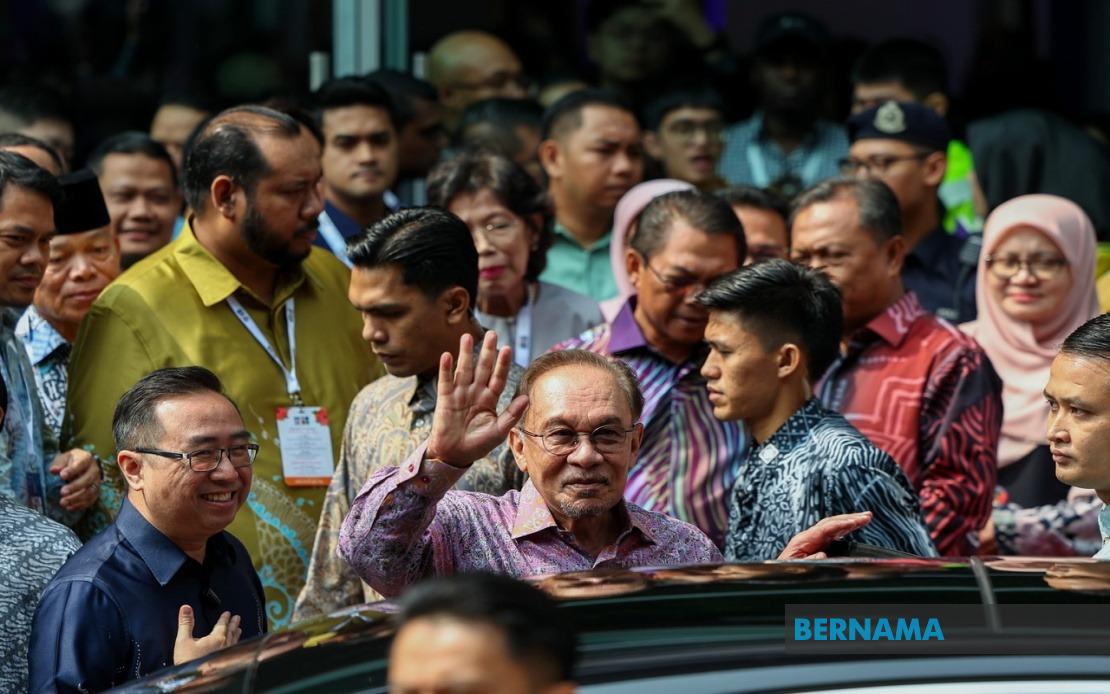
Prime Minister Datuk Seri Anwar Ibrahim has cast doubt on reports of an invitation extended to former PKR deputy president Datuk Seri Mohamed Azmin Ali to rejoin the party, stating categorically that he had received no notification of such an overture. Anwar's comments came after he was asked about the matter following his appearance at the National Innovation and Commercialisation Expo (NICE) 2026 at the Kuala Lumpur Convention Centre (KLCC) today. His terse response—"Has anyone invited him? Was there an invitation? I was not informed"—suggested either a lack of communication within PKR's leadership structure or deliberate distance-taking from any recruitment efforts involving the Bersatu figure.
The clarification from the PKR president arrives in the wake of Azmin's own public statements earlier this week asserting that he would not return to PKR under any circumstances, despite acknowledgement that invitations were being circulated to other former party members. Now secretary-general of Parti Pribumi Bersatu Malaysia, Azmin has maintained his position with his current political home, where he has consolidated influence following his departure from PKR several years ago. His firm rejection, combined with Anwar's apparent disengagement from any recruitment strategy involving him, suggests that any overture—if it occurred informally—was not sanctioned at the highest levels of the party.
The murkiness surrounding whether an invitation was actually extended reflects the often opaque nature of Malaysian political manoeuvring, where informal feelers and backroom discussions frequently precede—or substitute for—formal announcements. It also raises questions about the chain of command within PKR and whether mid-level party figures may have been engaging in recruitment activities without explicit approval from Anwar and the party's central leadership. Such loose coordination could prove problematic for party management, particularly when the target of such outreach declines publicly and the party president must scramble to clarify his own position.
What is clear, however, is that PKR has been actively pursuing the return of several former members who departed during periods of party instability. Datuk Kamarudin Jaffar, who previously represented Bandar Tun Razak in Parliament, and Datuk Mansor Othman, the former Nibong Tebal MP, have both been mentioned in reports as candidates for re-admission to the party. These recruitment efforts suggest PKR leadership is attempting to shore up its membership and parliamentary representation, likely in preparation for future electoral contests or to strengthen internal party cohesion ahead of potential political realignments.
One successful return has already materialised: Datuk Dr Xavier Jayakumar, a former PKR vice-president, has publicly confirmed his decision to rejoin the party. Jayakumar's homecoming provides a counterpoint to Azmin's rejection, demonstrating that while some departed members remain alienated from PKR's current direction, others view their return as strategically or ideologically prudent. The varying responses from different former figures illustrate the fractured nature of PKR's historical trajectory and the persistent tensions that have characterised the party's internal dynamics over successive leadership changes.
For Malaysia's broader political landscape, the question of party defections and readmissions carries implications beyond PKR itself. The relatively fluid movement of politicians between coalitions and parties—particularly prominent figures like Azmin—underscores the transactional nature of much contemporary Malaysian politics, where ideology and organisational loyalty often take secondary importance to factional positioning and personal advancement. Azmin's resistance to returning to PKR despite potential overtures suggests he has calculated that his position within Bersatu, and by extension within the broader coalition structures, offers greater security and influence than any role within PKR could provide.
Anwar's public disavowal of knowledge regarding an Azmin invitation may also serve a tactical purpose. By stating he was not informed, the Prime Minister insulates himself from any appearance of desperation or calculation in pursuing the Bersatu secretary-general, while simultaneously allowing him to distance PKR from any perception of internal disarray if recruitment efforts were indeed occurring without his sanction. This positioning permits him to move forward without losing face, should informal approaches have been made by lower-ranking party operatives.
The episode highlights the ongoing challenges facing PKR as it navigates the complexities of coalition politics while managing internal regeneration. With former members scattered across rival camps, reconstituting party strength requires both strategic recruitment and the acknowledgement that not all defectors can or should be brought back. The party's willingness to court figures like Kamarudin and Mansor, while apparently respecting Azmin's firm refusal, suggests a pragmatic approach to membership recovery—one that recognises which relationships remain salvageable and which have fundamentally fractured.
Looking forward, the success of PKR's recruitment drive will depend not merely on formal invitations but on the party's ability to offer returning members meaningful roles and evidence of organisational stability. Anwar's clarification regarding Azmin, though seemingly dismissive, may ultimately serve to reset expectations and allow PKR to concentrate its efforts on members who represent genuine prospects for reinvigoration rather than high-profile figures whose loyalties have shifted permanently to other political homes. For observers of Malaysian politics, the incident underscores the perpetually fluid nature of party allegiances and the calculations that shape decisions about political belonging in the country's competitive multiparty environment.

