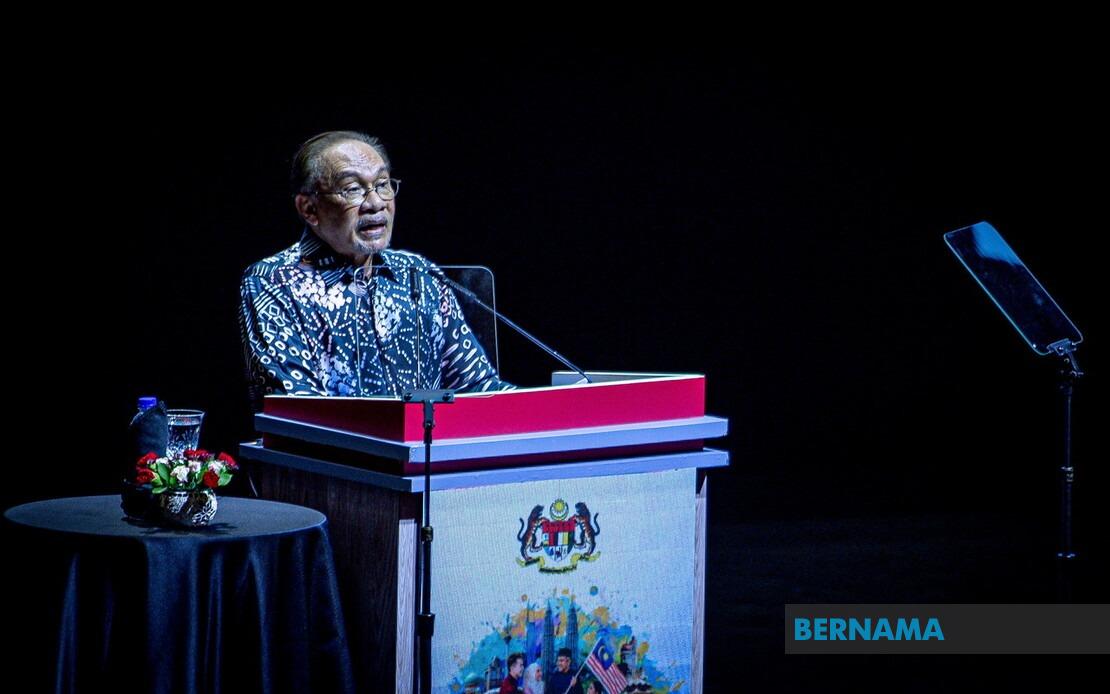
Prime Minister Datuk Seri Anwar Ibrahim has unveiled a six-point relief package designed to ease the mounting financial pressures facing ordinary Malaysians, with all measures set to commence on September 1. The initiatives span fuel subsidies, school maintenance grants, artificial intelligence deployment, healthcare digitalisation, e-Invoicing systems, and microfinancing schemes. The announcement came during the 2026 National Day Prime Minister's Address at the Putrajaya International Convention Centre, underlining the government's commitment to tackling household affordability challenges as Malaysians prepare for the nation's independence celebrations.
The timing of these announcements reflects growing public anxiety over escalating living costs that have persisted despite earlier intervention efforts. Anwar's public acknowledgment that previous measures have not fully resolved the cost-of-living crisis signals a significant shift in tone from the government, moving away from claims of comprehensive solutions towards a more candid assessment of ongoing economic hardship. The Prime Minister emphasised that while the Cabinet has introduced various programmes, officials recognise that additional targeted support remains essential to provide meaningful relief to vulnerable segments of the population.
The fuel subsidy component represents perhaps the most politically sensitive element of the package, given Malaysia's long history of petrol price management and public sensitivity around energy costs. Subsidisation directly impacts household budgets across all income levels, though the poorest families typically bear the greatest burden when petroleum prices rise. By maintaining or expanding fuel support mechanisms, the government aims to create immediate downward pressure on transport and living costs, benefiting everyone from daily commuters to small businesses reliant on logistics.
Education-focused measures, specifically school maintenance support, target the financial strain on families with children. Malaysian households frequently struggle with education-related expenses beyond tuition fees, including uniforms, textbooks, transportation, and facility contributions. By channelling resources toward school maintenance, the government hopes to reduce ad-hoc levies on parents while simultaneously improving learning environments. This dual benefit approach addresses both immediate household cash-flow problems and longer-term educational quality concerns.
The integration of artificial intelligence and healthcare digitalisation into a cost-of-living package reveals how the government conceptualises modern economic relief. Digital healthcare systems can reduce administrative inefficiencies, lower operational costs for medical facilities, and improve access to services—benefits that eventually translate into reduced out-of-pocket expenses for patients. Similarly, AI deployment across government services could streamline processes, reducing bureaucratic costs and service delivery times. These technological investments represent a medium-term cost-control strategy alongside immediate relief mechanisms.
E-Invoicing implementation represents the government's push toward digital formalisation of the economy. By digitising invoice systems, the government can improve tax compliance and reduce cash leakage from the formal economy, theoretically generating additional revenue to fund welfare programmes. For small and medium enterprises, e-Invoicing can reduce accounting and compliance costs while improving cash-flow visibility. This measure addresses cost-of-living pressures through systemic economic efficiency rather than direct subsidisation.
Microfinancing schemes typically target entrepreneurs and small-business operators who lack access to traditional banking credit. By expanding microfinance availability, the government enables ordinary Malaysians to start or expand small enterprises, potentially creating supplementary household income. This approach differs fundamentally from subsidy mechanisms—rather than directly lowering prices, it aims to increase earning capacity among lower-income groups. The effectiveness of such schemes depends heavily on implementation quality and access barriers that often exclude the poorest populations.
The announcement's framing emphasised support for specific population groups: schoolchildren, youths, housewives, and mothers. This segmentation reflects how cost-of-living burdens distribute unevenly across demographics. Families with school-age children face distinct expense categories, while women often manage household finances and experience particular sensitivity to changes in food, utility, and transport costs. By explicitly naming these groups, Anwar signalled that the government recognises how economic pressure manifests differently across Malaysian society.
Deputy Prime Minister Datuk Seri Dr Ahmad Zahid Hamidi and Communications Minister Datuk Seri Fahmi Fadzil's presence at the announcement underscored cabinet-level consensus on these measures. Such visible unity suggests the government has resolved internal disagreements over implementation costs and priorities. The inclusion of the Chief Secretary to the Government indicated that public service machinery stands ready to execute these initiatives within the compressed timeframe.
From a broader Southeast Asian perspective, Malaysia's approach to cost-of-living relief demonstrates the region's ongoing struggle with inflation and household economic stress. While commodity-price shocks hit regional economies similarly, Malaysia's policy response—combining price supports with digital transformation and financial inclusion—reflects its position as a relatively developed economy with existing technological infrastructure. Neighbouring countries facing comparable pressures often lack such sophisticated policy toolkits, making Malaysia's approach potentially instructive for regional economic management.
The September 1 implementation date carries symbolic weight, coinciding with Malaysia Day commemorations and creating a narrative linking national development with personal economic security. The government appears deliberate in connecting patriotic sentiment with tangible household relief, an approach designed to boost public morale alongside material circumstances. Whether these measures significantly impact household finances or merely provide psychological reassurance will depend on their design specifics and adequacy relative to actual cost-of-living increases.
The announcement also implicitly acknowledges that comprehensive economic transformation—price controls, structural reforms, and systemic efficiency improvements—requires time. Immediate relief measures, however modest, serve critical political functions by demonstrating governmental responsiveness to public concern. As Malaysian households continue navigating inflationary pressures, these six initiatives represent the government's attempt to balance quick-impact relief with longer-term economic restructuring, though the adequacy of such measures remains subject to public debate and economic data.

