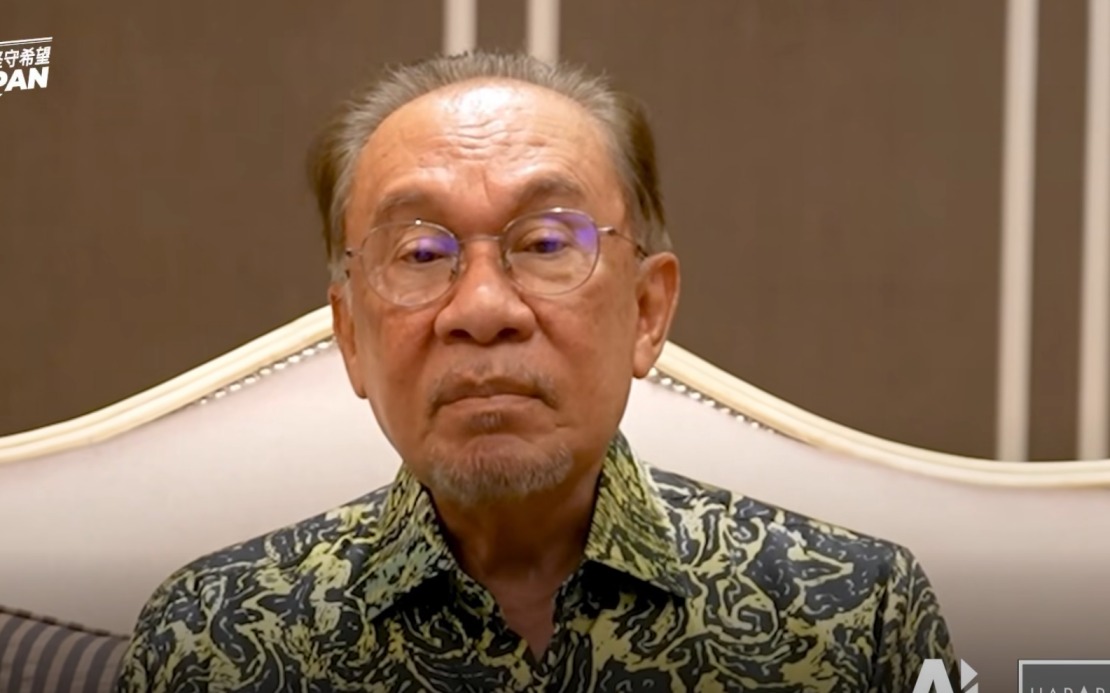
Prime Minister Datuk Seri Anwar Ibrahim has made a direct appeal to military and police personnel and their spouses participating in early voting for the 16th Negeri Sembilan State Election to cast their ballots for the Pakatan Harapan candidate. In a video message circulated through Facebook, Anwar positioned the election as an opportunity for security sector workers to endorse the coalition's continued governance, framing their electoral participation as a moment to affirm confidence in the administration's stewardship of the nation.
Anwar's outreach to uniformed personnel reflects the strategic importance of the security sector vote in determining electoral outcomes. The early voting process itself underscores the logistical complexity of conducting democratic exercises across geographically dispersed military and police installations, with 38 dedicated polling centres established throughout Negeri Sembilan to accommodate this constituency. The sheer volume of eligible voters—16,884 military personnel and their families alongside 5,455 police officers—signals the substantial electoral influence this demographic commands at the state level.
Central to Anwar's messaging is an implicit social contract between government and uniformed services. The Prime Minister contended that his administration, functioning alongside Cabinet Ministers, has prioritised tangible improvements in conditions for military and police personnel, yet acknowledged that meaningful enhancements remain achievable. This careful framing avoids suggesting complacency while simultaneously establishing grounds for voters to reward the incumbent coalition with their ballots based on demonstrated commitment rather than abstract promises.
The welfare provisions Anwar enumerated—salary structures, fundamental amenities, residential provisions, educational access for dependents, medical care for parents, and direct cash assistance through both Sumbangan Tunai Rahmah and Sumbangan Asas Rahmah schemes—represent concrete policy outcomes measurable by individual households. For military and police families, these constitute immediate material realities shaping daily existence. By anchoring his appeal in such specifics rather than ideological abstractions, Anwar sought to ground his political case in demonstrable governmental action affecting personnel welfare.
The broader implications extend beyond Negeri Sembilan itself. This election serves as a bellwether for broader patterns of support among constituencies traditionally viewed as politically aligned with state institutions. How security sector personnel vote provides insights into whether government policies targeting this demographic translate into genuine electoral backing, or whether such groups maintain political independence despite policy benefits. For Malaysian political observers, the outcome carries implications regarding the strength of Pakatan Harapan's institutional support networks.
Negeri Sembilan's electoral context deserves particular attention given its relatively compact size and the proportion of early voters represented by security forces. With the general polling date set for August 1, the early voting process concentrates ballot-casting among specific demographics during a discrete period. This temporal compression amplifies the visibility and impact of military and police participation relative to larger states with more dispersed voting patterns. The concentration of uniformed voters in designated centres also facilitates coordinated political messaging, as Anwar's video approach demonstrates.
The framing of electoral choice as an expression of trust and mandate carries psychological weight beyond its literal meaning. Anwar explicitly connected voting choices to national dignity, economic welfare, and collective wellbeing—abstractions that transcend narrow self-interest. This rhetorical strategy attempts to elevate security personnel voting from transactional calculation toward expressions of patriotic commitment and institutional faith. Whether such appeals resonate depends substantially on whether recipients perceive government messaging as respecting their intelligence or treating them as a bloc to be mobilised through patronage.
For Pakatan Harapan strategically, mobilising security sector support addresses a persistent vulnerability. Public sector employees and uniformed personnel have historically represented potential reservoirs of opposition votes should alternative coalitions successfully contest electoral narratives. By actively campaigning among military and police voters, Anwar signals determination to consolidate rather than take for granted this constituency. The personalised appeal through video format conveys respect for recipients' significance while maintaining accessibility across scattered posting locations.
The Negeri Sembilan election ultimately reflects broader Malaysian electoral dynamics wherein incumbency, welfare delivery, and institutional positioning intersect. For voters in security sectors specifically, electoral decisions encapsulate assessments regarding which political coalition credibly commits to their professional interests and family welfare. Anwar's campaign pitch, grounded in enumerated policy achievements and supplemented by appeals to national service, represents the standard contemporary approach to mobilising uniformed voters. Whether this approach generates sufficient turnout and support margins to significantly influence the state election outcome will become apparent when results materialise on August 1.

