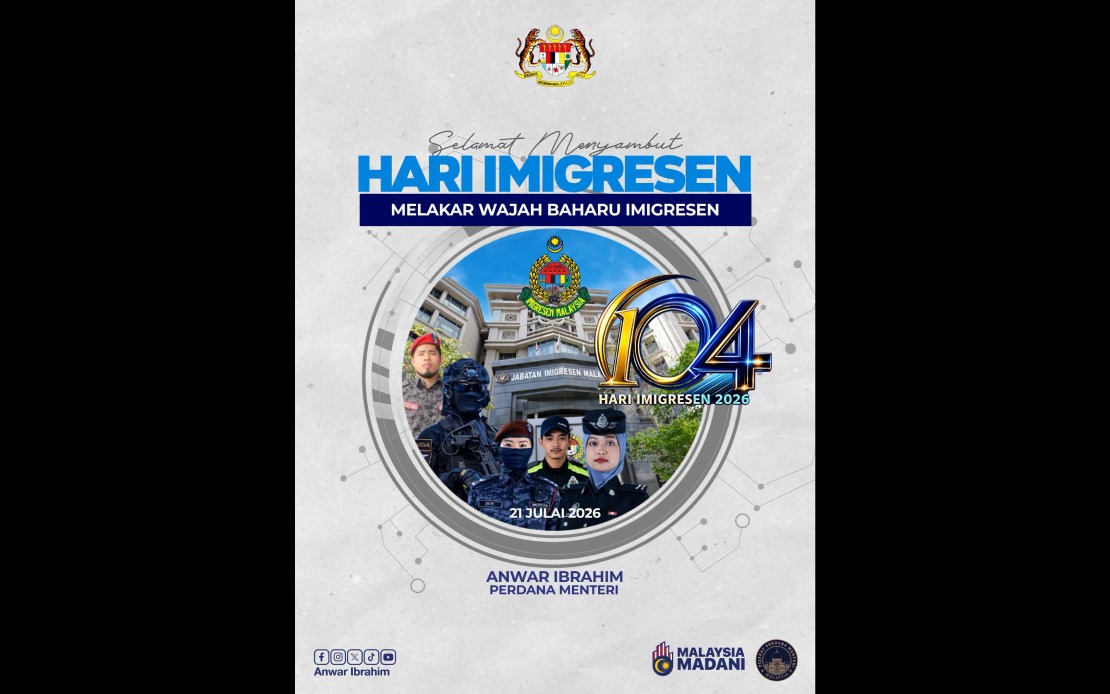
Prime Minister Datuk Seri Anwar Ibrahim has issued a direct call to all Immigration Department personnel to uphold the highest standards of integrity in their duties, while actively rejecting any form of misconduct or corruption. Speaking on the occasion of Immigration Day on July 21, Anwar underscored the critical importance of ethical conduct within an organisation that sits at the frontline of Malaysia's security and sovereignty. The message arrives at a juncture when Malaysian public institutions face ongoing scrutiny regarding governance standards and public accountability.
The Immigration Department, tasked with controlling the movement of people across Malaysia's borders, occupies a position of significant responsibility and public trust. Personnel working within this agency wield considerable discretionary power in processing travel documents, issuing visas, and managing entry procedures that directly affect both Malaysian citizens and foreign nationals. Anwar's emphasis on integrity reflects an understanding that lapses in ethical conduct within such a sensitive department can have far-reaching consequences for national security and Malaysia's international standing. Corruption or irregularities in immigration processes can create vulnerabilities that compromise border security and potentially enable criminal activities.
Beyond the call for integrity, Anwar articulated a broader vision for how immigration services should be delivered to the public. He highlighted the necessity of complementing ethical standards with a culture of compassion, alongside efficiency and professionalism in customer service. This dual emphasis—combining firm anti-corruption stances with service excellence—reflects a modernised approach to public administration that recognises both the enforcement and facilitative roles of government agencies. The Immigration Department must simultaneously secure Malaysia's borders while providing timely, courteous assistance to legitimate travellers and applicants.
The 2026 Immigration Day celebration adopted the theme "Charting a New Face for Immigration," suggesting an institutional commitment to reform and evolution. This thematic orientation implies that the department is actively reimagining its operational frameworks, service delivery models, or perhaps its public perception. Anwar's remarks at this moment reinforce signals that the government expects this renewal to be underpinned by uncompromising ethical standards. The timing of his message sends a clear directive that any institutional rebrand must be substantive rather than cosmetic, with integrity as its foundation.
The issue of corruption within immigration agencies is not unique to Malaysia, but it remains a persistent challenge across the region and globally. Border agencies are particularly vulnerable to corruption because of the high-value transactions involved—visa processing, travel permits, and clearances can command significant fees, creating incentives for bribery. Malaysian newspapers and investigative reports have periodically documented cases involving immigration personnel, underscoring that this sector requires constant vigilance and oversight. Anwar's public statement, therefore, serves as both an affirmation of expectations and a symbolic reinforcement of accountability.
For Malaysian citizens and businesses, the implications of this message are tangible. A well-functioning, incorruptible immigration service facilitates legitimate travel, supports tourism, and streamlines business operations that require cross-border movement. Foreign investors and international businesses often cite bureaucratic efficiency and transparency as factors influencing their confidence in a country. When immigration processes are compromised by corruption, it raises transaction costs and uncertainty for all users, whether tourists, skilled workers, or multinational corporations relocating operations. Anwar's call for integrity thus has economic dimensions that extend beyond ethical considerations.
The reference to safeguarding national sovereignty is particularly significant given Malaysia's geopolitical location and current security environment. The Immigration Department plays a crucial role in threat identification, preventing the entry of individuals who pose security risks, and maintaining comprehensive records of who enters and exits the country. Corruption that weakens these functions directly undermines sovereignty and national security. By linking integrity to sovereignty protection, Anwar framed ethical conduct not as a matter of administrative tidiness but as a national security imperative.
The Prime Minister's call also reflects a broader governmental agenda regarding institutional reform and accountability. The current administration has positioned anti-corruption and good governance as key priorities in its policy platform. Statements such as these serve multiple functions: they reiterate governmental values, set expectations for public servants, and send signals to civil society and international observers that Malaysia is serious about maintaining standards. Consistency in articulating these messages across government agencies reinforces their credibility.
For the Immigration Department specifically, translating Anwar's call into practice will require more than rhetorical commitment. This typically involves implementing or strengthening integrity mechanisms such as robust internal audit systems, whistleblower protections, regular integrity training, and transparent promotion and posting procedures that limit opportunities for patronage-based corruption. It requires clear consequences for misconduct and demonstrable enforcement of those consequences. The department's leadership will need to translate the Prime Minister's message into concrete operational changes that make ethical conduct the institutional norm.
Looking forward, the test of whether this call translates into sustainable institutional change will be evident in documented outcomes: the number of corruption investigations and disciplinary actions taken, improvements in processing times and service quality metrics, and feedback from the public regarding their experiences navigating immigration procedures. These tangible measures will ultimately determine whether Immigration Day 2026 represents a symbolic moment or the beginning of meaningful institutional transformation. For Malaysia's reputation as a stable, transparent business and travel destination, the stakes are considerable.

