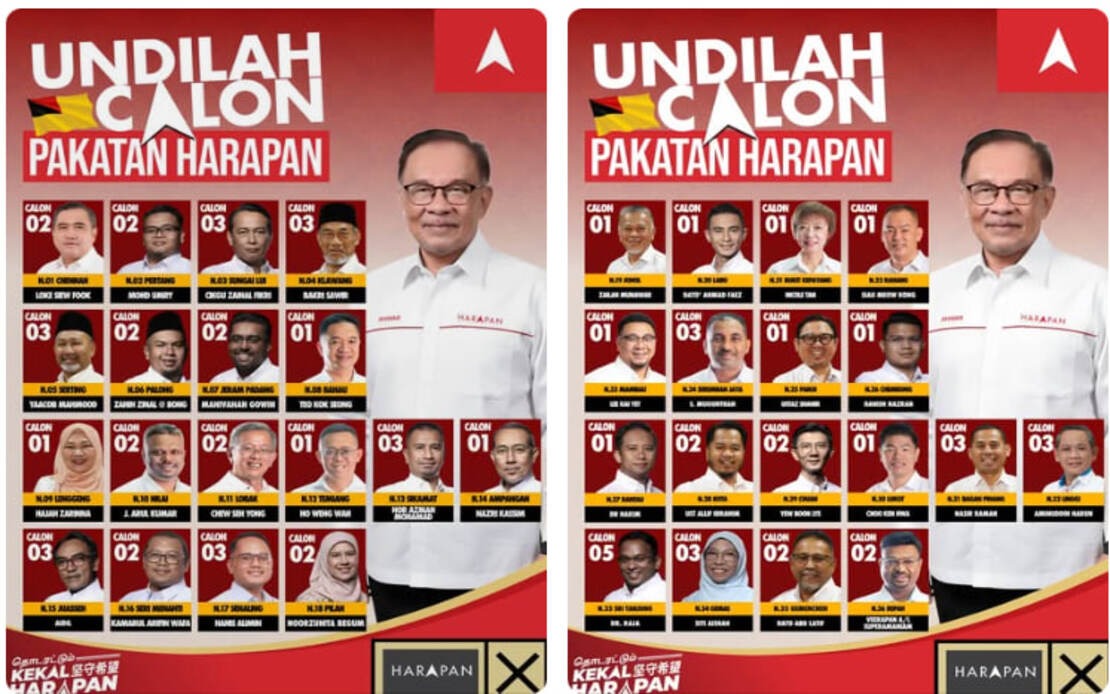
Prime Minister Datuk Seri Anwar Ibrahim has made an emotional appeal to voters in Negeri Sembilan ahead of the state election scheduled for August 1, asking them to deliver an enhanced mandate to Pakatan Harapan (PH) to ensure the continuation of what he characterizes as an administration rooted in cleanliness, stability, and institutional integrity. The PH Chairman's message, conveyed through social media, frames the upcoming contest not merely as a routine electoral exercise but as a critical juncture where voter support will determine the pace and scope of ongoing reforms across the state.
Anwar's intervention underscores the strategic importance that PH leadership assigns to the Negeri Sembilan result, particularly given the composition of Malaysia's political landscape following the 2022 general election. The push for a stronger state-level mandate reflects a broader pattern within the ruling coalition whereby federal leadership actively mobilizes public support at the state level, recognizing that decisive victories at the state tier strengthen the hand of federal administrators in implementing their agenda and demonstrate sustained public confidence in the government's direction.
The Prime Minister specifically cited the tenure of Menteri Besar Datuk Seri Aminuddin Harun as embodying the governance model that PH wishes to extend through the August 1 election. This personalisation of the campaign around the incumbent state leader is a calculated move to connect voter sentiment about performance and leadership capability at the state level with the broader national narrative that PH has constructed around the 2023 change of federal government. By linking Aminuddin's stewardship to initiatives begun in 2018, Anwar is attempting to position the election as a verdict on sustained institutional reform rather than a simple judgment on recent months alone.
According to official announcements from the Election Commission, the Negeri Sembilan state assembly was dissolved on June 5, triggering the nomination process that concluded with 103 candidates confirmed to contest for 36 State Legislative Assembly seats. This candidate field reflects the highly fragmented nature of contemporary Malaysian politics, with representation distributed across multiple parties and independent hopefuls. The scale of this fragmentation—ten distinct political entities fielding candidates—suggests that the path to a clear mandate requires one coalition to consolidate significant voter support.
PH's strategic position in the contest is evident from its decision to field a full slate of 36 candidates, matching exactly the number of seats available. This comprehensive candidacy signals confidence and organizational readiness, but it also means that PH cannot afford significant defeats in any constituency without affecting its ability to form government. The inclusion of incumbent Menteri Besar Aminuddin in the contest via the Linggi state seat demonstrates the personal stake of leadership in the outcome and allows PH to frame the election partially as a referendum on the performance of its chosen state executive.
The opposition landscape presents a more fractured picture. Barisan Nasional, traditionally a formidable force in Negeri Sembilan, has fielded 25 candidates, suggesting that it has chosen to contest selectively rather than comprehensively. Meanwhile, Parti Pribumi Bersatu Malaysia (Bersatu) has put forward 24 candidates—a significant presence that reflects the party's strong organizational base in several Negeri Sembilan constituencies despite its federal-level alignment with Pakatan Nasional. Perikatan Nasional, the broader coalition within which Bersatu operates at the national level, has registered 11 candidates, indicating that competition between supposed allies may fragment anti-PH votes across multiple platforms.
This splintering of opposition unity into multiple competing vehicles stands in stark contrast to PH's consolidated approach and likely forms the substance of Anwar's appeal for a stronger mandate. The Prime Minister's message, while framed in terms of continuity and development, implicitly invites voters to consolidate support behind PH rather than scatter votes across a crowded field of alternatives. In the context of Malaysian electoral mathematics, where first-past-the-post systems can produce disproportionate results, vote fragmentation among opponents can significantly amplify the benefit accruing to a united coalition.
The participation of smaller parties and independent candidates—including Berjasa, ASLI, PSM, and four independents—adds layers of unpredictability to the contest. While these entities are unlikely to change the overall trajectory of the election, they can create surprising outcomes in specific constituencies, particularly in areas with dense urban populations or where identity-based politics hold particular salience. The presence of Parti Orang Asli Malaysia reflects the ongoing assertion of indigenous political representation in Malaysian democracy, while the Socialist Party's participation signals the continued space for ideological contestation beyond the mainstream two-coalition framework.
The election timeline, with early voting scheduled for July 28 and main polling on August 1, compresses the campaigning period into little more than a fortnight following the close of nominations. This abbreviated campaign window may disadvantage smaller parties lacking media access and campaign resources while favoring well-resourced coalitions like PH and BN. For Anwar and PH leadership, the tight schedule necessitates immediate mobilization of party machinery, candidate deployment, and media engagement to translate the organizational advantage of a full slate of candidates into concrete electoral gains.
For Malaysian political observers and regional analysts, the Negeri Sembilan election assumes significance beyond the state's borders. A convincing PH victory would validate the government's governance model and provide political momentum as Anwar's administration navigates the complex terrain of economic management, institutional reform, and coalition maintenance at the federal level. Conversely, a closer-than-expected result or PH shortfall would invite questions about the durability of the 2023 electoral realignment that brought the current federal government to power and might embolden opposition parties to recalibrate their strategies.
The institutional framework governing the election—overseen by the Election Commission—reflects the established regulatory architecture of Malaysian electoral politics. The confirmation of 103 candidates through a formal nomination process, the setting of specific polling dates, and the provision for early voting all exemplify the procedural regularity that has come to characterize Malaysian elections despite ongoing debates about electoral fairness and representation. For Negeri Sembilan voters, these administrative details provide the formal structure within which their political choices will be registered and counted.
Anwar's invocation of divine blessing in his appeal—"May all PH candidates be granted strength, have their affairs eased, and achieve the best success. To Allah SWT we place our trust"—reflects the normalization of religious language in Malaysian political messaging across the spectrum. This rhetorical choice simultaneously addresses a devoutly Muslim-majority electorate and positions PH's political project as aligned with spiritual values, a strategy employed by competing political actors but particularly important for PH in asserting its legitimacy among Muslim voters who have historically supported other coalitions.
The broader context of the Negeri Sembilan election encompasses ongoing national debates about governance quality, economic inclusivity, and the pace of institutional reform. Anwar's emphasis on initiatives "set in motion since 2018" deliberately stretches the historical framing beyond the 2023 transition to encompass the earlier Pakatan Harapan government, suggesting continuity of vision despite the intervening period of Perikatan Nasional governance. This narrative framing attempts to position PH as the custodian of a reform agenda that transcends electoral cycles and coalitional shifts, though critics may contest this interpretation of recent political history.

