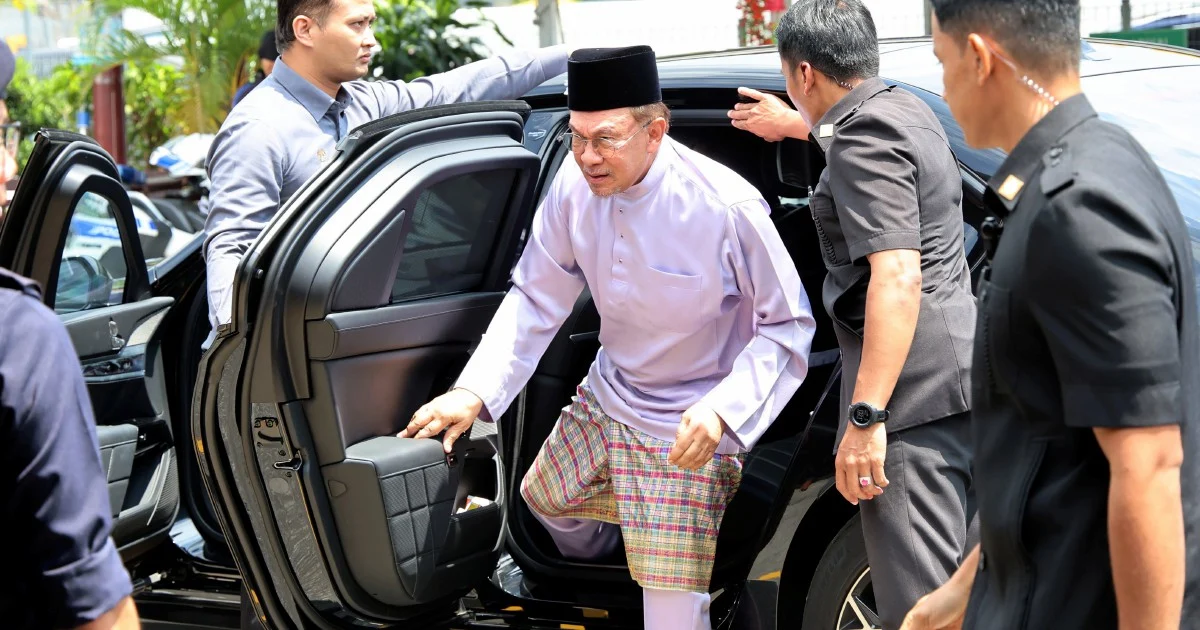
Prime Minister Datuk Seri Anwar Ibrahim has issued a direct appeal to all political parties vying in the upcoming Johor election to maintain decorum and civility throughout their campaign activities. Speaking in Dengkil, the premier emphasised the importance of conducting electoral contests within the bounds of respect and ethical conduct, cautioning parties against allowing competitive tensions to manifest as arrogant or disrespectful behaviour.
The call reflects growing concerns about the tone and conduct of election campaigns across Malaysia, where the intensity of political competition has occasionally led to heated exchanges and conduct deemed unbecoming of democratic discourse. By intervening at this early stage, Anwar signalled the government's commitment to ensuring that the Johor election serves as a demonstration of responsible political engagement rather than a platform for divisive rhetoric or aggressive posturing.
Anwar's reminder carries particular weight given Malaysia's recent political history, which has witnessed several election cycles marked by heated disputes and accusations of misconduct. The Prime Minister's emphasis on upholding good values suggests an intention to steer political competition toward substantive policy debates rather than personal attacks or inflammatory campaigning. This approach aligns with broader efforts to restore public confidence in electoral processes and political institutions following years of turbulence and institutional stress.
The Johor election represents a significant test of political stability in one of Malaysia's most strategically important states. As a predominantly Malay-Muslim region and traditional stronghold of the Barisan Nasional coalition, Johor's electoral outcome carries implications far beyond state-level governance. The state has historically served as a bellwether for national political sentiment, making the conduct of campaigns particularly consequential for the broader political landscape.
Anwar's intervention also underscores the delicate balance required in managing multiple competing interests within Malaysia's coalition-based political system. The government comprises diverse political parties with distinct constituencies and ideological positions, and state-level elections can create tensions within these broader arrangements. By setting clear expectations about campaign conduct, the Prime Minister sought to establish common ground and prevent electoral competition from destabilising the broader political equilibrium.
The emphasis on avoiding arrogance specifically merits attention, as it suggests concern about displays of political overconfidence or dominance that could alienate voters or breed resentment among opposition parties. In Malaysian electoral culture, where perceptions of fairness and equal treatment remain crucial to legitimacy, even symbolic displays of arrogance can undermine public support and create grievances that extend beyond the immediate election.
For Southeast Asian observers, Malaysia's approach to managing political competition offers relevant lessons. The region has experienced tensions between electoral competition and democratic stability, with several countries struggling to maintain the balance between permitting vigorous political debate and preventing campaigns from becoming destabilising forces. Anwar's appeal for respectful campaigning reflects an attempt to navigate this tension through appeals to shared values rather than through regulatory restrictions.
The timing of Anwar's statement, made during the campaign period itself, also carries significance. Rather than waiting for misconduct to occur, the Prime Minister chose to establish normative expectations upfront, seeking to shape behaviour through moral suasion and public commitment to standards. This preventive approach suggests confidence in the political maturity of Malaysian parties and voters, while simultaneously placing them on notice that departures from respectful conduct would be viewed unfavourably.
For Malaysian voters and civil society, Anwar's intervention offers a framework for evaluating campaign conduct. Citizens can assess whether parties are living up to the standards the Prime Minister articulated, and public discourse can centre on holding political actors accountable to these expectations. This potential empowerment of voters as monitors of campaign conduct represents an important dimension of democratic accountability.
The broader context of Malaysia's ongoing political evolution also shapes interpretation of Anwar's appeal. Following several years of significant political instability, institutional reforms, and questions about democratic performance, the nation remains in a period of consolidation. Elections conducted with integrity and respect contribute to that consolidation process, helping to rebuild public confidence in democratic institutions and processes.
As Johor voters prepare to cast ballots, they will do so in an environment where the Prime Minister has publicly committed to and expects others to uphold standards of respectful political engagement. This establishes a baseline expectation that transcends the immediate election, potentially setting a precedent for future electoral contests across Malaysia. Whether parties and candidates successfully meet this standard will offer important insights into the state of Malaysian democracy and the capacity of political actors to prioritise institutional health over short-term competitive advantage.

