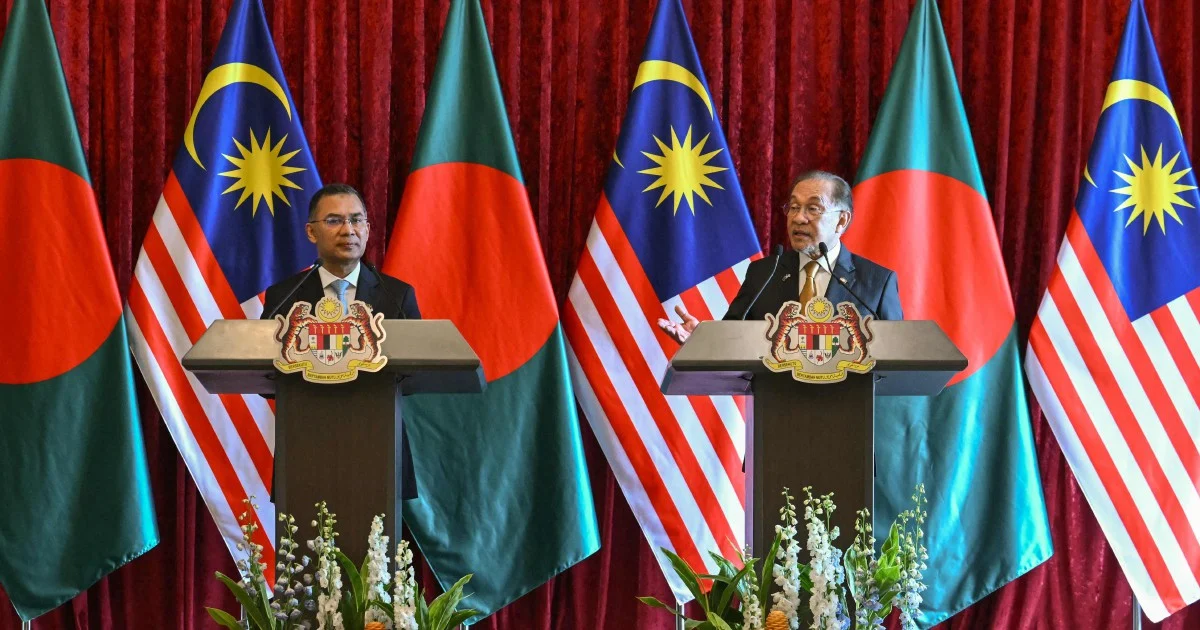
Prime Minister Datuk Seri Anwar Ibrahim has given a strong assurance that Malaysia will not tolerate the mistreatment and exploitation of Bangladeshi migrant workers, pledging decisive government intervention to safeguard their rights and welfare. His statement underscores the administration's determination to address longstanding concerns about labour abuses within Malaysia's substantial migrant workforce, an issue that has drawn both domestic and international scrutiny in recent years.
Anwar's commitment reflects the government's recognition that Bangladeshi workers represent an indispensable pillar of Malaysia's economic infrastructure. These labourers form a significant portion of the workforce across construction, manufacturing, agriculture, and domestic service sectors—industries that would struggle considerably without their contributions. The Prime Minister's characterisation of their role as critical to Malaysia's economic survival acknowledges the demographic reality that the country faces a persistent shortage of skilled and unskilled local workers willing to undertake these essential but often difficult jobs.
The pledges made by Anwar arrive against a backdrop of persistent allegations regarding wage theft, excessive working hours, unsafe conditions, and restricted movement experienced by Bangladeshi workers in Malaysia. Human rights organisations and labour monitors have documented cases where workers have been subjected to debt bondage arrangements, confiscation of identity documents, and threats of deportation to coerce compliance and suppress complaints. These practices have generated diplomatic friction and reputational concerns for Malaysia on the international stage, particularly affecting bilateral relations with Bangladesh.
The government's stated intention to eliminate such exploitation touches on a complex challenge that involves multiple stakeholders and systemic issues. Labour enforcement agencies, employers, labour trafficking syndicates, and housing operators all play roles in either preventing or enabling mistreatment. Bangladeshi workers themselves often lack awareness of their rights under Malaysian employment law and may fear that reporting abuses will result in arrest or deportation rather than remedial action. Language barriers and social isolation further complicate their ability to seek assistance.
Effective implementation of Anwar's pledge would require strengthening labour inspectorates with adequate staffing and resources to conduct meaningful workplace audits and investigations. Current enforcement capacity remains inadequate relative to the scale of Malaysia's migrant worker population, which numbers in the millions. Additionally, prosecution of offenders must carry consequences severe enough to deter violations, rather than the minimal penalties that have historically characterised such cases. Employers caught violating labour standards must face sanctions that affect their business operations and reputation, not merely token fines.
The government's approach must also address the underlying supply-side structures that make workers vulnerable. Malaysia's reliance on labour intermediaries and recruitment agents, many of whom charge excessive fees to workers, perpetuates financial dependency and desperation. Reforming this system—including capping or eliminating worker-side recruitment fees and establishing more transparent hiring pathways—would reduce the leverage that unscrupulous employers can exert over workers already burdened by debt.
Bangladesh's government has expressed concerns about the conditions facing its citizens abroad and has occasionally threatened restrictions on labour migration to Malaysia unless standards improve. Given Bangladesh's economic dependence on remittances from overseas workers, such restrictions affect both nations. Anwar's commitment signals willingness to work constructively with Bangladeshi authorities to establish stronger bilateral frameworks for worker protection and to allow for more rigorous monitoring of conditions in Malaysia.
For Malaysian readers and businesses, the Prime Minister's stance carries important implications. Legitimate employers who maintain fair workplace standards have a stake in stricter enforcement, as it levels the competitive playing field and prevents unethical competitors from undercutting wages and working conditions. The government's commitment can also serve Malaysia's international reputation, demonstrating that economic development does not require tolerating human rights abuses and positioning the country as an employer of choice within Southeast Asia.
The pledges require translation into concrete legislative amendments, resource allocations, and enforcement protocols that extend beyond rhetoric. This includes ensuring that migrant workers can file complaints through accessible, protected channels without risking their employment status or legal standing. Civil society organisations and worker advocacy groups should be engaged as partners in identifying violations and holding stakeholders accountable. Additionally, transparency mechanisms allowing international monitoring could help demonstrate genuine commitment to reform.
Anwar's statement also reflects broader shifts in Southeast Asian labour politics, where migrant worker rights have become increasingly salient in public discourse and foreign policy. Countries in the region compete for migrant labour supply, and those with reputations for protection and fair treatment gain advantages in attracting workers. Malaysia's ability to deliver on these commitments could enhance its standing among labour-sending nations and strengthen regional stability by reducing grievances that fuel irregular migration and trafficking.
The weeks and months ahead will reveal whether Anwar's pledge translates into sustained policy action and institutional change. Worker advocates and international observers will scrutinise budget allocations to labour enforcement, legislative amendments improving worker protections, and conviction rates for exploitation offences. The true measure of commitment lies not in symbolic statements but in transforming a system where Bangladeshi workers can confidently report abuses and receive meaningful remedies without jeopardising their livelihoods or safety.

