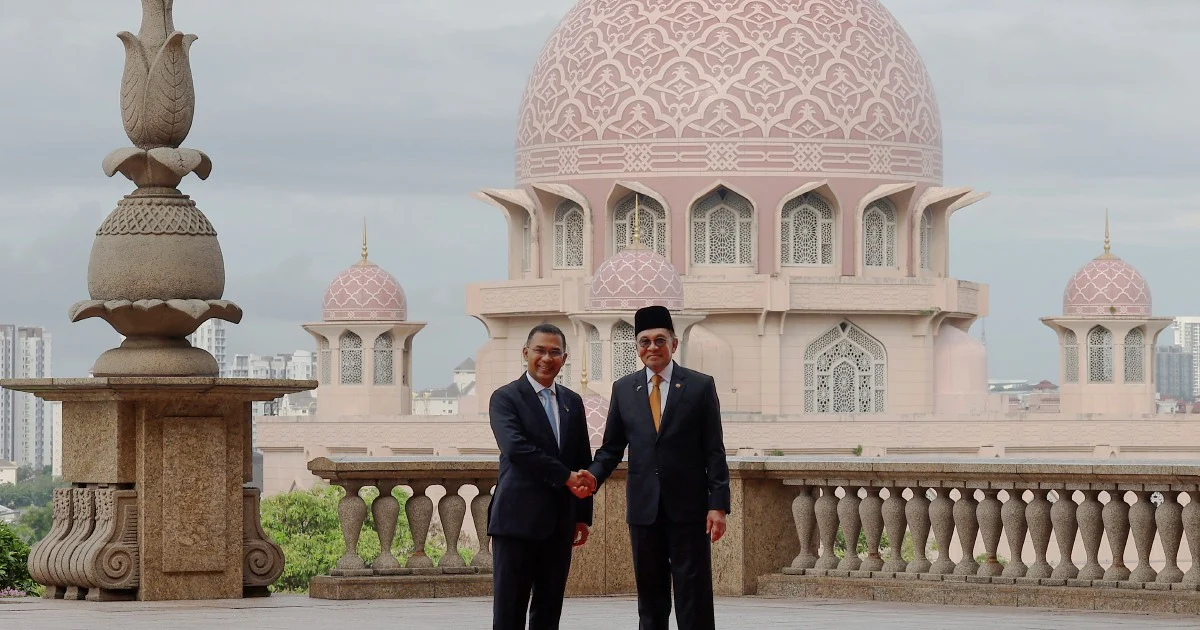
Prime Minister Anwar Ibrahim rolled out the ceremonial welcome for visiting Bangladesh Prime Minister Tarique Rahman at the Perdana Putra Complex in Putrajaya today, marking the beginning of a significant bilateral engagement between the two South and Southeast Asian nations. The official reception underscores Malaysia's commitment to strengthening diplomatic ties with Bangladesh, a country of immense strategic importance given its position in the Bay of Bengal and its role as a major economic hub in South Asia.
The two-day visit represents a notable opportunity for high-level discussions between Malaysian and Bangladeshi leadership on matters of mutual concern. Such state visits typically encompass conversations spanning trade relations, security cooperation, and regional stability issues that affect both nations and their broader neighbourhoods. The formal nature of the welcome ceremony—conducted at the seat of Malaysia's executive power—signals the significance both governments attach to this engagement.
Bangladesh, under Tarique Rahman's leadership, has been navigating a complex period of political transition and economic restructuring. The country remains one of Southeast Asia's closest neighbours and a critical player in regional affairs, particularly concerning maritime issues in the Bay of Bengal and connectivity initiatives linking South Asia with Southeast Asia. For Malaysia, maintaining robust relations with Bangladesh serves multiple strategic interests, from ensuring stability in the broader Indo-Pacific region to facilitating people-to-people contacts and economic partnerships.
The timing of this visit carries particular relevance given ongoing regional developments and Malaysia's active engagement in multilateral platforms where Bangladesh also participates. Both nations are members of the Organisation of Islamic Cooperation and share common interests in issues ranging from maritime security to economic cooperation. Bangladesh's substantial diaspora in Malaysia and Malaysia's investments in Bangladesh underscore the depth of existing bilateral connections that such high-level visits seek to further strengthen.
During such official visits, delegations typically explore opportunities for expanding trade and investment flows between nations. Bangladesh's rapidly growing economy and Malaysia's established position as a regional financial and trading hub create complementary opportunities for deepening economic integration. Discussions may also address potential collaboration in sectors such as manufacturing, infrastructure development, and technology transfer.
Anwar's leadership has placed considerable emphasis on revitalizing Malaysia's regional diplomacy and positioning the country as a constructive player in Southeast Asian affairs. Hosting visiting dignitaries at the Perdana Putra Complex—the official seat of Malaysia's Prime Minister—reflects this diplomatic outreach. The venue itself carries symbolic weight, reserved for state visits and meetings of highest protocol standing.
The bilateral relationship between Malaysia and Bangladesh extends beyond governmental interactions to encompass cultural, educational, and religious dimensions. The substantial Bangladeshi community in Malaysia contributes to the Malaysian economy and society, while Malaysian institutions have long offered educational opportunities to Bangladeshi citizens. These soft-power dimensions often form important discussion points during state visits, as leaders seek to broaden engagement beyond formal political and economic channels.
Regional security considerations are likely to feature prominently in discussions between the two leaders. Both nations have vested interests in maintaining freedom of navigation through regional waterways, combating transnational threats, and ensuring stability in shared maritime zones. Bangladesh's strategic location along major shipping routes and its involvement in regional maritime governance frameworks make such conversations particularly relevant for Malaysia.
The visit also provides an opportunity to discuss multilateral cooperation within frameworks such as ASEAN Regional Forum, the East Asia Summit, and Indian Ocean Rim Association initiatives where both countries participate. Malaysia's experience as an ASEAN member and a bridge between different regional groupings can offer valuable perspectives for Bangladesh as it seeks to enhance its own regional engagements and secure a stronger voice in Indo-Pacific affairs.
Looking forward, successful state visits typically culminate in joint statements and bilateral agreements that formalize commitments in identified areas of cooperation. Such instruments often establish mechanisms for regular high-level dialogue, coordinate positions on international issues, and create frameworks for practical collaboration in areas ranging from customs procedures to defence cooperation. The outcomes of this visit will likely shape the trajectory of Malaysia-Bangladesh relations for the coming period.
For Malaysian observers and policymakers, the visit represents a strategic reaffirmation of Malaysia's commitment to maintaining active relationships across South Asia and Southeast Asia. In an era of increasing great-power competition and regional geopolitical complexity, such bilateral engagements serve as anchors for regional stability and cooperation. Bangladesh's development as a nation and its role in regional affairs make it a natural partner for Malaysia in pursuing shared objectives around economic growth, security, and prosperity across the broader Asian region.

