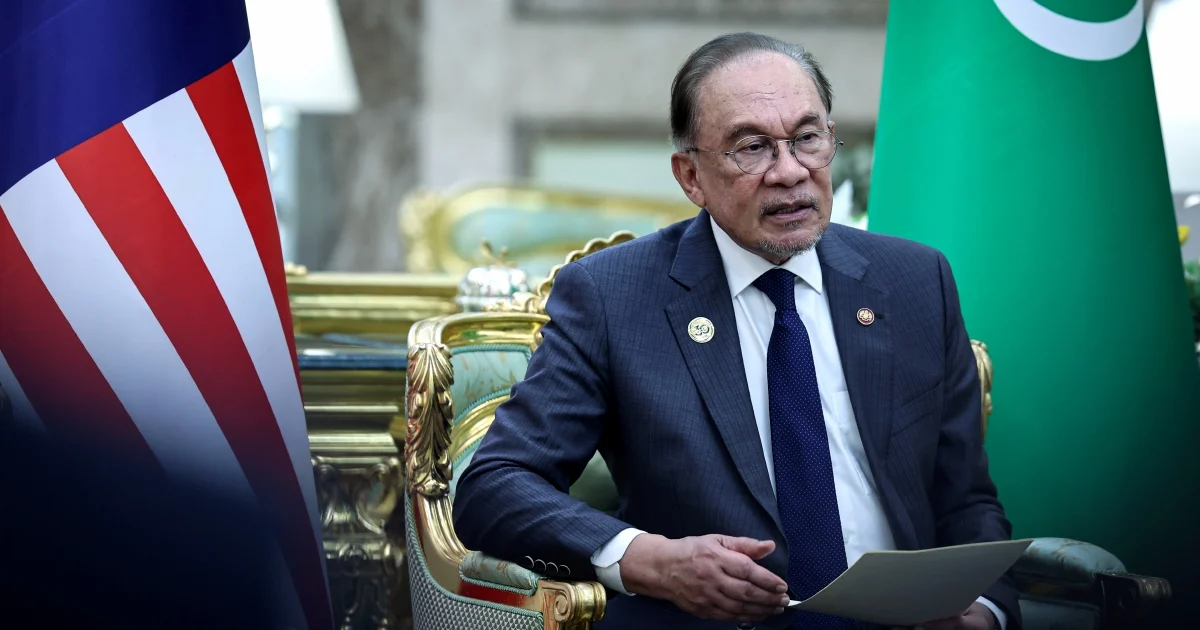
Prime Minister Datuk Seri Anwar Ibrahim has thrown his support behind emerging signs of agreement between the United States and Iran, framing the diplomatic overture as welcome progress for global affairs. Speaking from his constituency of Batu Kawan, the premier characterized the reported accord as beneficial developments that extend beyond the two nations directly involved, signaling optimism that dialogue may yield enduring solutions to long-standing tensions.
The Malaysian leader's remarks reflect a broader regional perspective on the importance of resolving major geopolitical standoffs through negotiation rather than confrontation. As a developing economy with significant trade interests spanning the Middle East and Western markets, Malaysia has traditionally advocated for dialogue-based approaches to international disputes. Anwar's endorsement of the emerging US-Iran understanding aligns with Malaysia's consistent diplomatic posture of supporting multilateral engagement and de-escalation, particularly in volatile regions that affect global energy markets and trade corridors.
The reported preliminary agreement between Washington and Tehran represents a potential thaw in relations that have been marked by decades of mutual sanctions, diplomatic isolation, and strategic competition. For Southeast Asian nations like Malaysia, sustained hostility between two major global powers carries direct consequences for regional security architecture, commodity prices, and investment flows. Any progress toward normalization could theoretically reduce uncertainty in international markets and create space for broader cooperation on issues ranging from counterterrorism to maritime security.
Anwar's cautious optimism about achieving lasting peace reflects the prime minister's broader foreign policy philosophy emphasizing constructive engagement. Throughout his career, particularly since assuming office in late 2022, he has positioned Malaysia as a mediating voice within international affairs, seeking to maintain productive relationships across ideological and strategic divides. His welcoming tone toward the US-Iran development demonstrates continuity with this approach, even as Malaysia navigates the complex geopolitical terrain of being a predominantly Muslim-majority nation with historical ties to various regional actors.
The timing of Anwar's comments carries significance for Malaysia's domestic and foreign policy messaging. By publicly endorsing diplomatic breakthroughs, the prime minister signals to both the international community and domestic constituencies that Malaysia remains committed to peaceful resolution of conflicts. This positioning becomes particularly important for a nation seeking to enhance its role in regional mediation and to attract foreign investment from countries concerned about political stability and predictable governance.
From an economic perspective, de-escalation between the US and Iran could have tangible benefits for Malaysian interests. Reduced tensions might stabilize global oil markets, where price volatility directly affects Malaysia's energy sector and transportation costs. Additionally, a more stable Middle East could enhance opportunities for Malaysian companies and investors operating in the region, particularly in sectors like palm oil trading, construction, and manufacturing. The uncertainty created by US-Iran hostility has historically posed risks to regional commerce and logistics networks.
However, Anwar's remarks also underscore Malaysia's limited leverage in shaping outcomes between major powers. While the prime minister can voice support for diplomatic progress, Malaysia's actual influence on US-Iran negotiations remains minimal. The statement appears designed more to position Malaysia as a voice for peace and moderation rather than as a consequential actor in the negotiations themselves. This reflects a realistic assessment of where developing Southeast Asian nations fit within great power dynamics.
The Malaysian leader's emphasis on hopes for lasting peace rather than focusing narrowly on the agreement's technical details suggests awareness that preliminary accords often face implementation challenges. Durability of any understanding between the US and Iran will depend on sustained commitment from both sides, verification mechanisms, and whether the underlying strategic interests of both powers can be genuinely reconciled. Malaysia's experience as a nation balancing relationships between different major powers likely informs Anwar's measured optimism.
Regionally, Anwar's comments may also carry subtle signals about Malaysia's approach to the broader Middle Eastern landscape, where various actors from Iran to Saudi Arabia to Israel pursue competing interests. By expressing support for US-Iran dialogue without appearing to favor one side over another, the prime minister maintains Malaysia's diplomatic flexibility while affirming commitment to peaceful resolution. This careful positioning becomes increasingly important as Middle Eastern tensions influence everything from shipping through the Strait of Malacca to terrorism threats in Southeast Asia.
The prime minister's statement also reflects growing recognition among Southeast Asian leaders that regional prosperity increasingly depends on the stability of distant global relationships. Malaysia cannot remain insulated from consequences of major power conflicts, whether through energy market disruptions, security threats, or economic slowdowns. Therefore, supporting international diplomatic breakthroughs serves Malaysian national interests, even when the country plays no direct role in the negotiations.
Anwar's endorsement of the emerging accord demonstrates how Malaysia seeks to contribute meaningfully to global affairs through soft power and diplomatic advocacy. By consistently advocating for dialogue and peaceful resolution, Malaysian leadership positions the nation as a responsible stakeholder in international affairs. This approach can enhance Malaysia's reputation and influence in multilateral forums, even if concrete leverage in specific negotiations remains limited.

