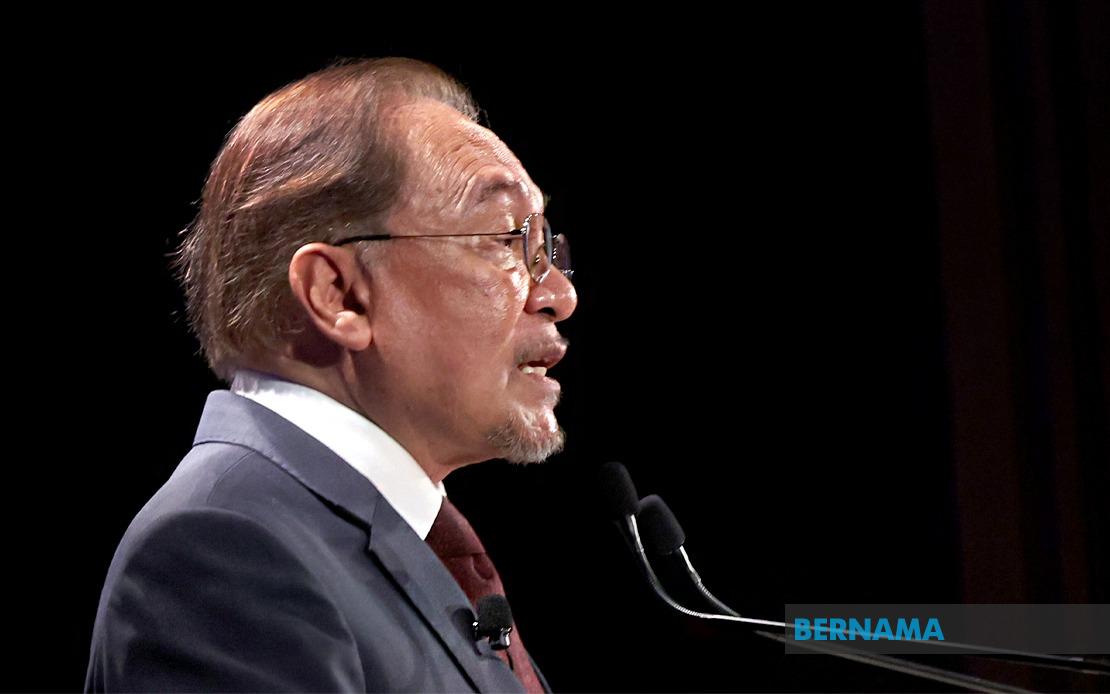
Prime Minister Datuk Seri Anwar Ibrahim's final day in Turkmenistan will centre on strategic diplomatic engagements and formal ceremonies designed to reinforce bilateral ties between Malaysia and the Central Asian nation. The packed itinerary reflects the significance Kuala Lumpur places on deepening its relationship with Ashgabat, particularly as regional dynamics continue to shift in Central Asia and Malaysia seeks to expand its footprint beyond Southeast Asia.
The day opens with a formal reception at the Presidential Palace, where Anwar will be welcomed by Turkmenistan President Serdar Berdimuhamedov. This ceremonial beginning sets the diplomatic tone before the two leaders move into a one-on-one meeting, a format that typically allows for candid discussion of strategic interests and shared concerns. Following this, a full bilateral session between both delegations will commence, with both the Malaysian and Turkmenistan delegations working through the substantive agenda that has been carefully prepared by their respective foreign ministries.
Among the most consequential outcomes of this visit will be the joint statement and the array of binding agreements to be signed. The memorandum of understanding on air services between the two nations stands out as particularly significant, potentially opening new routes for Malaysian carriers and facilitating greater people-to-people connectivity. Beyond aviation, both governments will formalise cooperation through a pact between Malaysia's Foreign Ministry and Turkmenistan's equivalent body, creating institutional frameworks for sustained diplomatic dialogue and knowledge exchange.
The substantive discussions are expected to span multiple economic sectors critical to both nations' development agendas. Trade and investment feature prominently, given that Malaysia has successfully positioned itself as an attractive partner for Central Asian nations seeking to diversify their economic partnerships. The energy sector, particularly oil and gas, represents perhaps the deepest area of cooperation, with Petronas having invested substantially in Turkmenistan since the mid-1990s. Agricultural commodities and digital transformation also appear on the agenda, reflecting Malaysia's interest in expanding its presence across diverse economic domains and sharing expertise in technology adoption.
Regional and international affairs will likewise be discussed, though these conversations often operate at a more nuanced level in diplomacy. Malaysia's perspective as an ASEAN member will be of interest to Turkmenistan, which has its own engagement frameworks with regional organisations. Similarly, developments affecting Central Asia—including connectivity initiatives, security considerations, and the evolving geopolitical balance—offer natural talking points for leaders seeking to understand each other's strategic perspectives in their respective regions.
Multiple memoranda of understanding will be exchanged between various government and academic institutions. The pact between Malaysia's Academy of Sciences and Turkmenistan's equivalent demonstrates a commitment to research collaboration and scientific advancement. An agreement involving the Ministry of Transport and Turkmenistan's State Service signals intentions to improve logistics and transportation cooperation, potentially benefiting supply chains and connectivity between the two nations. These technical-level agreements, though less visible than headline trade deals, often provide the substance for long-term partnership.
The visit extends beyond purely governmental spheres, with Anwar scheduled to perform Friday prayers at the Turkmenbashi Ruhy Mosque, a gesture that acknowledges the Islamic dimensions of Malaysia-Turkmenistan ties and demonstrates respect for local culture and religious traditions. Such symbolic acts carry weight in diplomatic relationships, signalling mutual recognition and cultural sensitivity. A luncheon hosted by Berdimuhamedov at the Presidential Palace provides an informal setting for continued conversation and relationship-building.
The Malaysia-Turkmenistan Forum, which Anwar will jointly inaugurate with Berdimuhamedov at the Chamber of Commerce and Industry of Turkmenistan, represents an attempt to institutionalise business and people-to-people engagement. Such forums typically bring together investors, business leaders, academics, and civil society representatives, creating platforms for networking and identifying concrete commercial opportunities beyond the government-to-government sphere. This positioning of both leaders as joint hosts underscores the bilateral nature of the initiative.
Anwar's delegation includes economic heavyweights: Datuk Seri Johari Abdul Ghani, who heads the Investment, Trade and Industry Ministry, and Akmal Nasrullah Mohd Nasir, the Economy Minister. Their presence signals that this is not merely a ceremonial visit but one grounded in tangible economic objectives. Senior officials from the Prime Minister's Office and Foreign Ministry complete the delegation, ensuring that diplomatic, administrative, and policy coordination can occur seamlessly throughout the visit.
Ashgabat itself, with its distinctive architecture and the title of 'White Marble City,' serves as more than just a backdrop to these engagements. The city's status as holding the Guinness World Record for white marble-clad buildings reflects Turkmenistan's development aspirations and its strategic positioning in Central Asia. For Malaysian observers, the choice of venue underscores Turkmenistan's confidence in its regional role and its capacity to host high-level diplomatic events.
Economically, Malaysia's relationship with Turkmenistan has shown positive momentum. In 2025, bilateral trade reached RM75.80 million, with Malaysian exports constituting RM75.50 million and representing a nine percent increase year-on-year. While these figures may appear modest compared to Malaysia's trade with some Asian economies, they reflect growing engagement and potential for expansion. More significantly, Petronas' cumulative investments of RM52.73 billion since 1996 position Turkmenistan as a critical energy asset for Malaysia's national oil company and a long-term strategic consideration.
For regional analysts and policymakers, Anwar's visit illustrates Malaysia's strategic pivot toward deepening relationships across Asia and beyond ASEAN's immediate sphere. Central Asian nations, with their vast energy resources and growing economic ambitions, represent emerging opportunities for Malaysian companies and investors. By elevating diplomatic engagement and formalising cooperation frameworks, Malaysia positions itself to capture opportunities as Central Asia continues its own development trajectory and seeks partnerships with established Asian economies.
The press conference concluding the visit will offer Malaysian media the opportunity to gauge the outcomes and significance of the bilateral discussions. Media coverage of this engagement will help shape public and investor perception of Malaysia-Turkmenistan relations and signal to the broader business community the government's commitment to Central Asian partnerships. Such diplomatic visits, with their carefully choreographed sequences of formal and informal engagement, ultimately aim to build the relational foundations upon which sustained cooperation can flourish.

