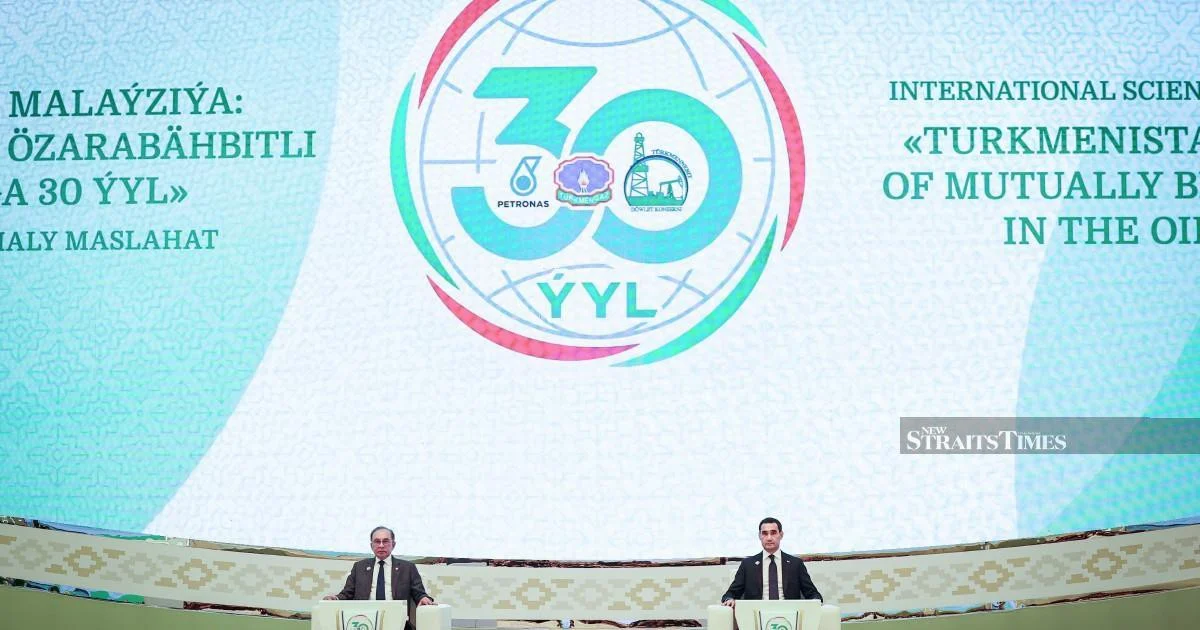
Malaysia's Prime Minister Datuk Seri Anwar Ibrahim has secured substantial energy sector agreements during high-profile visits to Russia and Turkmenistan, marking a notable diplomatic success that carries implications far beyond bilateral trade relations. The missions represent a deliberate recalibration of Malaysia's energy strategy at a time when global petroleum markets face structural uncertainty and regional powers compete intensely for access to reliable hydrocarbon supplies.
Anwar's engagement with both nations reflects a sophisticated understanding that Malaysia's energy independence depends on diversifying suppliers beyond traditional partners in the Middle East and Southeast Asia. Russia and Turkmenistan together control vast proven reserves and operate as major exporters in global energy markets. For Malaysia, a country that remains energy-dependent despite domestic oil and gas production, securing preferential arrangements or long-term supply contracts offers both economic and strategic insurance against price volatility and supply disruptions that could destabilise the broader economy.
The timing of these visits carries particular significance given the evolving international energy landscape. Western sanctions on Russian energy exports have fundamentally altered trade flows and pricing mechanisms, creating both opportunities and risks for Asian economies seeking to diversify sourcing. Malaysia, as a major liquefied natural gas (LNG) importer and energy-intensive manufacturer, stands to benefit from accessing alternative suppliers and potentially negotiating competitive terms that Western-sanctioned markets have abandoned.
Turkmenistan's role in this engagement cannot be overstated. The Central Asian nation possesses some of the world's largest natural gas reserves and has historically struggled to find reliable export markets outside the Russian orbit. Malaysia's overtures therefore represent a potential outlet for Turkmen gas and create opportunities for Malaysian investment in Central Asian energy infrastructure, a sector where competition from China has intensified dramatically over the past decade. This diversification of Turkmenistan's customer base also reduces Ashgabat's vulnerability to Moscow's economic pressures.
For the Malaysian manufacturing and power generation sectors, these agreements could translate into improved energy security and potentially lower unit costs over contract periods. Malaysia's rapidly urbanising population and industrial base require consistent electricity supply, making long-term gas contracts essential to avoiding bottlenecks that could constrain economic growth. The energy-intensive petrochemicals, electronics, and heavy industrial sectors that anchor Malaysia's export economy depend critically on reliable hydrocarbon access at predictable prices.
Anwar's diplomatic approach also signals Malaysia's commitment to maintaining pragmatic relationships across the geopolitical divide, neither fully aligning with Western-led coalitions nor abandoning democratic values. This balancing act has become increasingly difficult as global polarisation intensifies, but it remains essential for a middle-power nation whose prosperity depends on maintaining trading relationships with all major economic blocs. The visits underscore Malaysia's determination to pursue national interest through active diplomacy rather than passive alignment.
The broader Southeast Asian dimension deserves attention as well. Malaysia's energy agreements with Russia and Turkmenistan could establish templates for regional partners seeking alternative suppliers. Vietnam, Thailand, and Indonesia, all energy-consuming nations with varying degrees of domestic production, face similar pressures to diversify sourcing. Malaysia's success in negotiating favourable terms might encourage others to pursue comparable arrangements, potentially reshaping regional energy trade patterns and reducing dependence on any single supplier or regional hegemon.
These initiatives also position Malaysia more advantageously within the broader Asian energy architecture. China's dominance in Central Asian energy markets through the Belt and Road Initiative and direct investments has been a defining feature of regional geopolitics. Malaysian engagement in this space, while modest compared to Beijing's scale, demonstrates that Asian nations retain agency in choosing partners and structuring arrangements according to their own strategic interests. This assertion of independence, though limited, carries symbolic and practical importance.
The commercial implications extend to Malaysia's state-owned energy companies, particularly Petronas. International partnerships and supply agreements provide these entities with exposure to global energy networks and potentially enhance their status as regional players. For a company like Petronas, which operates across multiple continents and seeks to grow beyond its traditional Southeast Asian base, partnerships with major Eurasian suppliers strengthen its portfolio and competitive positioning in Asian markets.
However, Malaysia must carefully manage several risks arising from these energy engagements. Excessive dependence on politically volatile suppliers could create vulnerabilities if international circumstances shift. Balancing energy imports from Russia and Turkmenistan requires sophisticated risk management to avoid becoming entangled in broader geopolitical conflicts that could disrupt supply chains or trigger secondary sanctions. Malaysia must also ensure that these arrangements do not undermine existing relationships with traditional energy partners or create domestic political complications.
The medium-term success of these agreements ultimately depends on translating political commitments into functioning commercial structures with transparent pricing and reliable delivery mechanisms. Energy diplomacy often falters when converting initial enthusiasm into workable contracts that withstand market fluctuations and political disagreements. Malaysia's negotiating teams must establish durable frameworks that protect national interests while offering Russian and Turkmen counterparts sufficient commercial incentives to maintain the relationships through inevitable challenges.
Looking forward, Anwar's energy diplomacy demonstrates Malaysia's capacity for strategic thinking beyond short-term commercial advantage. By securing partnerships with major energy producers during a period of geopolitical instability, Malaysia has taken prudent steps to enhance energy security for its citizens and businesses. Whether these initiatives ultimately transform into substantial commercial benefits or remain symbolic gestures will depend on the rigour with which Malaysia implements agreements and maintains diplomatic engagement with these crucial partners.

