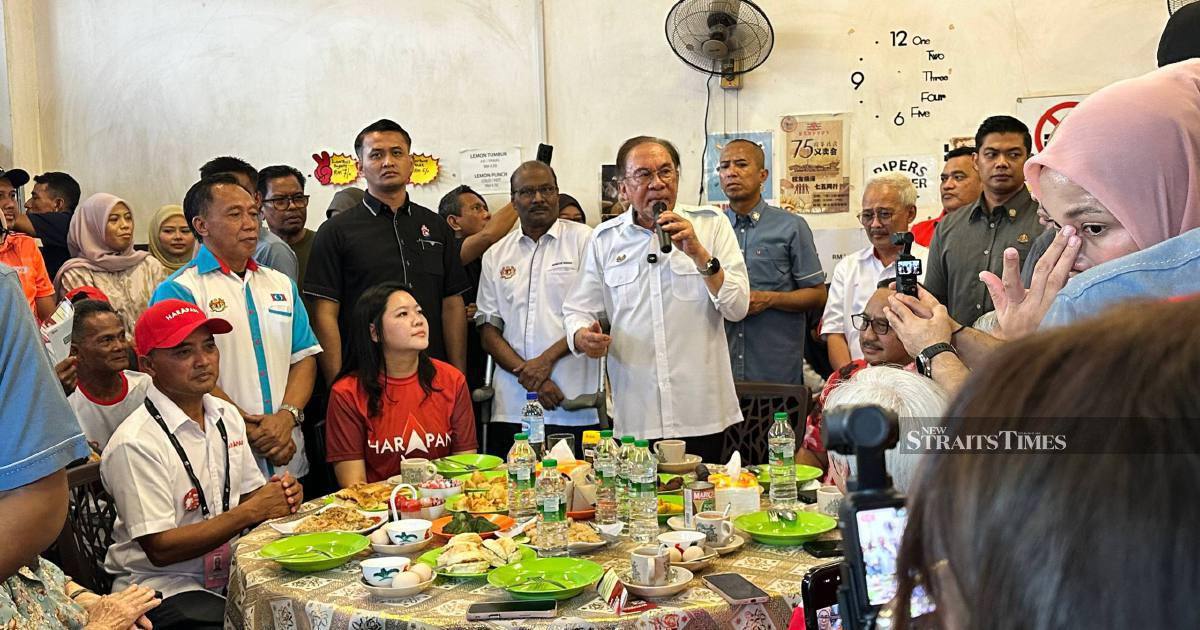
Prime Minister Datuk Seri Anwar Ibrahim's on-the-ground campaign work during the Johor state election push has delivered a crucial lift to Pakatan Harapan's operational momentum, particularly as volunteers and party machinery focused their efforts on the Machap and Layang-Layang constituencies. The visit, coming nine days before voters head to polling stations on July 11, underscored the coalition's determination to secure ground-level enthusiasm at a pivotal stage of the campaign cycle.
The presence of a sitting prime minister in active campaign mode carries substantial symbolic weight in Malaysian electoral contests. Beyond the immediate optics, such visits typically galvanise local party networks that depend on sustained energy and messaging coherence to effectively reach voters across door-to-door canvassing, community engagement, and voter contact operations. For Pakatan Harapan machinery at the grassroots level in these constituencies, the timing of Anwar's appearance represented an opportunity to consolidate volunteer commitment and reset campaign narratives heading into the campaign's final stretch.
Machap and Layang-Layang occupy strategically distinct positions within Johor's electoral landscape. These constituencies have historically reflected broader state-level voting patterns, yet each carries its own demographic composition and local political dynamics that demand tailored approach strategies. The twin focus on both areas suggests Pakatan Harapan's assessment that these seats represent competitive terrain where marginal improvements in turnout, messaging penetration, and voter persuasion could prove decisive.
The Johor state election itself carries significance beyond the constituent 56 state assembly seats at stake. As one of Malaysia's largest states by population and economic output, Johor's political direction influences broader regional stability and federal-state governance considerations. For Pakatan Harapan, a coalition that experienced substantial electoral gains in recent years, maintaining or expanding its footprint in Johor directly impacts the coalition's credibility and resource allocation capacity in other states where it contests seats.
Campaign momentum in Malaysian elections operates as a measurable phenomenon that astute observers track through volunteer deployment rates, event attendance, social media amplification, and the organisational bandwidth parties can sustain across their networks. A prime ministerial visit typically generates local media coverage, energises previously lukewarm supporters into active participants, and demonstrates institutional backing that lower-profile candidates or local leaders might struggle to generate independently.
The Machap area encompasses mixed urban-rural demographics that require messaging addressing both urban service delivery concerns and rural economic sustainability questions. Party machinery in such constituencies must navigate distinct voter priorities—urban residents may prioritize infrastructure and cost-of-living issues, whilst rural communities focus on agricultural support, rural development allocation, and traditional livelihood protections. Anwar's appearance allowed Pakatan Harapan to project unified leadership that acknowledges these competing demands.
Layang-Layang presents a somewhat different electoral profile, presenting Pakatan Harapan with distinct challenges and opportunities around voter demographics, ethnic composition, and incumbent party performance records. The coalition's ability to penetrate these constituencies depends substantially on volunteer confidence and messaging clarity, both of which can deteriorate without active leadership presence and strategic reinforcement during intensive campaign periods.
Campaign dynamics accelerate significantly during the final fortnight before polling day, as undecided voters solidify preferences and competing parties make final resource and personnel commitments. This window represents the campaign phase where leadership visibility, supporter mobilisation, and media advantage become particularly consequential. Anwar's campaign engagement positioned Pakatan Harapan to exploit this window effectively by channelling additional attention and organisational resources toward constituencies identified as winnable or vulnerable.
The coalition model that Pakatan Harapan represents requires sustained coordination across multiple constituent parties, each with distinct bases, priorities, and organisational capacities. Maintaining unified messaging and volunteer enthusiasm across such a structure demands constant reinforcement from senior leadership. Prime ministerial campaign engagement serves as a practical tool for maintaining coalition coherence whilst simultaneously advancing the electoral objectives in specific constituencies.
For Malaysian voters assessing coalition competence and seriousness about electoral prospects, a prime minister actively campaigning in marginal territory signals confidence and commitment to victory. Such engagement creates material campaign momentum through increased volunteer mobilisation, enhanced local news coverage, and psychological reinforcement effects that translate into turnout and persuasion dividends on election day itself.
The trajectory toward July 11 polling day will reveal whether Anwar's campaign visit translated into measurable ground-level improvements for Pakatan Harapan in these constituencies. Election outcomes ultimately depend on millions of individual voting decisions, yet the organisational foundations, volunteer morale, and campaign narrative clarity that leadership engagement establishes during intensive campaign periods frequently correlate with electoral performance. The Johor contest will provide substantial data regarding these dynamics as one of Malaysia's most consequential state-level elections in recent years.

