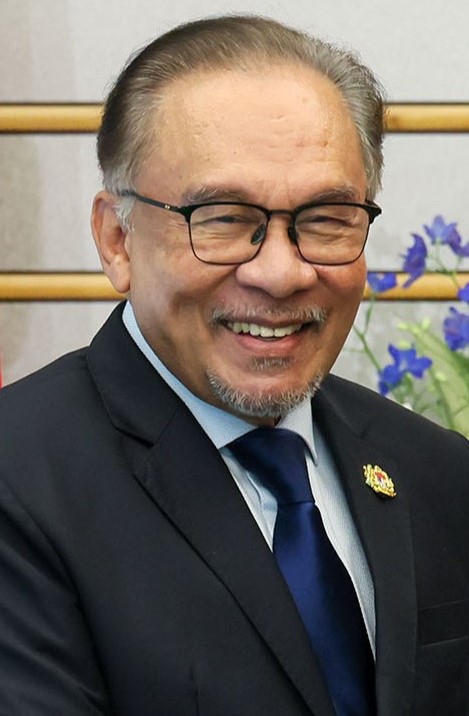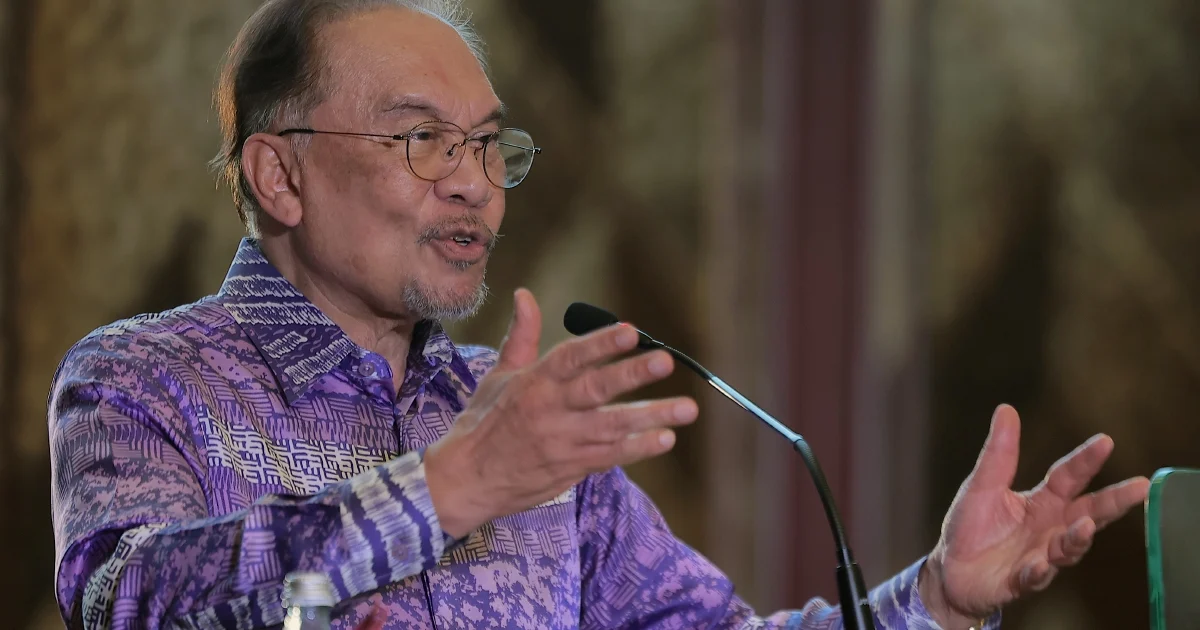
Prime Minister Datuk Seri Anwar Ibrahim will undertake a significant diplomatic mission to Kazan beginning June 17, where he is expected to hold substantive discussions with Rais of the Republic of Tatarstan Rustam Minnikhanov during an intensive two-day working visit. The timing of this engagement reflects Malaysia's strategic interest in cultivating deeper institutional links with the Russian Federation at both bilateral and regional levels, particularly as emerging economies navigate shifting geopolitical dynamics across the Eurasian continent.
The visit to Tatarstan's capital carries particular resonance given the republic's prominence as an economic and cultural hub within Russia's federation. Tatarstan maintains significant influence over regional trade corridors and energy infrastructure that span from Eastern Europe through Central Asia, positioning it as a key interlocutor for Southeast Asian nations seeking to expand commercial partnerships beyond traditional Western markets. As Malaysia continues to position itself as a non-aligned mediator in international affairs, engagement with subnational Russian leaders complements Kuala Lumpur's efforts to maintain equidistant relations across competing power blocs.
The bilateral dimension of this visit encompasses multiple policy areas that hold strategic importance for Malaysia's medium-term interests. Expanding trade relations between Kuala Lumpur and Moscow has become increasingly relevant as international sanctions reshape supply chains and redirect commerce toward willing partners. Malaysian enterprises operating in commodity sectors, manufacturing, and technology stand to benefit from closer institutional connections with Russian counterparts, particularly in sectors where Western companies have reduced their operational footprint. Furthermore, the aviation and energy sectors represent domains where both nations possess complementary expertise and commercial opportunities.
Beyond the bilateral framework, Anwar's engagement with Minnikhanov addresses Malaysia's capacity to exercise leadership within the Association of Southeast Asian Nations on matters concerning great power relations. ASEAN's established principle of strategic autonomy requires member states to cultivate productive relationships with multiple global players, and Malaysia's diplomatic initiatives in this regard help maintain ASEAN's collective room for manoeuvre amid superpower competition. By engaging directly with influential Russian regional officials, Malaysia signals both ASEAN's independence from Western-led institutional frameworks and the bloc's commitment to inclusive regional architecture.
The two-day format of this working visit suggests a comprehensive agenda extending beyond ceremonial exchanges. Such engagements typically incorporate business roundtables, technical discussions on specific cooperation mechanisms, and exploratory conversations regarding potential collaboration in multilateral forums. Malaysian government officials have previously indicated interest in expanding cooperation through mechanisms such as the Eastern Economic Forum and other regional platforms where Russian and Southeast Asian stakeholders intersect.
Tatarstan itself occupies a distinctive position within Russian federalism, possessing considerable autonomy in foreign relations and economic policy. This semi-autonomous status has historically enabled the republic to pursue independent commercial initiatives and maintain robust international partnerships. For Malaysian delegations, this characteristic offers advantages in negotiating arrangements that might navigate around federal-level constraints or international restrictions that constrain bilateral state-to-state relations.
The geopolitical context surrounding this visit remains crucial for understanding its significance. Western sanctions imposed following military developments in Ukraine have compelled Russia to reorient its economic and diplomatic strategy toward Asia, where emerging markets present both commercial opportunities and political alignment on questions regarding international order and non-interference. Malaysia, as a prominent developing economy within a major regional grouping, represents precisely the type of strategic partner Moscow seeks to cultivate during this period of structural repositioning.
From Malaysia's perspective, this engagement reflects a calculated approach to great power relations that avoids zero-sum thinking while protecting national interests. The Malaysian government has consistently articulated its preference for regional stability, dialogue over confrontation, and the preservation of international laws and norms—positions that require active diplomacy across all major power centres rather than alignment with any single bloc. The Kazan visit exemplifies this doctrine in practice.
Energy security considerations underpin much of the strategic calculus driving closer Malaysia-Russia engagement. As regional demand for hydrocarbon resources and electricity remains robust, maintaining diverse supplier relationships becomes increasingly important for Southeast Asian economic stability. Russia's capacity as a global energy exporter, combined with its emerging partnerships across Asia, creates natural intersections with Malaysian energy security strategy. Discussions during the Kazan visit will likely address not only bilateral energy cooperation but also potential collaboration on regional energy infrastructure development.
Tatarstan's specific strengths in petrochemicals, aviation manufacturing, and information technology sectors align meaningfully with Malaysian capabilities and development priorities. The possibility of joint ventures, technology transfer arrangements, and collaborative research initiatives in these domains could generate tangible economic benefits for both jurisdictions. Equally, cultural and educational exchanges between Tatarstan and Malaysia would strengthen people-to-people connections underpinning broader diplomatic relationships.
The timing of Anwar's visit also reflects ASEAN's evolving engagement with Russia, particularly within the ASEAN Regional Forum and East Asia Summit frameworks where Moscow participates as an external dialogue partner. Malaysia's leadership in articulating ASEAN perspectives and mediating between regional and external powers makes bilateral missions such as this visit crucial for maintaining consensus among member states regarding Russia policy and broader questions of regional architecture.
Looking forward, the Kazan visit represents an early phase in what may evolve into a more structured partnership framework encompassing trade, investment, cultural exchange, and multilateral cooperation. Success in this initial engagement could lead to reciprocal visits at higher levels, establishment of joint commissions addressing specific sectors, and coordination within regional multilateral mechanisms where both nations maintain influence.