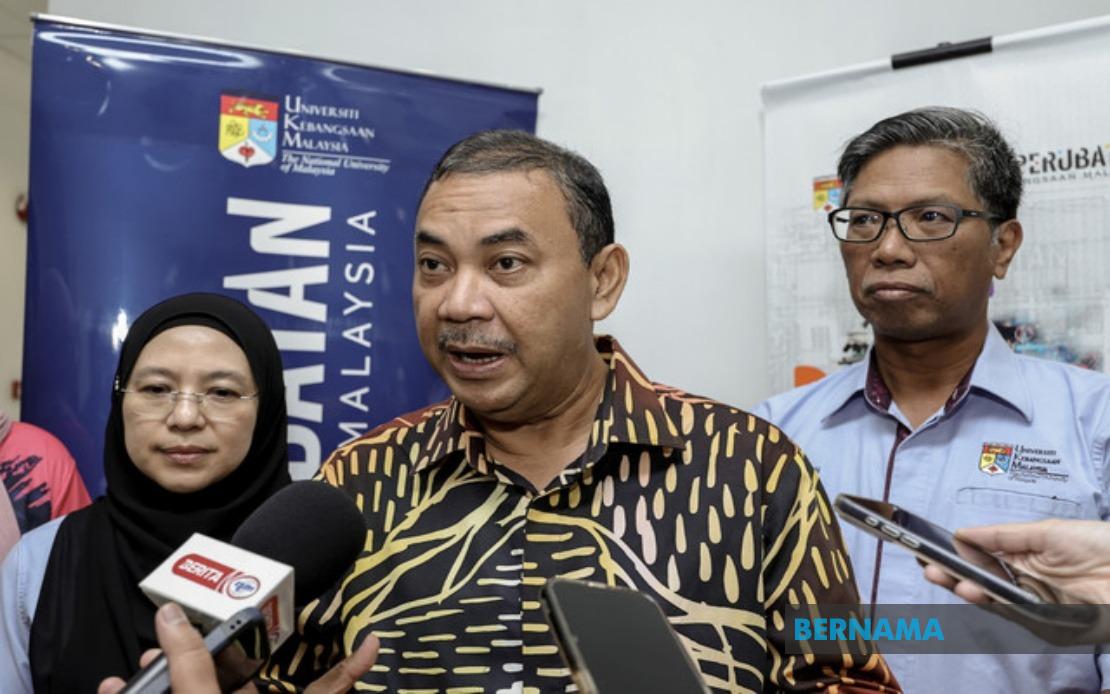
The MADANI Government under Datuk Seri Anwar Ibrahim has garnered broad acknowledgement for its economic stewardship and fiscal management, according to the Prime Minister's political secretary Datuk Azman Abidin. Speaking in Kuala Lumpur on August 19, Azman contended that the administration's accomplishments across investment attraction, macroeconomic indicators and currency performance have earned recognition from diverse stakeholders, strengthening the case for electoral endorsement of continued governance.
Azman's remarks reflect growing political confidence within the government's inner circle regarding its track record. By framing the achievements as universally acknowledged rather than contested, he positioned the administration's tenure as one deserving renewal based on demonstrable results rather than rhetoric. This messaging strategy appears calibrated to counter opposition narratives and appeal to swing voters concerned primarily with economic outcomes and stability.
The endorsement of Anwar's capabilities comes amid intensifying political jockeying ahead of the next general election. Political analysts quoted by Azman have publicly assessed the MADANI Government as performing strongly and worthy of space to advance its reform agenda. This external validation carries political weight, particularly when referenced by government officials seeking to build momentum for the administration's re-election bid. The framing suggests confidence that electoral calculations will favour continuity over change.
Economic performance has indeed become central to the government's political narrative. Currency stability, often viewed as a barometer of investor confidence and macroeconomic health, features prominently in Azman's assessment. For Malaysia's export-dependent economy and middle-class consumers, a steady ringgit carries tangible implications—affecting import costs, loan repayment burdens for foreign borrowings, and competitiveness in global markets. The government's apparent success in this domain represents a meaningful achievement worthy of emphasis to economically conscious voters.
Beyond the immediate political context, Azman's statements hint at an expansive agenda ahead. He referenced several initiatives and policy announcements anticipated from Anwar in the lead-up to National Day and Malaysia Day celebrations, as well as Budget 2027. This staggered release of announcements suggests a coordinated effort to maintain political momentum and deliver tangible benefits—from infrastructure projects to subsidy measures—that resonate across voter demographics during a critical electoral cycle.
The government's commitment to ensuring that policy benefits reach all societal segments underscores an awareness that economic growth alone may not suffice politically. While national aggregates may show robust expansion, lived experience varies dramatically by income group, region and sector. The emphasis on inclusive distribution indicates recognition that electoral viability depends on translating macroeconomic gains into household-level improvements, particularly for lower and middle-income Malaysians who form the crucial swing voter base.
Azman's confidence in public wisdom regarding electoral choices reflects optimism about voter discernment, though it also contains an implicit assumption that voters will prioritize economic metrics over other governance dimensions. This framing implicitly directs public attention toward quantifiable achievements—foreign direct investment flows, GDP growth, ringgit performance—rather than qualitative assessments of institutional integrity, policy inclusivity or democratic health.
On the educational front, Azman's presence at the STEM Exploration 2.0 programme at Universiti Kebangsaan Malaysia illustrated the government's parallel emphasis on skills development and future competitiveness. His advocacy for elevating STEM education from optional to essential reflects broader regional anxieties about technological capability and competitive positioning in an increasingly technology-driven global economy. Southeast Asian nations, including Malaysia, face mounting pressure to develop technical expertise and reduce dependence on foreign talent and technology imports.
The initiative's expansion from 200 participants across Kuala Lumpur, Selangor and Negeri Sembilan toward national coverage signals ambition to democratize access to scientific training. Early exposure to STEM fields and career pathways helps address skill shortages and potentially reshapes educational trajectories for talented youth who might otherwise lack such opportunities. For a country positioning itself as a regional innovation hub, this investment carries strategic significance beyond immediate electoral considerations.
Azman's rhetoric about statesmen and scientists beginning with foundational knowledge and deliberate steps represents aspirational framing aimed at mobilizing youth engagement with technical disciplines. The metaphor of incremental progress toward excellence resonates particularly in an educational context, positioning scientific pursuits as achievable through determination and structured learning rather than innate genius or privilege. This messaging may influence parental and student attitudes toward STEM careers, which typically command premium salaries and offer robust career security.
The integration of medical technology—specifically 3D printing applications in healthcare—within the STEM programme grounds abstract scientific concepts in practical, health-relevant contexts. For Malaysian students contemplating career choices, demonstrating how innovations solve real medical problems increases relevance and appeal compared to purely theoretical instruction. This pedagogical approach aligns with international best practices in STEM education and may help address persistent local shortages in medical technology specialists and biomedical researchers.
Politically, the government's visible investment in youth development and scientific education serves multiple constituencies simultaneously. It appeals to parents concerned about children's future prospects, to educators seeking modern resources and frameworks, and to industry sectors dependent on pipeline talent. The optics of government leadership attending educational initiatives also counter narratives of administrative detachment from ground-level concerns.
The broader political calculus seems to hinge on a multifaceted approach: maintaining economic credibility through highlighted achievements, delivering targeted benefits through policy announcements during festive periods, investing in long-term human capital development, and projecting confidence that voters will reward demonstrated competence. Whether this approach suffices to secure electoral renewal remains contingent on numerous variables beyond the government's immediate control—global economic conditions, opposition effectiveness, evolving voter preferences, and unforeseen crises all shape electoral outcomes.

