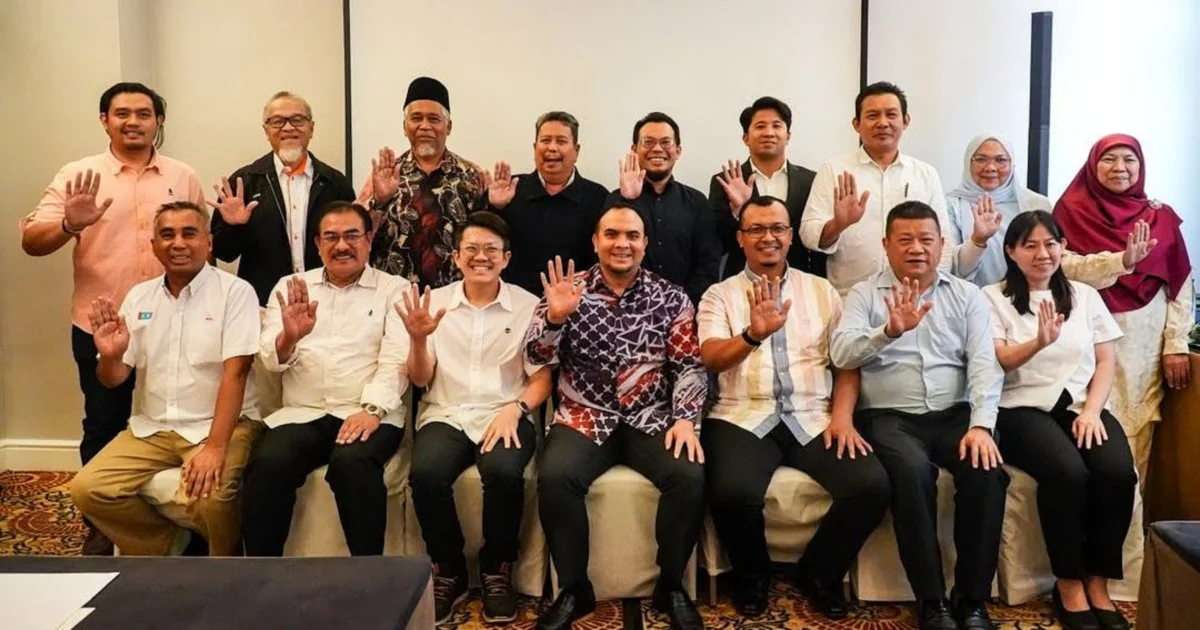
Datuk Ahmad Farhan Fauzi, who serves as Prime Minister Datuk Seri Anwar Ibrahim's political secretary, has assumed the position of Pahang Pakatan Harapan chairman. The appointment underscores the premier's intention to anchor coalition operations in the eastern state through a trusted aide, effectively positioning his political machinery to strengthen PH's foothold in one of Malaysia's most electorally significant states.
Pahang holds considerable strategic weight within Malaysia's political landscape. As the largest state by land area and home to a substantial electorate, the state's contribution to parliamentary and state assembly seats makes it a critical battleground during general elections. The choice of Ahmad Farhan to lead the regional coalition indicates that Prime Minister Anwar views the consolidation of PH's presence in Pahang as instrumental to his broader political agenda. By placing his own political secretary in this role, Anwar ensures direct oversight and coordination between federal coalition strategies and ground-level operations in the state.
Ahmad Farhan's elevation reflects a pattern within Malaysian politics where proximity to the prime minister translates into expanded responsibility and influence. As the holder of Anwar's political secretary position, he would already possess deep familiarity with the administration's priorities, policy directions, and strategic calculations. This institutional knowledge proves invaluable when attempting to align a state-level coalition chapter with national governing objectives. The appointment therefore functions as both recognition of his capabilities and a practical mechanism for extending the prime minister's political reach into Pahang's grassroots networks.
The timing of this announcement carries implications for the ruling coalition's preparedness in anticipation of future electoral cycles. Pakatan Harapan has faced considerable challenges in recent years, including the defection of key component parties and internal fractures that weakened its electoral performance. Reconsolidating leadership structures, particularly in states where PH maintains traditional support bases, represents a defensive and offensive strategy simultaneously. A strengthened state chapter leadership under a figure loyal to the prime minister can both stabilise existing party members and project renewed organisational confidence to wavering supporters.
Pahang's political dynamics have shifted considerably over the past decade. The state government alternated between PH and Barisan Nasional control, with voter sentiment proving volatile across successive elections. For Anwar's administration, reversing any erosion of PH support in the state becomes crucial to maintaining the coalition's parliamentary majority. A coordinated, well-resourced state leadership structure helps address localised grievances, optimise candidate selection processes, and marshal campaign efforts during critical electoral periods. Ahmad Farhan's appointment signals intent to treat Pahang not as a peripheral concern but as central to coalition survival.
The choice of a politician closely aligned with the prime minister also raises questions about internal party dynamics within PH's Pahang chapter. Previous state leadership may have pursued directions at variance with federal coalition preferences, or personality conflicts might have impeded organisational efficiency. Appointing someone with direct access to the premier's office potentially reshapes decision-making authority within the state coalition. This consolidation approach could either rejuvenate party structures through decisive leadership or, conversely, breed resentment among mid-tier party figures displaced or sidelined by the new arrangement.
From a Southeast Asian perspective, such appointments reflect broader governance patterns where prime ministers extend executive authority through political secretaries into regional party structures. Similar models appear across the region, where central leadership maintains channels of influence independent of formal state party hierarchies. For Malaysian observers accustomed to federal-state political tensions, Ahmad Farhan's dual role as both the prime minister's aide and state coalition chairman effectively collapses potential separation between these power centres, enabling faster decision implementation but also concentrating authority.
The appointment also carries implications for component parties within PH operating in Pahang. Organisations like the Democratic Action Party, Amanah, and others must coordinate their state strategies through Ahmad Farhan's leadership. This arrangement requires consensus-building across party lines, testing PH's cohesion precisely when internal strains have previously threatened the coalition's stability. Whether Ahmad Farhan can navigate these tensions whilst maintaining his loyalty to Prime Minister Anwar will determine whether this appointment strengthens or complicates the coalition's functioning in the state.
Looking ahead, the success of this structural change depends partly on Ahmad Farhan's political acumen and partly on macroeconomic and national political trends beyond his control. Economic performance, federal government popularity, and competitor party strategies will all influence Pahang voters' ultimate decisions. Nevertheless, by installing a trusted aide in this position, Anwar has signalled that PH's eastern operations warrant close attention and sustained investment of political capital.

