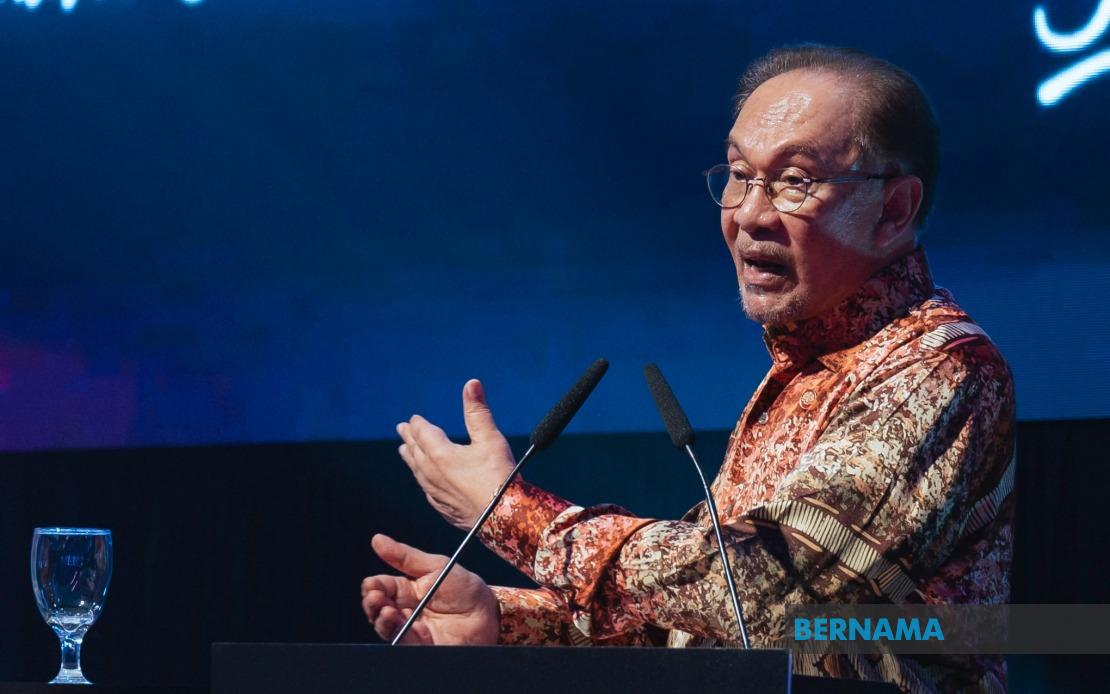
Prime Minister Datuk Seri Anwar Ibrahim's recent comments on Taiwan have drawn scrutiny, particularly his acknowledgement of China's position that force may become necessary should peaceful reunification efforts fail. Yet interpreting these remarks as a call for war misses the deeper argument rooted in classical deterrence theory and the principle that no state willingly accepts territorial dissolution. Anwar's statements warrant careful examination within Malaysia's diplomatic framework and the broader context of regional stability, where such nuances carry significant weight for Southeast Asian nations caught between major powers.
At the heart of Anwar's argument lies a distinction fundamental to international relations: maintaining the capacity for action differs fundamentally from advocating its use. When he invoked Malaysia as an analogy, the Prime Minister was articulating a position shared across virtually all nation-states—that no government would passively accept the dismemberment of its federation or territorial dissolution. This principle transcends ideology or geography. A state's willingness to defend itself, including through military means if necessary, serves as a stabilising rather than destabilising force when exercised as deterrence rather than as an aggressive posture. The credible possibility that consequences will follow aggression often prevents aggression from occurring in the first place.
Deterrence operates on a paradox: the option of force exists precisely so it need never be used. This logic underpins nuclear strategies, conventional military doctrine, and diplomatic posturing worldwide. When a nation renounces the capacity or will to resist territorial challenge, it inadvertently invites such challenges by removing the cost-benefit calculation that otherwise discourages them. Anwar's observation reflects this understanding—that deterrence requires the adversary to believe that attempting coercion will prove costly. Without this credible possibility, even states genuinely committed to peaceful resolution become vulnerable to pressure and ultimatums. The framework prioritises negotiation, law, and political settlement as the primary instruments of dispute resolution, while reserving defensive capacity as an ultimate safeguard.
Malaysia's official position on Taiwan complicates these arguments in ways that deserve close examination. Malaysia recognises the People's Republic of China as the legitimate government of China and does not extend diplomatic recognition to Taiwan as a separate sovereign entity. Simultaneously, Malaysia maintains substantial economic relationships and people-to-people exchanges with Taiwan that reflect pragmatic engagement. Within this carefully calibrated One China policy, Anwar's reasoning acquires particular significance. If Malaysia formally accepts the One China principle, he suggests, it cannot simultaneously dismiss as wholly illegitimate Beijing's concerns about territorial integrity and national reunification. This does not constitute endorsement of any particular method—including coercion—but rather recognition that China's stated position on this matter reflects calculations about sovereignty that parallel those any nation might make about its own territorial coherence.
The analogy extends further when considering Malaysia's federal structure and regional composition. Just as Malaysia would resist any attempt to detach Sabah, Sarawak, or Peninsular Malaysia from the federation, Beijing views Taiwan's status through a lens of national integrity. Acknowledging this parallel does not require agreement with Beijing's preferred solutions or timeline. Rather, it demands intellectual honesty about the legitimacy of concerns regarding territorial reunification, separate from debates over methods and timelines. The distinction proves crucial for Malaysian policy-makers navigating between recognition of China's legitimate interests and firm advocacy for peaceful, consensual resolution of disputes.
Taiwan's perspective, conversely, rests on fundamentally different ground. Taipei sees Taiwan as a sovereign, functioning democracy with its own government, military, and democratic institutions—not a breakaway province awaiting reintegration but a separate polity with legitimate claim to self-determination. This position directly contradicts the One China framework Malaysia officially adopts. For Taiwan's government and those who support its democratic system, any reference to potential use of force carries inherent coercive implications regardless of how deterrence theory frames them. The Taiwanese experience—with decades of island self-governance following military separation from the mainland—shapes a national identity distinct from Chinese identity, making forced reunification unacceptable to significant portions of Taiwan's population regardless of military calculations.
The practical implications for Southeast Asia of any Taiwan Strait conflict extend far beyond the immediate parties involved. Malaysia, as a maritime trading nation and ASEAN member, faces potentially catastrophic consequences from military escalation across the Taiwan Strait. The region depends fundamentally on freedom of navigation through these waters for commercial survival; any conflict would disrupt supply chains, fragment semiconductor production networks, and undermine the economic interdependence that currently binds the region together. Japanese, South Korean, and Southeast Asian economies remain deeply integrated with Taiwan's manufacturing base. A conflict scenario would test ASEAN's cherished non-alignment principle while forcing member states into untenable positions between economic necessity and political pressure from major powers.
Within this precarious regional context, Malaysia's continued emphasis on restraint, dialogue, and peaceful resolution mechanisms becomes not merely diplomatic preference but strategic necessity. Anwar's statements should properly be understood as articulating Malaysia's commitment to understanding all parties' legitimate concerns while firmly opposing military solutions. The position is not neutrality—which would imply indifference—but rather active commitment to de-escalation and negotiated settlement. Malaysia can acknowledge the strategic logic of deterrence while simultaneously advocating for institutions, confidence-building measures, and diplomatic channels that reduce the likelihood deterrence ever requires actual implementation.
A critical misreading of Anwar's remarks emerges when interpreting them as endorsement of coercion against Taiwan or abandonment of Malaysia's peaceful inclinations. Rather, they reflect sophisticated realist thinking that neither side can credibly commit to accepting outcomes that fundamentally alter their security or territorial status without reservation. Taiwan's democratic system and identity represent legitimate political facts on the ground; simultaneously, China's reunification objectives reflect deeply held national aspirations rooted in historical experience. Neither side will simply dissolve these commitments through diplomatic pressure alone. Recognising these realities does not necessitate accepting war but rather understanding why negotiated solutions require addressing underlying concerns about security, dignity, and future status rather than demanding unconditional surrender by either party.
Malaysia's balanced posture—maintaining One China recognition while avoiding endorsement of coercive methods—mirrors the careful calibration required across Southeast Asia. Regional states benefit from acknowledging that Beijing has legitimate interests in Taiwan's status while simultaneously supporting international norms prohibiting unilateral territorial change through force. They can support peaceful negotiation without demanding that either side abandon core interests or accept predetermined outcomes. This approach respects Malaysian policy continuity while reinforcing commitment to regional stability and the principles undergirding ASEAN's founding. Anwar's remarks, properly understood, contribute to this framework by explaining how Malaysia's One China policy accommodates recognition of legitimate state interests in territorial integrity while maintaining firm opposition to military solutions.
The broader principle underlying Anwar's argument—that states maintain military capacity not to wage war but to prevent it—reflects strategic wisdom accumulated across centuries of international practice. Weakness invites pressure; strength, paradoxically, can deter aggression by ensuring that attempts at coercion become prohibitively costly. Malaysia's own regional relationships, including with larger neighbours and major powers, depend partly on credible capacity to defend its interests while demonstrating preference for peaceful resolution. The same logic applies globally: deterrence stability—the condition where both sides believe escalation serves nobody's interests—depends on each side believing the other possesses both capacity and resolve to defend core interests. When Malaysian leaders articulate this understanding, they contribute to international stability even when such articulation proves diplomatically awkward or subject to misinterpretation.

