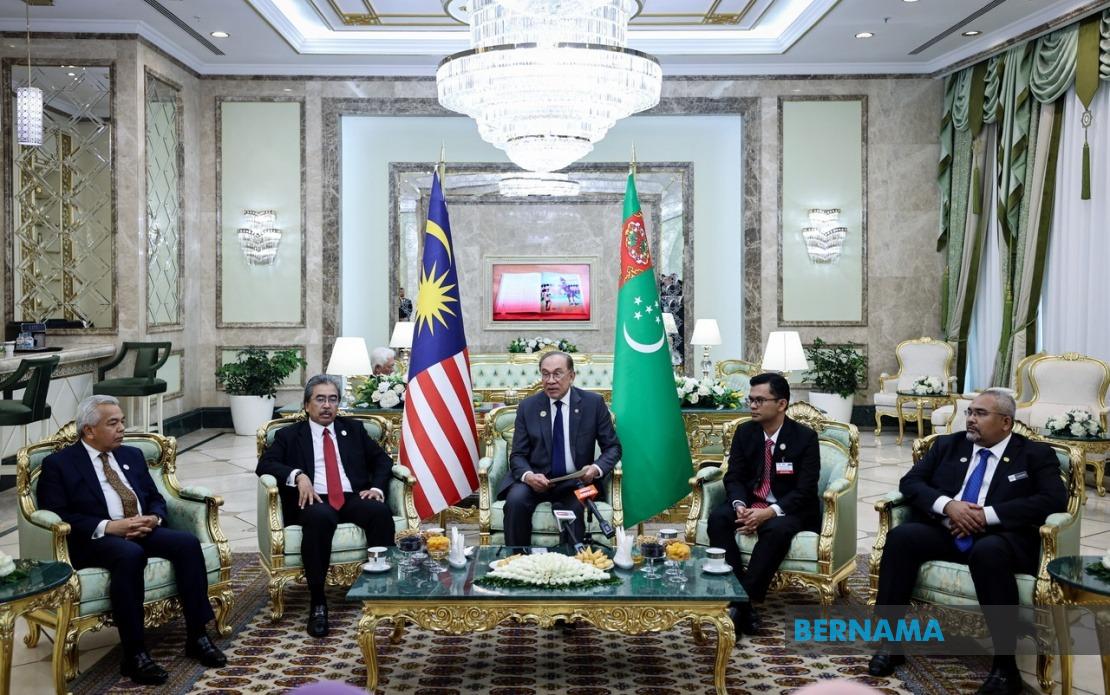
Prime Minister Datuk Seri Anwar Ibrahim has returned from a two-day official working visit to Turkmenistan declaring the trip a success in deepening Malaysia's engagement with the Central Asian nation. Speaking through a Facebook post, Anwar characterised the diplomatic mission as having fulfilled its primary aims of reinforcing friendly relations and laying groundwork for substantive strategic cooperation across multiple sectors of mutual benefit to both nations.
The visit, which commenced on June 18, marks Anwar's inaugural official journey to Turkmenistan since his elevation to the premiership in November 2022. The timing and nature of the trip underscore Malaysia's strategic interest in diversifying its international partnerships beyond traditional regional and Western alignments, particularly towards resource-rich nations in Central Asia that offer complementary economic opportunities.
Central to the discussions during the visit was the energy sector, which both countries recognised as presenting considerable potential for expanded bilateral engagement. Malaysia's growing energy demands and Turkmenistan's substantial hydrocarbon reserves create a natural foundation for deeper commercial ties. This focus reflects broader Malaysian foreign policy positioning to secure diverse energy supplies and reduce dependence on any single regional source, a concern that has gained urgency given global energy market volatility and the energy transition challenges facing Southeast Asia.
Anwar extended formal gratitude to President Serdar Berdimuhamedov and the Turkmenistan delegation for the reception accorded to the Malaysian party, signalling the importance placed on the relationship from both capitals. The warm diplomatic reception serves as a foundation for translating political goodwill into concrete economic arrangements and institutional frameworks that can facilitate sustained cooperation beyond the immediate visit.
The Prime Minister's delegation comprised high-level officials essential to advancing Malaysia's economic and trade interests abroad. Minister of Investment, Trade and Industry Datuk Seri Johari Abdul Ghani and Minister of Economy Akmal Nasrullah Mohd Nasir accompanied Anwar, their presence indicating the economic substance of discussions. The inclusion of PETRONAS, Malaysia's national petroleum company, underscores that energy cooperation discussions carried the weight of Malaysia's premier oil and gas enterprise, capable of translating political agreements into operational reality through specific commercial projects.
Supporting officials from the Prime Minister's Office and the Foreign Ministry ensured coordination across government agencies responsible for implementation and maintenance of diplomatic channels. The Malaysian Embassy in Ashgabat played a crucial coordinating role in preparing the ground for high-level engagement, reflecting the importance of diplomatic infrastructure in facilitating productive bilateral interaction. Security personnel and media representatives rounded out a carefully assembled delegation designed to project Malaysian professionalism and serious intent.
The characterisation of this visit as opening a new chapter in bilateral cooperation carries particular significance for Malaysia's positioning in Central Asian affairs. While Southeast Asia commands much of Malaysia's diplomatic attention, engagement with Central Asia remains underdeveloped relative to the region's strategic and economic importance. Turkmenistan, despite its significant energy endowments, remains relatively isolated internationally due to historical geopolitical factors and the nation's controlled foreign policy approach, making high-level visits from regional powers like Malaysia valuable opportunities for both nations to broaden their engagement horizons.
For Malaysia, deepening ties with Turkmenistan serves multiple objectives simultaneously. Beyond immediate energy security considerations, expanded relations with Central Asian nations contribute to Malaysia's broader positioning as a bridge between Asia's major economic and demographic centres. Enhanced presence in Central Asia can provide Malaysian enterprises with gateways to wider regional markets and investment opportunities, while also establishing Malaysia as a relevant partner in an area traditionally dominated by Russia, China, and other powers with historical roots in the region.
The energy sector emphasis reflects Malaysia's recognition that long-term economic development requires securing stable supplies of hydrocarbons during a transitional period before renewable energy sources can fully substitute fossil fuels. While Malaysia possesses some domestic energy resources, they are finite and increasingly challenged by declining reserves. Turkmenistan's position as one of the world's major natural gas exporters makes it a strategically valuable partner in securing Malaysia's energy future through potential direct supply arrangements or through regional and international energy market cooperation.
Anwar's description of the visit as having strengthened bilateral ties and expanded cooperation frameworks suggests that concrete understandings were reached during the discussions, even if formal announcements have not been immediately disclosed. The deliberate diplomatic language indicates that preliminary agreements or declarations of intent likely emerged from the Turkmenistan engagement, to be formalised through subsequent ministerial-level negotiations or institutional arrangements between the two governments.
The visit also positions Malaysia as an active participant in Central Asian affairs during a period of significant geopolitical flux in the region. While much international attention focuses on major powers' competition for influence in Central Asia, smaller regional powers like Malaysia can establish useful bilateral relationships based on pragmatic economic interests and mutual respect, offering valuable partnerships that transcend traditional Cold War or contemporary great power dynamics.
Looking forward, the success of this inaugural visit under Anwar's leadership appears likely to establish a template for regular high-level engagement between Malaysia and Turkmenistan. The groundwork laid during this trip should facilitate follow-up missions at various governmental levels, enabling the translation of political commitment into specific business arrangements, joint ventures, and institutional mechanisms that can sustain and deepen bilateral cooperation across energy, trade, investment and cultural domains.

