Prime Minister Datuk Seri Anwar Ibrahim used the ancient form of Malay poetry to convey a message about cohesion and mutual respect on his official Facebook page, a symbolic gesture that observers believe carries deeper meaning for Malaysia's current political landscape. The four-line pantun, a traditional verse form steeped in Malaysian cultural heritage, emphasised the virtues of friendship, consensus, and disciplined cooperation among colleagues. The post generated considerable momentum across social media, accumulating over 11,500 likes within two hours and sparking more than 1,700 responses from engaged citizens, many of whom replied in kind with their own pantun compositions.
The timing of Anwar's message arrives at a delicate juncture for the Federal Government, where the partnership between Pakatan Harapan and Barisan Nasional faces its most visible test since the coalitions united to form the present administration. The two blocs remain committed to their federal alliance, yet they are currently mounting vigorous and competing campaigns for control of the Negeri Sembilan state assembly. This paradox—allies during the day becoming rivals on the election trail—has created a complex political dynamic that requires careful management to prevent the cracks from destabilising the broader coalition framework that has kept Malaysia's government stable.
In the Negeri Sembilan election, which will see polls conducted on August 1 following early voting on July 28, Pakatan Harapan is contesting all 36 state seats under Anwar's leadership. Barisan Nasional, headed by Deputy Prime Minister Datuk Seri Dr Ahmad Zahid Hamidi, has fielded candidates in 25 constituencies whilst forging a tactical pact with Perikatan Nasional to maximise their collective chances. The dissolution of the Negeri Sembilan State Assembly on June 5 triggered the election process, creating a window of intense political competition that could potentially strain the relationships between federal coalition partners if not managed with considerable diplomatic skill.
Anwar's poetic intervention appears deliberately crafted to remind the political establishment and the public that despite short-term electoral competition, the overarching commitment to national stability remains paramount. By invoking traditional cultural forms and accompanying his message with a nostalgic 1980s song, the Prime Minister grounded his appeal in shared Malaysian values and collective memory. This rhetorical approach suggests a sophisticated understanding of how symbols and cultural references can communicate political messages more effectively than conventional statements, particularly in a multicultural society where poetry and music hold significant emotional resonance.
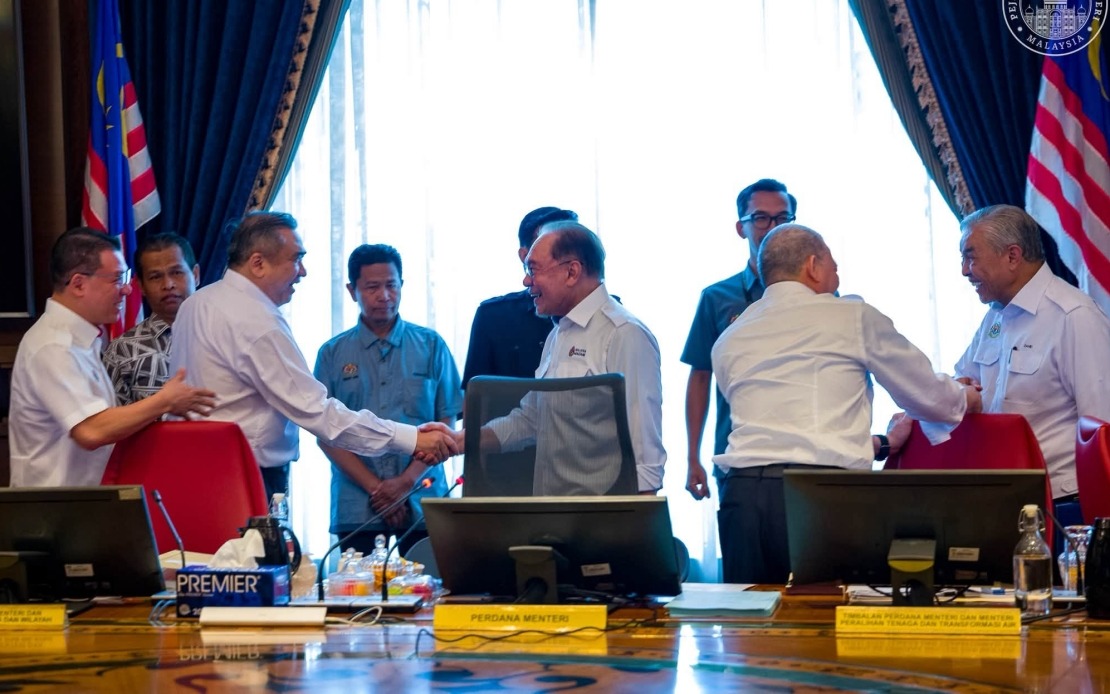
The photographs accompanying the post, featuring Anwar alongside Deputy Prime Minister Dr Ahmad Zahid Hamidi and Transport Minister Anthony Loke in relaxed settings at a Cabinet meeting, served as visual reinforcement of the unity message. The apparent camaraderie and good spirits displayed in these images countered potential narratives about tension or discord within the federal government structure. Such visual communications carry weight in the social media age, where perception often shapes political reality and where images can either amplify or diminish underlying strains within coalition relationships.
The public reception of Anwar's message reveals something significant about Malaysian society's appetite for unity messaging during periods of political competition. The enthusiastic response—both in terms of engagement metrics and the quality of online comments—suggests that citizens value leaders who can maintain perspective about the relationship between short-term electoral contestation and long-term governmental stability. The fact that many respondents chose to reply with their own pantun demonstrates that cultural forms remain powerful tools for political dialogue in Malaysia, transcending the more conventional language of policy statements and press releases.
Analysts have interpreted this intervention as a calculated reminder that the Federal Government's coherence depends on restraint from all coalition partners during state-level competitions. The Negeri Sembilan election, whilst significant in its own right, carries implications beyond that state because the manner in which PH and BN conduct their campaigns will signal their commitment to the federal arrangement. Any excessive acrimony or violations of the coalition's understood boundaries could precipitate wider instability or recriminations that might undermine the administration's capacity to govern effectively on national matters.
The Federal Unity Government that emerged after the 2022 elections represented a significant political realignment for Malaysia, bringing together parties with different ideologies and historical relationships. Maintaining this arrangement has required continuous attention to managing competing interests and preventing the resurgence of old rivalries. Anwar's intervention through cultural channels suggests a recognition that governance at this level demands not just political management but also appeal to deeper shared values and aspirations for national coherence.
For Malaysian voters and the broader Southeast Asian region observing Malaysian politics, this episode illustrates how political actors navigate the tension between competition and cooperation. It demonstrates that modern democracies frequently require leaders to compete vigorously whilst maintaining institutional relationships that serve broader national interests. The success or failure of this balancing act in Negeri Sembilan could set important precedents for how federal and state-level politics interact in Malaysia going forward, particularly if other states hold elections while the current coalition arrangement remains in place.
The Negeri Sembilan campaign will ultimately determine whether Anwar's unity message translates into actual restraint or whether the competitive pressures of electoral politics overwhelm the constraints imposed by coalition membership. The weeks ahead will reveal whether both PH and BN can maintain their partnership at the federal level whilst engaging in legitimate electoral competition at the state level, a challenge that tests the maturity and sophistication of Malaysia's political system.

