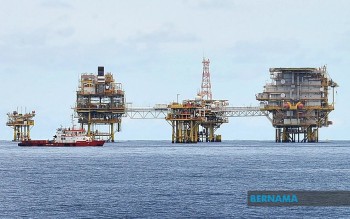
Capital investment in Asia Pacific offshore energy projects is showing resilience in the aftermath of recent West Asian geopolitical tensions, with Southeast Asia positioned to lead regional growth. Hong Leong Investment Bank projects greenfield capital expenditure across Southeast Asia will climb by 12 per cent, surpassing US$100 billion and reflecting a return to confidence in launching major new developments. The forecast suggests that despite heightened regional risks earlier this year, investors remain committed to expanding upstream capacity and new infrastructure throughout the region.
The stabilisation of offshore spending underscores a strategic pivot towards developing untapped reserves and new production facilities. The investment bank emphasises that this greenfield expansion complements ongoing activity in existing assets, where brownfield operations—involving upgrades and optimisations of established infrastructure—are equally critical. South Asia is anticipated to drive brownfield capital expenditure growth at 23 per cent, while Southeast Asia will contribute a more modest 3 per cent increase. This bifurcated approach reflects industry operators' determination to balance near-term supply resilience through maintaining current assets with longer-term growth through exploration and development of new prospects.
A critical turning point emerged with the signing of a US-Iran 14-point memorandum of understanding, which has tempered fears of prolonged energy supply disruptions. Although the ceasefire arrangement remains fragile and observers remain cautious about its durability, the diplomatic framework has created sufficient certainty for energy markets and investors to recalibrate their risk assessments. The agreement's implications extend beyond bilateral relations; it signals potential de-escalation across the broader West Asian theatre, a region that accounts for a substantial portion of global hydrocarbon flows and consequently influences energy prices affecting all regional players.
Shipping patterns along the Strait of Hormuz—the world's most critical energy chokepoint through which roughly one-third of seaborne oil transits—have begun recovering since the MOU signing. However, the picture remains complicated by vessels deliberately disabling their Automatic Identification System transponders, a practice that masks actual traffic volumes and suggests lingering caution among ship operators navigating the region. This selective use of AIS signals reflects underlying uncertainty; despite diplomatic progress, commercial actors are exercising defensive measures against potential future disruptions, revealing that confidence has not fully returned to pre-tension levels.
Hong Leong's investment thesis for the oil and gas sector rests on two interconnected pillars. The first centres on whether international energy security concerns will persist, potentially driving the maintenance of elevated strategic petroleum reserves among developed nations. Higher inventory policies would benefit regional pipeline operators and tank terminal operators throughout Southeast Asia, whose infrastructure would see sustained utilisation supporting these reserves. This outcome would create stable, predictable demand for energy logistics services across the region's ports and pipeline networks.
The second major investment driver projects a Petronas capital expenditure cycle expansion beginning around 2027, which would cascade benefits throughout Malaysia's domestic oil and gas services sector. Companies specialising in upstream development work, equipment fabrication, maintenance services, marine support, and pipeline construction stand to gain substantially from this anticipated capex surge. For Malaysian investors and service providers, this prospective upcycle represents an opportunity to capture regional opportunities as Petronas advances major projects and expands production capacity across its portfolio.
Revised oil price forecasts from Hong Leong signal expectations of moderately elevated crude costs persisting through the medium term. The investment bank has lowered its 2026 Brent crude forecast to US$80 per barrel from a previous US$90 estimate, while maintaining a US$75 projection for the following year. These price points remain substantially above pre-pandemic baselines, reflecting structural changes in global energy markets stemming from supply constraints and security premiums. The downward revisions nevertheless indicate confidence that prices will not spiral to earlier highs as regional stability improves and production recovers incrementally.
Global inventory dynamics underscore the persistence of tight energy markets. Data from the United States Energy Information Administration indicates that OECD commercial oil stocks will compress to approximately 50 days of supply by late 2026, substantially below the pre-war average of 60 days or higher. This inventory compression remains the primary driver sustaining elevated oil prices despite recent price retreats from their peaks. Until global oil flows normalise and inventory levels rebuild, crude is likely to remain underpinned by a floor price around US$80 per barrel, with potential support extending above US$75 into early 2027 should the rebuilding process extend beyond the 60-day supply threshold.
Production recovery timelines have lengthened considerably due to the severity of shutdowns across the Strait of Hormuz region. Combined shut-in volumes surged to 45 per cent of regional production by May 2026, elevated from 35 per cent recorded in March, indicating that production normalisation will unfold gradually over multiple quarters. This extended timeline for capacity restoration provides additional support for higher oil prices, as global supply deficits persist longer than initially anticipated. For Southeast Asian economies dependent on energy imports, this dynamic implies sustained upward pressure on fuel costs and energy-intensive production expenses throughout the forecast period.
Market realities have begun reflecting gradual confidence recovery, with Brent and West Texas Intermediate crude retreating to a sustainable range of US$70 to US$75 per barrel following sharp declines from their recent peaks. According to investment strategists, stabilisation within this band would provide businesses with improved cost certainty for energy-dependent operations across the region. Manufacturers relying on petroleum-based inputs, transportation operators, and power generation facilities would all benefit from predictable energy costs within this range, enabling better long-term planning and investment decisions.
Broader economic implications of stabilised oil prices extend well beyond the energy sector itself. Sustained crude pricing in the US$70-75 range would ease global inflationary pressures that have constrained growth across Asia Pacific in recent years. By reducing cost-push inflation stemming from elevated energy prices, regional economies could see improved business sentiment, stronger consumer purchasing power, and greater policy flexibility for central banks to maintain accommodative monetary stances if needed. These macroeconomic improvements would reinforce the region's economic recovery trajectory and support sustained investment across multiple sectors.
As of the latest market close, Brent crude registered at US$69.17 per barrel, up 0.90 per cent, while West Texas Intermediate rose 0.94 per cent to US$72.67 per barrel, tracking within the consensus forecast range. These modest daily movements indicate markets have digested recent geopolitical developments and established new equilibrium levels reflecting the current risk environment. For Malaysian policymakers and business leaders, current pricing levels provide a window of relative clarity to plan strategic initiatives while remaining cognisant that energy markets remain subject to headline risks from West Asian developments.

