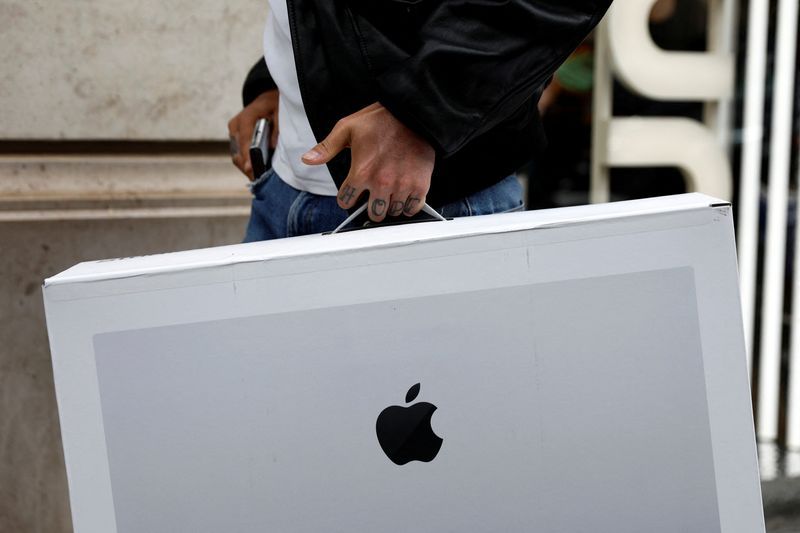
Apple has displaced Nvidia from its position as the world's most valuable publicly traded company, a symbolic moment that reflects a fundamental recalibration in how institutional investors are viewing the artificial intelligence investment thesis. Trading at approximately $4.88 trillion in market capitalisation, Apple nudged past Nvidia, which stood at roughly $4.86 trillion following a 3.5 per cent share decline on Friday. The transition marks Apple's return to the top ranking it last held in April of the previous year, interrupting Nvidia's near-year-long reign at the summit of corporate valuations.
The reshuffling of these technology giants carries significant implications for how markets are pricing the long-term winners in the AI revolution. Nvidia's dominance reflected the initial boom period when investors concentrated capital flows into companies most directly manufacturing the semiconductor infrastructure required to build and train large language models. However, the latest movement suggests that this narrow focus is giving way to a more nuanced evaluation of the entire technology ecosystem, encompassing companies positioned at various points along the artificial intelligence value chain.
Investment analysts point to a fundamental narrative shift underlying Apple's ascendancy. According to Toni Meadows, head of investment at BRI Wealth Management, the market previously dismissed Apple as a laggard precisely because the company was not pouring billions into developing proprietary artificial intelligence models, a strategy that characterised Nvidia and other chip-focused competitors. Yet this perceived weakness has transformed into a strength as investors recognise that Apple operates from a fundamentally different and potentially more sustainable business model. Rather than bearing the enormous capital expenditure burden associated with building foundational AI infrastructure, Apple can leverage its existing ecosystem and consumer base to monetise artificial intelligence through premium services, reinforced lock-in with hardware upgrades, and consumer data assets.
This reorientation of investor confidence reflects growing recognition that the artificial intelligence sector's value will not concentrate solely among infrastructure providers but will distribute across multiple layers of the technology stack. The shift also signals emerging doubts about the sustainability of current semiconductor capital expenditure levels. Nvidia's graphics processors remain essential to the generative AI infrastructure powering the current wave of model development and deployment, yet questions persist about whether spending growth can continue indefinitely at current trajectories. Apple's positioning as a consumer-facing monetisation engine rather than a pure infrastructure play appeals to investors seeking exposure to artificial intelligence without the cyclical and competitive pressures affecting semiconductor manufacturers.
Apple's milestone comes as the company undergoes significant leadership transition. Chief Executive Tim Cook is preparing to hand over operational control to John Ternus, a veteran of hardware development, in September. The timing of Apple's resurgence to the top valuation tier could reshape how Cook's tenure is ultimately assessed. Throughout much of the artificial intelligence conversation, observers had questioned whether Apple was sufficiently aggressive in pursuing the technology. The company's previous approach emphasised privacy protections and on-device processing rather than cloud-based model development, positioning it as cautious relative to competitors aggressively investing in large language models.
Apple has recently begun addressing this perception through substantive product development. The company rolled out a comprehensive overhaul of its Siri virtual assistant, a delayed initiative intended to close competitive gaps with established players and upstart competitors alike in the crucial AI applications market. The refreshed Siri represents the company's most visible effort to demonstrate competence and innovation in practical artificial intelligence deployment. Beyond this consumer-facing initiative, industry analysts highlight a potentially transformative asset that Apple possesses but has historically under-utilised: the vast personal data residing on hundreds of millions of iPhones and other Apple devices worldwide. This information trove could substantially enhance Siri's capabilities and response accuracy, providing contextual understanding impossible for generic cloud-based assistants lacking device-level user information.
Yet Apple confronts a fundamental challenge in realising this asset's potential value. The company has built its brand and customer loyalty partly upon privacy commitments, enshrining data protection within operating systems and restricting access to personal information. Extracting commercial value from this data without compromising the privacy principles that define Apple's brand positioning requires careful navigation. The company faces the intricate task of developing technical and business frameworks that unlock this data's utility while maintaining consumer confidence in privacy protections. This tension between competitive necessity and brand positioning will likely occupy significant strategic attention within Apple management.
Nvidia's displacement from the top position does not necessarily presage a permanent realignment in the companies' relative valuations. The chipmaker remains a principal beneficiary of artificial intelligence infrastructure spending and continues supplying the graphics processing units powering the generative AI wave. Market sentiment can shift rapidly, and Nvidia could reclaim the top ranking should investment conviction swing back towards infrastructure plays. Benjamin Hall, vice president of alpha research at Segal Marco Advisors, emphasises that Nvidia will remain a significant participant regardless of short-term valuation fluctuations.
However, Apple itself faces distinct vulnerabilities that could undermine its current valuation premium. The company has pursued a strategy of raising prices across its product range to offset escalating manufacturing and development costs. This approach carries inherent demand risks, particularly in markets sensitive to consumer purchasing power constraints. Economic weakness or competitor pressure could test whether consumers continue absorbing price increases, potentially affecting revenue and earnings growth trajectories.
The semiconductor sector's momentum has broadened considerably beyond the traditional chip champions. Memory chip manufacturers such as Micron Technology, which surpassed one trillion dollars in market valuation in May, have emerged as significant beneficiaries of artificial intelligence infrastructure expansion. The industry recognises that memory capacity represents a critical constraint in AI systems, offering these manufacturers substantial growth opportunities. South Korea's SK Hynix listing on the Nasdaq earlier this month further expanded the competitive landscape for investor capital within semiconductor markets.
Benjamin Hall argues that this diversification of artificial intelligence winners represents a structural market evolution. Rather than concentration of investment flows into the "Magnificent Seven" technology group, capital is increasingly spreading across a broader universe of companies positioned at various points within artificial intelligence value chains. This distribution reflects market maturation as investors move beyond initial excitement about foundational infrastructure into recognition that value creation spans multiple industrial segments.
The semiconductor sector experienced turbulence during July as investors undertook more critical reassessment of artificial intelligence sustainability. The Philadelphia Semiconductor Exchange index declined nearly nineteen per cent from its previous highs as the market questioned whether current investment enthusiasm justifies prevailing valuations. Despite this substantial correction, the index has still outperformed Nvidia individually during the calendar year, demonstrating the sector's underlying strength alongside near-term valuation pressures.

