Arab League Secretary-General Nabil Fahmy has issued a stark warning to the incoming Trump administration, demanding decisive action to constrain Israeli policies affecting Palestinians and prevent what he characterises as an impending regional catastrophe. Speaking ahead of scheduled discussions between US President Donald Trump and Israeli Prime Minister Benjamin Netanyahu in Washington, Fahmy articulated deep concern that the Middle East stands at a dangerous crossroads, with multiple flashpoints threatening to ignite simultaneously.
Fahmy's statement reflects escalating anxiety within Arab capitals about the trajectory of Israeli-Palestinian relations and broader geopolitical dynamics in the Gulf. The Arab League chief attributed current instability directly to the unresolved Palestinian question and what he termed reckless escalation tactics that characterise ongoing regional disputes. His language suggests Arab leadership views the situation as fundamentally unsustainable without immediate international intervention, particularly from Washington.
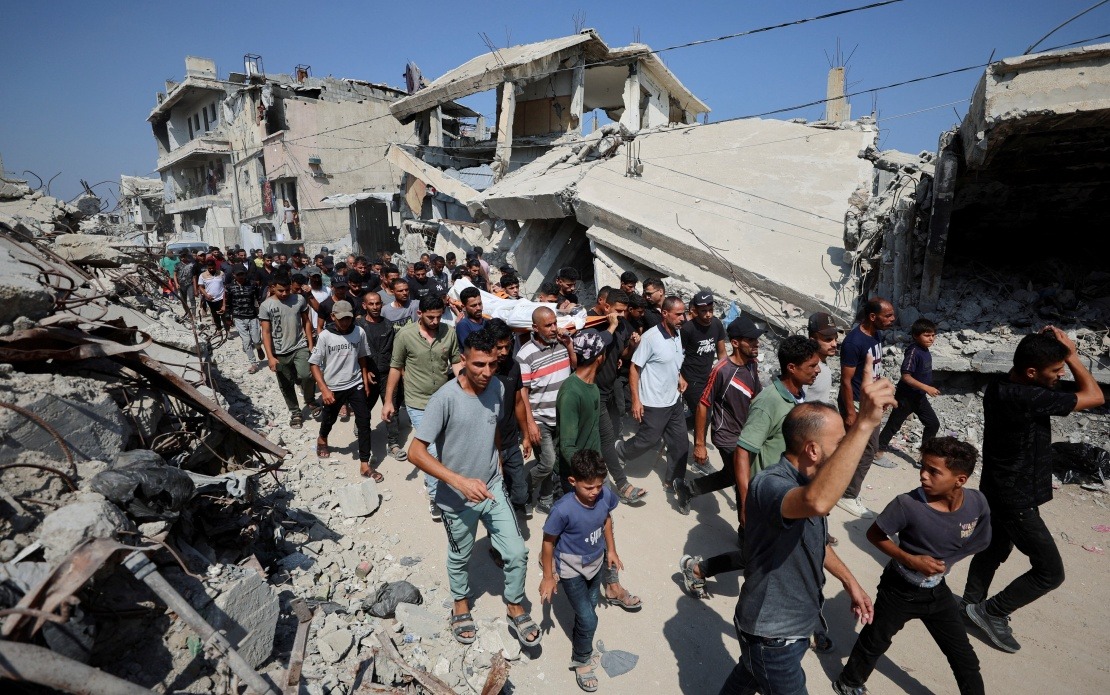
The humanitarian toll of recent violence undergirds these warnings. Since October 2023, Israeli military operations in Gaza have resulted in over 73,000 deaths and approximately 174,000 injuries according to casualty figures cited by the Arab League. Simultaneously, intensified operations in the occupied West Bank have claimed nearly 1,200 Palestinian lives during the same period. These numbers illustrate the scale of human suffering that Arab officials argue demands urgent diplomatic attention and international pressure on all parties.
The regional security landscape has deteriorated markedly over recent months, with multiple actors drawing closer to direct confrontation. The joint Israeli-American strikes against Iran in February and subsequent Iranian retaliatory operations targeting facilities in Gulf states have raised stakes considerably. Such military escalations signal how interconnected various regional conflicts have become, with actions in one theatre quickly generating reverberations across the broader Middle East.
Fahmy's appeal specifically addresses Trump's September 2025 peace initiative, which presented a 20-point framework encompassing ceasefire arrangements, prisoner exchanges, phased Israeli military withdrawal from Gaza, establishment of transitional Palestinian governance structures, and reconstruction efforts. The Arab League secretary-general explicitly called on the incoming Trump administration to prevent the Israeli government from derailing this diplomatic pathway, framing American action as essential to preventing catastrophe.
The Arab League chief's accusations focus on what he characterises as Israeli efforts to fundamentally alter Palestinian demographics and territorial presence through expanded settlement construction and displacement policies. These actions, he argues, represent attempts to erase Palestinian presence rather than negotiate coexistence. This framing reflects deep Arab conviction that current Israeli policies pursue objectives incompatible with Palestinian statehood or meaningful autonomy.
Beyond the Israeli-Palestinian dimension, Fahmy advocated for restored diplomatic engagement between the United States and Iran, positioning normalised relations as prerequisite for broader regional stability. He specifically referenced the need to ensure safe passage through critical maritime chokepoints including the Bab el-Mandeb Strait, underscoring how Israeli-Palestinian tensions connect to Gulf security concerns affecting shipping and energy supplies vital to Asian economies including Malaysia's.
The timing of Fahmy's intervention carries particular significance given uncertainty surrounding Trump's Middle East approach. The Arab League clearly seeks to establish parameters for American policy before the administration fully assumes office, attempting to shape expectations around US commitment to Palestinian interests and regional equilibrium. Fahmy's emphasis on American responsibility signals that Arab states view Washington as the only power capable of meaningful pressure on Israel.
For Malaysian policymakers, Fahmy's warnings merit serious consideration given Malaysia's longstanding commitment to Palestinian causes and significant exposure to regional instability. Any major Middle East conflict would inevitably disrupt shipping lanes critical to Malaysian trade, affect energy prices, and potentially generate refugee flows affecting Southeast Asian stability. The Arab League chief's emphasis on maritime security, particularly regarding the Bab el-Mandeb Strait, directly concerns Malaysian interests in Indian Ocean security and global commerce.
Fahmy's call for American restraint on Israeli policies represents the Arab consensus position, articulated through the Arab League's institutional voice. However, success depends entirely on whether the Trump administration proves receptive to such appeals or pursues alternative diplomatic frameworks. The Arab League's invocation of imminent regional explosion suggests Arab capitals view current circumstances as genuinely precarious, requiring immediate preventive diplomacy rather than incremental negotiations.
The fundamental challenge Fahmy articulates is whether diplomatic initiatives can be salvaged amid deepening mistrust and competing visions of acceptable outcomes. His reference to "extremist ambitions" within the Israeli government suggests Arab concerns extend beyond specific policies to fundamental strategic objectives that may prove incompatible with Arab interests. Resolution would require significant Israeli policy adjustments that current political currents within Israel appear unlikely to produce voluntarily.
As the Trump administration contemplates Middle East strategy, Fahmy's statement serves as notice that Arab states expect meaningful American action constraining Israeli actions rather than tacit acceptance. Whether Washington prioritises these concerns or alternative regional partnerships will substantially shape the coming years of Middle Eastern geopolitics and Southeast Asian exposure to consequent instability.

