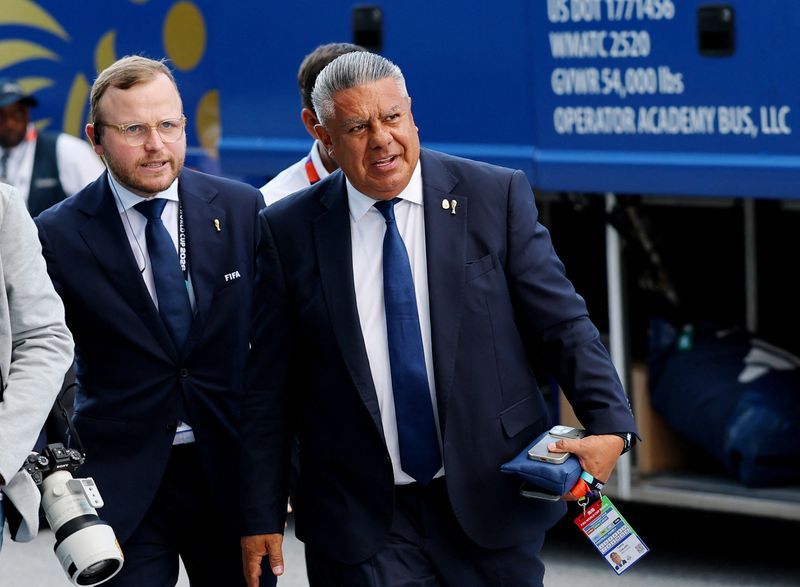
Argentina's football association issued a forceful denial on Wednesday of claims circulating in local media that its president Claudio Tapia and treasurer Pablo Toviggino had been ordered by United States courts to provide testimony. The AFA's statement sought to quash what it characterised as false reporting that suggested either official faced legal obligations in connection with an ongoing American investigation. However, the organisation's position became more nuanced when it acknowledged that unidentified third parties had indeed received subpoenas to appear before a US grand jury and potentially furnish evidence related to matters involving AFA officials and operations.
The controversy erupted following reports that federal agents had encountered Tapia and Toviggino at New York's JFK Airport on Monday morning as the Argentine national squad prepared to depart following the World Cup final. According to eyewitness accounts from the airport, the two officials were questioned for approximately 30 minutes inside a bus parked on the tarmac. Some initial reports suggested that agents had requested access to Tapia's electronic devices, a claim the AFA explicitly rejected in its statement, asserting that no phones or other devices belonging to either official had been confiscated or seized.
The underlying investigation appears far more extensive than the immediate airport encounter suggests. According to the investigation outlet Infobae, American authorities are scrutinising over $300 million in commercial contracts associated with the AFA, attempting to determine whether funds moved through these agreements were handled improperly. This inquiry forms part of a broader examination of Argentine football finances that intensified following raids conducted in December as part of a separate money-laundering investigation. The scope of the US inquiry indicates concerns extending well beyond individual transactions to systemic questions about how the AFA manages its commercial relationships and revenue streams.
The AFA's carefully worded response attempted to distinguish between what it characterised as direct legal action against its officials and the broader investigative activity. The association emphasised that the document in question—apparently a grand jury subpoena—contained no personal measures targeting Tapia or Toviggino, imposed no obligation on them to appear, and carried no seizure orders affecting their property. This legalistic parsing suggested the AFA was distinguishing between being a subject of investigation and being a target, a meaningful but subtle difference in legal terminology that may not alleviate concerns about the organisation's leadership.
The timing of the airport encounter, occurring immediately after Argentina's World Cup triumph in December, proved particularly awkward for the football association and its officials. The incident risked overshadowing the nation's sporting achievement with questions about financial governance and potential impropriety. By issuing a prompt and emphatic denial, the AFA appeared to be attempting damage control, seeking to prevent the narrative from hardening around claims of direct legal action against its senior officials.
The existence of the subpoenaed third party introduces significant uncertainty about what information US authorities are seeking and from whom. The AFA's refusal to identify this individual or organisation creates a vacuum that speculation has filled, with various theories circulating about whether the summoned party is a contractor, intermediary, or employee with knowledge of the commercial arrangements under examination. The secrecy surrounding the grand jury proceedings prevents public assessment of how serious the allegations might be or how thoroughly authorities are pursuing the investigation.
The scale of the questioned transactions—exceeding $300 million—places this investigation in a context of international concern about governance in major sports organisations. Football associations across Latin America and globally have faced scrutiny in recent years regarding financial transparency and appropriate use of commercial revenues. Argentina's situation reflects a pattern where massive sums flow through national federation accounts with sometimes limited public accountability, creating opportunities for questionable arrangements that attract official attention.
For Southeast Asian readers, this case illustrates broader governance challenges facing sports organisations globally, particularly federations managing large commercial interests. Malaysian football administrators and officials in other regional sports bodies face similar pressures regarding transparency, appropriate use of commercial revenues, and maintaining public confidence in financial management. The Argentine situation underscores how international investigations can reach across borders and implicate national federation officials in ways that damage the sport's reputation domestically and internationally.
The investigation's existence and apparent focus on specific commercial contracts suggests that American authorities have identified particular transactions warranting closer examination rather than launching a wide-ranging probe into AFA finances generally. This targeted approach indicates they likely possess specific documentation or witness testimony indicating potential impropriety rather than merely suspicions about systemic mismanagement. The cooperation of a third party willing or obliged to testify before a grand jury provides authorities with internal information they might otherwise struggle to obtain.
The diplomatic dimensions of an American investigation into an Argentine national institution remain understated but potentially significant. Argentina's government has not publicly commented on the investigation, but the involvement of its national football federation—a symbol of sporting pride—in international law enforcement proceedings carries political resonance. The AFA's vigorous denials attempt to localise the issue as a misunderstanding rather than evidence of actual misconduct by federation leadership.
Looking forward, the investigation's progress and any subsequent developments will likely emerge gradually given grand jury secrecy rules. Whether the US authorities ultimately bring charges, issue reports, or close their inquiry without public disclosure remains uncertain. For the AFA and its officials, the reputational damage may prove significant regardless of the investigation's ultimate outcome, particularly if the $300 million figure in questioned transactions continues circulating in media coverage without clarification of what portion actually involved improper conduct versus legitimately disputed transactions or contractual disputes.

