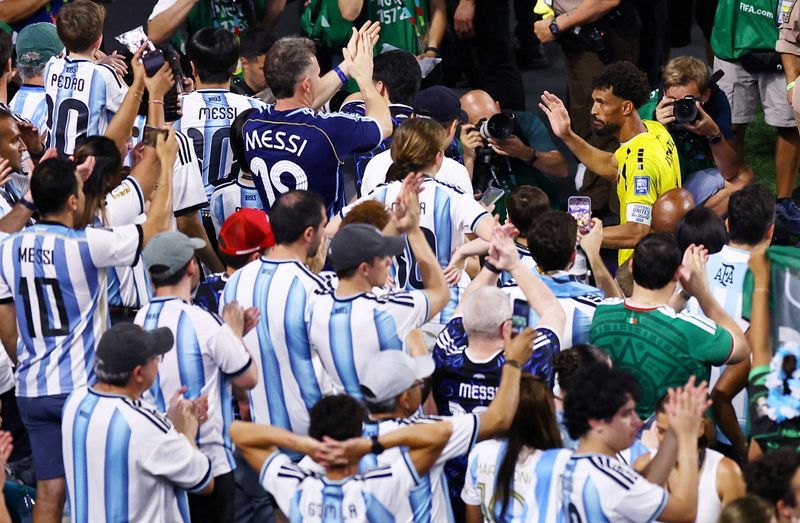
Argentina's passage to the World Cup knockout rounds came at a steeper cost than their dominant group performance had suggested, as the reigning champions required extra time to see off a spirited Cape Verde side in Kansas City on July 4. The 3-2 victory, secured through a deflected header from defender Cristian Romero in the additional period, masks deeper tactical vulnerabilities that have begun to trouble analysts and coaching staff alike as the tournament enters its decisive phase. The manner of the victory—pushed to the brink by tournament debutants who had previously drawn with established European powers—stands in stark contrast to Argentina's earlier displays, where they dismantled Algeria 3-0, defeated Austria 2-0, and overwhelmed Jordan 3-1 to top their group.
What made Cape Verde's performance particularly notable was their refusal to be overawed by their opponents' pedigree and reputation. The Island nation's team demonstrated the capacity to recover from setbacks, equalising twice throughout the match and forcing Argentina into a prolonged struggle for control. Coach Lionel Scaloni had publicly warned before the fixture that Cape Verde possessed genuine danger, pointing to their earlier draws against Spain and Uruguay as evidence of their competitive quality. Yet even this forewarning appeared insufficient to prepare observers for the defensive fragility that Argentina displayed, particularly in their inability to dominate possession and control the tempo through sustained pressing—a hallmark of championship-winning teams.
The performance has reignited discussions that had circulated since Argentina's preparations for this tournament. Observers had noted that the team's group-stage opponents, whilst respectable, lacked the intensity and sophistication of elite European sides. The only European opposition they had faced in recent warm-up matches was Iceland in June, creating a vacuum of exposure to teams capable of testing their defensive organization. This sheltered run meant Argentina's backline had avoided the kind of sustained, coordinated attacking pressure that would characterise encounters with more accomplished opponents in the knockout rounds. The Cape Verde match served as an inadvertent reality check, forcing Argentina to confront weaknesses that might prove more consequential against Egypt or subsequent opponents.
Marcelo Gallardo, the former River Plate manager who represented Argentina in the 1998 and 2002 World Cups, interpreted the narrow escape as potentially beneficial for the team's evolution in the tournament. Speaking on ESPN Argentina, Gallardo suggested that the adversity might catalyse a necessary shift in mentality and tactical execution. "It was good that this happened. There will be a reaction, there has to be a reaction," he observed, implying that the discomfort of this encounter could serve as a corrective mechanism before more demanding challenges emerged. This perspective frames the match not as a failure but as an instructive moment capable of sharpening Argentina's approach to subsequent fixtures.
Lionel Messi, who extended his World Cup goalscoring record to 20 goals with a first-half strike, offered candid insights into Argentina's tactical struggles during the encounter. The 39-year-old captain attributed the team's difficulties to their inability to maintain effective pressing, describing how the defensive line's disconnection from attacking players created gaps that Cape Verde exploited systematically. Messi's physical condition by match's end reflected the exhaustion that comes from chasing possession rather than controlling it—a reversal of the fluid dominance that characterises Argentina at their best. His acknowledgment that "the lines were too far apart" highlighted a fundamental organisational issue rather than individual player performance, suggesting the problem required collective tactical adjustment rather than personnel changes.
Scaloni's response focused on the resilience and character demonstrated by his squad during moments of genuine difficulty. The manager resisted the temptation to criticise his team's execution, instead emphasising their capacity to respond when circumstances turned adverse. He reiterated his pre-match assertion that international football at World Cup level contains no genuinely easy fixtures, a principle seemingly vindicated by Cape Verde's performance. Scaloni's measured tone conveyed confidence that the team possessed the experience and mental fortitude to improve, though he acknowledged that analytical debate would continue regarding whether Argentina's performance had matched or fallen short of expectations.
The architects of Argentina's comeback were tellingly both defenders, whose earlier injury struggles had seemed to cast doubt upon their availability for the tournament's latter stages. Lisandro Martinez, who had suffered a serious anterior cruciate ligament injury in early 2025, demonstrated his return to full fitness by scoring Argentina's second goal. His contribution proved symbolic—a player overcoming significant physical adversity to deliver when most needed. Similarly, Cristian Romero's winner came after he had managed earlier knee problems that threatened to exclude him from the competition entirely. Martinez's post-match comments reflected the emotional resonance of his participation, expressing gratitude to medical and coaching staff for facilitating his recovery. These performances suggested that Argentina's depth, particularly in the defensive compartment, remained a significant competitive asset despite recent setbacks affecting key personnel.
Argentina will return to their Miami base on Saturday to prepare for their last-16 encounter with Egypt scheduled for Tuesday in Atlanta. The interval provides Scaloni with crucial time to address the organisational and pressing deficiencies exposed by Cape Verde, ensuring that the team enters the knockout phase with renewed tactical discipline. The defensive vulnerabilities, whilst concerning, remain addressable within a short preparation window—provided the coaching staff implements targeted adjustments. Egypt, whilst representing a significant step up in quality from Cape Verde, will present different tactical challenges that may actually suit Argentina's strengths better than the Cape Verde setup did, potentially allowing for the kind of dominant performance that characterised their group-stage performances.
The broader narrative emerging from this encounter concerns whether Argentina's path through the tournament has adequately prepared them for the increasing intensity that awaits. Their historical experience and the presence of world-class players like Messi suggests they retain the capacity to overcome adversity, yet the Cape Verde match has illustrated that remaining challenges exist in transforming group-stage brilliance into sustained excellence during the knockout phases. How quickly they implement tactical refinements and whether their defence can tighten its organisational structure will likely determine their ultimate trajectory in this competition.

