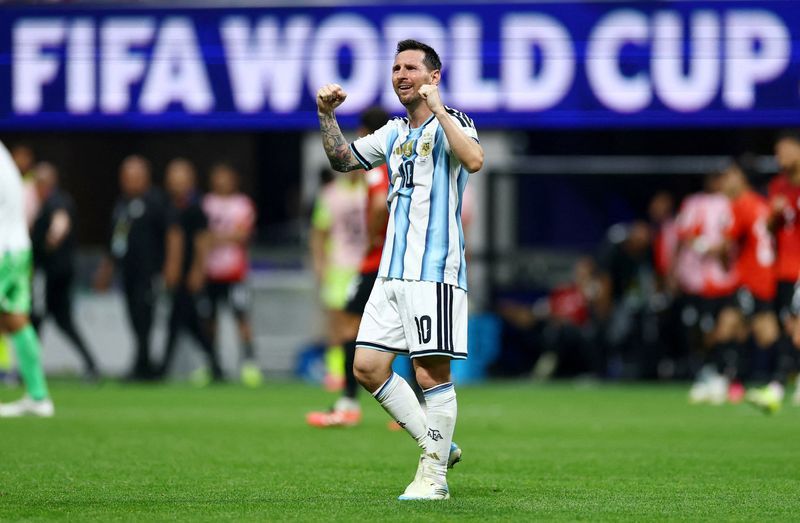
The defending World Cup champions have discovered an unexpected source of strength through adversity, refusing to surrender even when circumstances appeared dire. Argentina's dramatic 3-2 comeback victory over Egypt in Atlanta on Tuesday—requiring an extraordinary rallying effort in the closing stages—has emerged as a pivotal moment that could define their entire tournament, should they ultimately complete their title defence. After commanding the group stage with near-flawless performances, the team has found itself pushed to the brink in consecutive knockout encounters, yet each time has emerged with their campaign intact.
Head coach Lionel Scaloni's squad now trains its focus toward Saturday's quarter-final clash against Switzerland in Kansas City, where another stern examination awaits. The path to this point has tested the champions' psychological fortitude in ways their group-stage dominance never demanded. Victories over Algeria, Austria and Jordan proceeded with the kind of clinical efficiency expected of holders, but the knockout rounds have exposed unexpected fragility and forced the team to dig deep into reservoirs of determination previously untested in this tournament.
The turnaround against Egypt proved particularly stunning in its execution and timing. Trailing by two goals with merely eleven minutes remaining, Argentina orchestrated one of the competition's great comebacks, with Lionel Messi at the heart of their resurrection. The veteran forward's performance illuminated what makes this squad dangerous even when circumstances conspire against them—an ability to conjure moments of brilliance when necessity demands. Former striker Carlos Tevez, analysing the match for ESPN Argentina, highlighted the psychological dimension underlying the technical victory, emphasising the heart and determination the team demonstrated rather than simply crediting the skill on display.
This resilience extends beyond the playing arena into how the squad itself processes adversity. Speaking after the Egypt match, Messi acknowledged the suffering they endured while simultaneously normalising the struggle as inherent to World Cup football. His insistence that the group refuses to surrender and maintains belief until the final whistle reflected a collective mentality permeating the camp. Midfielder Leandro Paredes reinforced this narrative, revealing that despite the scoreline turning against them, the players never experienced a sense of resignation or acceptance of defeat. Such psychological fortitude often proves decisive in knockout tournaments where the margin between elimination and progression narrows to moments.
The statistics underlying these two knockout performances reveal a concerning defensive vulnerability that contrasts sharply with their group-stage solidity. Argentina conceded four goals across matches against Cape Verde and Egypt combined, a dramatic escalation from their entire group phase where only a single goal entered the net—and that came when Scaloni deliberately rotated his squad and rested key personnel. This defensive fragility cannot be entirely overlooked, regardless of the attacking brilliance that ultimately proved decisive. The question emerging is whether Scaloni can restore defensive shape and stability before confronting Switzerland's organised, methodical approach.
Scaloni himself offered a measured assessment of the Egypt performance, contending that his team actually played more convincingly in that match compared to their previous knockout ordeal against Cape Verde. He highlighted the quantity of chances Argentina created in the first half, noting that missed opportunities—particularly a penalty by Messi—represented failures of execution rather than tactical inadequacy. This perspective suggests the coach views his team's underlying approach as sound, even if the final product wavered. His commitment to maintaining Argentina's identity and approach, playing until the referee's final whistle, communicates confidence that the tactical framework remains viable despite recent scares.
The psychological impact of escaping elimination twice in quick succession could manifest in multiple ways as the tournament progresses. Some teams draw momentum and enhanced self-belief from surviving pressure situations, while others experience mental exhaustion from the constant stress and emotional fluctuations. For Argentina, the repeated comebacks might forge an unshakeable conviction in their collective ability to overcome adversity, a potentially invaluable asset in knockout football where psychological advantages frequently prove determinative. The squad's explicit statements about never feeling defeated, despite objective evidence to the contrary, suggest they are consciously constructing a narrative of inevitability around their tournament.
Switzerland presents a fundamentally different challenge from the opponents Argentina has thus far encountered. Scaloni acknowledged this reality by emphasising the Swiss team's remarkable World Cup tradition and the calibre of experienced players within their squad. The Swiss approach typically emphasises organisation, compact defending, and disciplined transitions—potentially creating structural problems for a team that thrives through attacking momentum and individual brilliance. Unlike Egypt, who played an attacking game that created space Argentina could exploit, Switzerland's methodical style may limit the opportunities for counterattacking surges that have recently rescued the champions.
The defending champions' journey through this tournament increasingly resembles a narrative of character tested and proven under pressure. While their initial dominance suggested a team operating at peak efficiency, the subsequent difficulties have introduced a human dimension that ultimately may define their legacy. Teams that win major tournaments frequently face moments that could have ended their campaigns, and how they respond to those junctures separates champions from the merely talented. Argentina's repeated demonstrations of refusal to accept defeat, embodied particularly in Messi's continued influence during crucial moments, represent the intangible qualities that separate tournament winners from early exits.
As Scaloni leads his squad through training sessions in Kansas City, the focus shifts toward restoring defensive stability while maintaining the attacking verve that has ultimately prevailed. The pattern established in these knockout rounds—defensive lapses followed by attacking brilliance—cannot be sustained indefinitely against increasingly sophisticated opposition. Switzerland awaits, and their tactical discipline will provide a sterner examination than the somewhat chaotic approach that allowed Argentina their comeback opportunities against Egypt. The defending champions have proven they possess the resilience to survive adversity; now they must demonstrate they can progress without requiring such dramatic late interventions.

