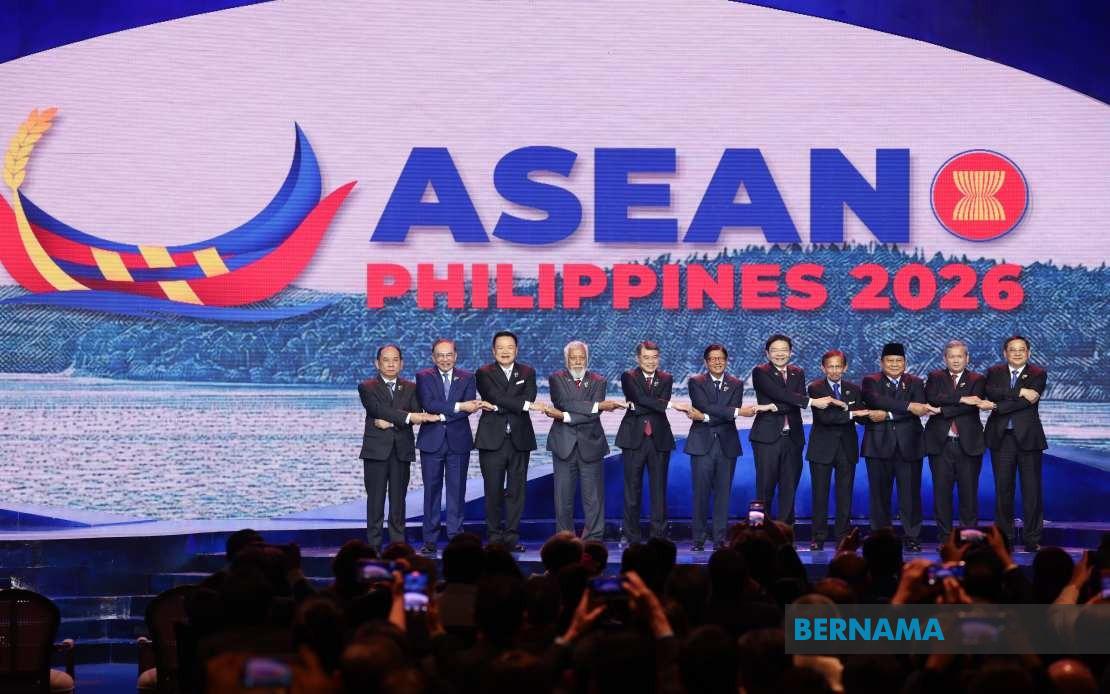
ASEAN marked its 59th anniversary this week confronting a region transformed by geopolitical upheaval and emerging security challenges that demand far greater internal cohesion than the bloc has previously required. The Association of Southeast Asia Nations, which has spent nearly six decades building international credibility and demonstrating institutional resilience, now faces a fundamentally different test: maintaining its relevance not through external validation but through concrete delivery on the ambitious Community Vision 2045. Experts across the region argue that the bloc's survival as a central actor in regional affairs depends less on how external powers perceive it and more on whether member states can forge genuine economic and political integration among themselves.
The geopolitical landscape surrounding Southeast Asia has shifted dramatically in recent years, creating both opportunity and vulnerability for ASEAN. Tensions stemming from United States involvement in West Asia, particularly the fraught relationship with Iran, have rippled across global markets and directly threatened the region's energy security and trade corridors. These disruptions have exposed how interconnected Southeast Asia remains to distant conflicts while simultaneously highlighting how ill-equipped the bloc currently is to coordinate collective responses. For ASEAN's 700 million inhabitants, the stakes are particularly high because their prosperity depends on stable trade flows, predictable supply chains, and regional security arrangements that neither depend on nor become hostage to external power competition.
Professor Phar Kim Beng, director of the International Islamic University Malaysia's Institute of International and ASEAN Studies and a former ASEAN Secretariat official, articulates a crucial distinction that underpins contemporary thinking about the bloc's future. ASEAN can no longer rely solely on diplomatic recognition from major powers or their acknowledgment of the bloc's regional importance. Instead, the organisation must generate its own centrality through the actions of member states themselves, ensuring that ASEAN functions as a cohesive economic and political entity worthy of the respect it demands from outside actors. This internal reinforcement of centrality requires not merely symbolic gestures but substantive progress on longstanding integration challenges that have plagued the bloc for years.
Progress toward becoming a genuine single economic community remains constrained by persistent barriers that member states have proven reluctant to dismantle. Labour mobility across ASEAN, despite repeated commitments, remains severely restricted by national regulations and protectionist sentiment in individual countries. Digital connectivity, while improving, still lags behind comparable efforts in other regions, with fragmented regulatory frameworks preventing seamless cross-border transactions and commerce. Government-to-government cooperation, though improving, continues to be hampered by bilateral disputes, territorial disagreements, and differing political interests that take precedence over collective ASEAN objectives. These are not new problems, yet their persistence suggests that deeper political will and sustained commitment from ASEAN member states is essential if Vision 2045 is to become more than an aspirational document.
The geopolitical competition between the United States and China has injected new urgency into ASEAN's regional agenda while simultaneously creating new obstacles to unity. According to Rahul Mishra, an associate professor at India's Jawaharlal Nehru University's Centre for Indo-Pacific Studies, ASEAN has demonstrated considerable capacity for normative leadership in framing regional responses to internal and external challenges. However, normative influence without corresponding practical capability becomes increasingly hollow as regional security pressures mount. The South China Sea disputes, which involve multiple ASEAN member states in disagreements with China over maritime boundaries and fishing rights, exemplify how ASEAN's diplomatic pronouncements on regional stability can diverge sharply from members' individual security calculations and bilateral relationships with major powers.
To bridge the gap between diplomatic rhetoric and functional cooperation, ASEAN must transform its expanding network of dialogue partnerships into mechanisms that deliver tangible benefits to the region. The bloc recently elevated Turkey to full dialogue partner status and expanded its Treaty of Amity and Cooperation signatories to 62 nations, including newly acceded Sweden, Poland, Romania, and Lithuania. These additions demonstrate ASEAN's growing diplomatic reach, yet each new partnership risks becoming another forum for dialogue without substance unless the bloc can orchestrate coordinated positions and mutual benefit-sharing. The 50th anniversary of the Treaty of Amity and Cooperation, marked this year, offers a symbolic moment to reflect on whether the treaty has truly contributed to regional stability or simply provided a venue for powers to engage in non-committal discussions.
Specific regional crises demand ASEAN's urgent attention and coordinated response if the bloc is to prove its utility in security matters. The Myanmar situation has deteriorated dramatically since the 2021 coup, with the military's escalating conflict against resistance forces creating refugee outflows, narcotics production surges, and regional destabilisation that threaten neighbouring Thailand and Laos. Cybercriminal operations, particularly those generating financial fraud and human trafficking networks, have increasingly emanated from certain ASEAN jurisdictions, embarrassing the bloc internationally and creating friction within the community over burden-sharing in law enforcement cooperation. These challenges require not merely diplomatic statements condemning illegal activity but concrete, time-bound action plans with defined responsibilities, resource commitments, and accountability mechanisms that remain largely absent from current ASEAN frameworks.
ASEAN's founding principles, established in 1967 by Indonesia, Malaysia, the Philippines, Singapore, and Thailand through the ASEAN Declaration, emphasised non-interference in internal affairs and mutual respect for sovereignty. These principles provided the foundation upon which the organisation expanded to eleven members, gradually incorporating Brunei, Vietnam, Laos, Myanmar, and Cambodia, and most recently Timor-Leste in 2023. Yet this expansive membership, while representing an achievement, has made consensus-building exponentially more difficult as member states span vastly different development levels, political systems, and strategic interests. The principle of non-interference has increasingly become a shield behind which regional powers ignore problematic governance while the principle of consensus has created gridlock on pressing issues requiring urgent action.
The theme selected for this year's ASEAN Day celebrations, "Navigating Our Future Together," will also guide ASEAN 2026 under Philippines chairmanship. This thematic emphasis on collective navigation suggests recognition that the bloc faces choices about its strategic direction and must chart a course that accommodates diverse member interests while maintaining sufficient cohesion to preserve ASEAN's relevance. The year 2045 represents both an aspirational endpoint and a reminder that nearly two decades remain for ASEAN to prove it can bridge the gap between its ambitious vision and the prosaic realities of intra-regional politics, power competition, and competing national interests that have long complicated its institutional effectiveness.
For Malaysia and other ASEAN members, the current juncture presents an opportunity to revitalise the regional project through genuine commitment to the integration mechanisms that remain underdeveloped. The alternative scenario, wherein ASEAN becomes increasingly marginalised as major powers directly engage individual member states and circumvent collective ASEAN mechanisms, represents a threat to regional stability and Malaysian interests. Strengthening ASEAN centrality from within requires sustained investment in institutional capacity, political will to overcome narrow national interests, and honest acknowledgment that the bloc's survival depends not on external recognition but on member states' willingness to make ASEAN work as an effective vehicle for collective prosperity and security.

