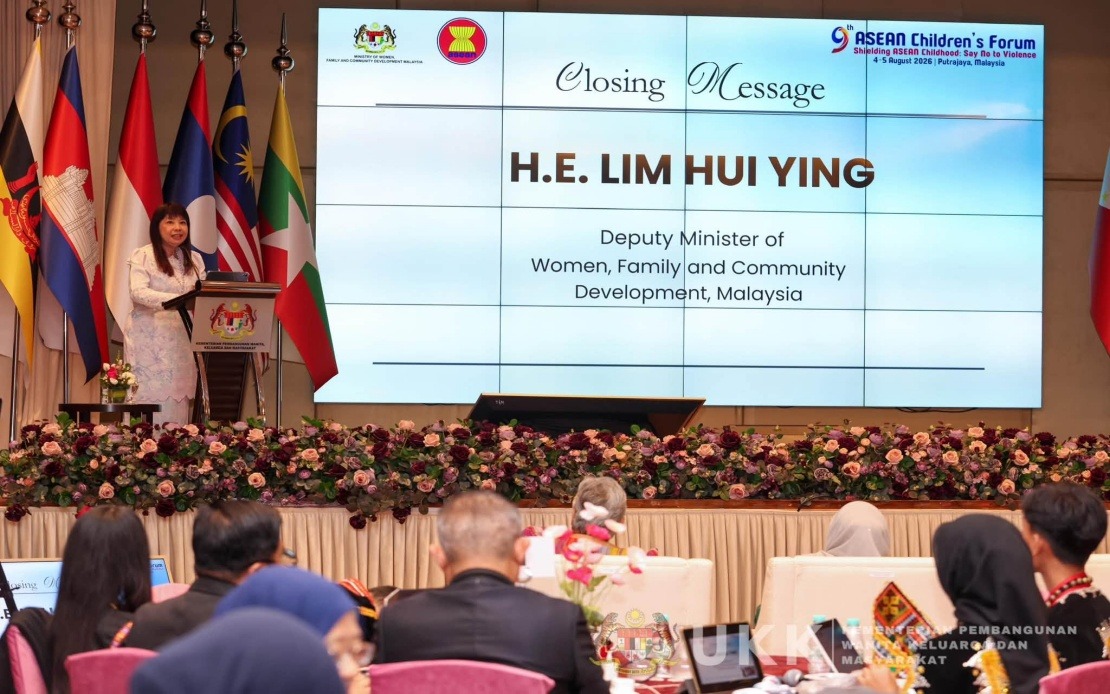
Regional governments must act decisively to safeguard children from violence by translating recommendations from the 9th ASEAN Children's Forum into binding legislation and enforcement mechanisms, according to Malaysian officials overseeing the landmark gathering in Putrajaya. The forum, which concluded recently, assembled young voices from across Southeast Asia to address a persistent challenge confronting the region: the multiple forms of abuse and harm that children experience in homes, schools, digital spaces and communities.
Deputy Women, Family and Community Development Minister Lim Hui Ying emphasised that the proposals emerging from the forum warrant serious consideration from policymakers navigating both domestic priorities and ASEAN's collective agenda. She stressed that recommendations stemming from children themselves—drawn from their lived experiences and aspirations—carry particular weight and should guide the development of substantive policies at national and regional levels. This approach recognises that children are not passive subjects of protection but active participants whose insights into the barriers they face should inform strategy.
The forum identified four critical domains requiring urgent intervention: family settings, educational institutions, online environments and broader community spaces. Within these areas, participants articulated specific priorities that cut across the region's diverse contexts. Strengthening the legal architecture surrounding child protection emerged as foundational—many ASEAN nations maintain legislation that falls short of international standards or lacks adequate enforcement capacity. Equally pressing is the need to establish accessible reporting mechanisms that children can navigate without fear of retaliation or further harm, acknowledging that current systems often remain opaque or intimidating to young people.
Anti-bullying policies feature prominently in the recommendations, reflecting the pervasiveness of peer violence that frequently goes unaddressed in schools across Southeast Asia. The proliferation of social media and digital platforms has transformed bullying into a borderless phenomenon, where harassment follows children beyond classrooms into their homes and private spaces. Participants recognised that existing disciplinary approaches often prove inadequate to address the psychological impact of sustained online abuse, necessitating preventive education and accountability frameworks tailored to digital contexts.
The forum's emphasis on psychosocial support reflects growing recognition that child protection must extend beyond preventing immediate physical harm. Survivors of abuse, even those who escape active violence, frequently endure lasting emotional and psychological consequences that impede their development and wellbeing. By broadening access to counselling, trauma-informed care and mental health services, governments can facilitate recovery and reduce the intergenerational transmission of trauma that often perpetuates cycles of violence.
Particularly significant is the forum's call for more inclusive services addressing children in vulnerable circumstances. This encompasses protection mechanisms sensitive to the unique risks faced by children with disabilities, migrant and refugee children, LGBTQ youth and those experiencing extreme poverty. These populations frequently encounter compounded vulnerabilities that standard protection systems inadequately address, requiring tailored interventions and dedicated resources. For Malaysia and other middle-income ASEAN nations, this demand resonates particularly as migration, urbanisation and socioeconomic stratification create expanding populations of children at heightened risk.
The forum's recognition of multiple stakeholders—parents, educators, businesses, civil society organisations, media outlets and peer networks—reflects an understanding that child protection cannot rest solely with governments. Effective safeguarding requires coordinated action across institutional and social domains. Private sector entities controlling digital platforms bear particular responsibility for creating safer online spaces, while educators occupy a unique position to identify abuse and intervene early. Media outlets shape cultural norms around violence and childhood, while civil society organisations often reach marginalised communities beyond state capacity.
The pledge by forum participants to support one another and cultivate cultures of care and respect suggests emerging consciousness among Southeast Asian youth about collective responsibility for their peers' safety. This bottom-up commitment potentially energises more formal institutional responses, creating momentum for change that extends beyond bureaucratic processes. However, translating youthful idealism into sustained behavioural and structural change presents significant challenges, particularly in contexts where entrenched power dynamics and cultural traditions sometimes normalise violence against children.
For Malaysia specifically, the forum's outcomes carry immediate implications as policymakers consider revisions to existing child protection frameworks. The country's Child Act, while progressive in regional terms, contains gaps in areas like addressing violence by state actors and comprehensively addressing online harm. Implementation challenges also persist, with reported inconsistencies in how child protection laws are applied across states and enforcement agencies. The forum's emphasis on accessible reporting channels speaks directly to Malaysian concerns, where many incidents of child abuse go unreported due to victim fear, family pressure or lack of awareness regarding complaint procedures.
Implementing the forum's recommendations requires sustained political will and budgetary commitment at a time when many ASEAN governments confront competing priorities and resource constraints. Moving beyond rhetorical commitment to concrete action—drafting legislation, establishing specialised units, training frontline workers and funding services—demands coordination across multiple ministries and sustained engagement with diverse stakeholders. The regional dimension adds complexity, as ASEAN's consensus-based decision-making approach can dilute ambitious targets into lowest-common-denominator compromises.
Looking forward, the forum's impact depends significantly on whether governments establish mechanisms for tracking progress against specific recommendations and hold themselves accountable to implementation timelines. International scrutiny through UN mechanisms and regional human rights bodies may incentivise compliance, but internal institutional change proves most durable when rooted in genuine commitment rather than external pressure. The involvement of children themselves in monitoring implementation—allowing young people to assess whether promised reforms materialise—could sustain momentum and ensure recommendations reflect youth priorities rather than adult assumptions.
The 9th ASEAN Children's Forum ultimately represents a pivotal moment for regional child protection. It elevates young voices often marginalised in policy discussions, documents concrete areas requiring urgent action and establishes a record against which governments can be measured. Whether these recommendations catalyse meaningful transformation across Southeast Asia depends on whether policymakers treat them as obligatory guidance rather than advisory suggestions, and whether implementation receives the institutional and financial resources necessary to embed change across societies still grappling with violence against children.

