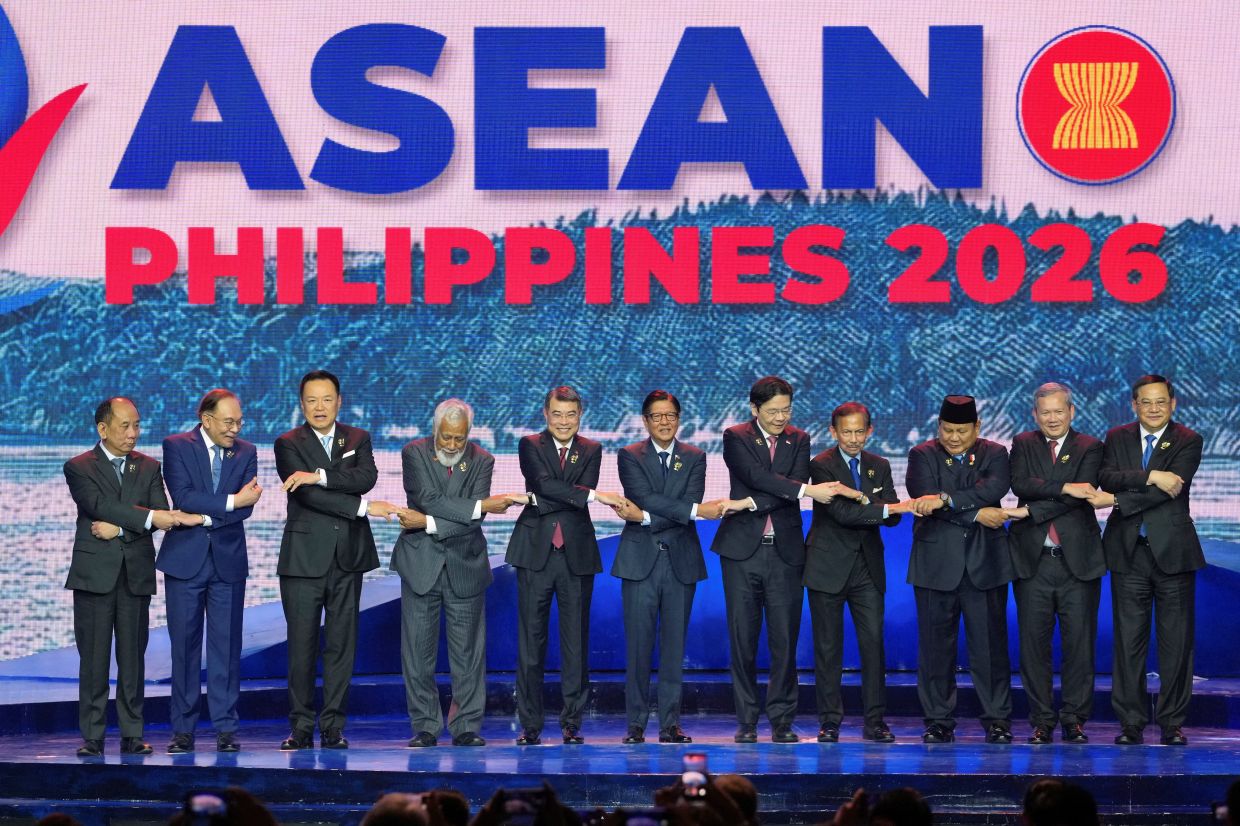
Southeast Asia's diplomatic community is bracing for a consequential gathering in Manila this week as the region's top foreign ministers arrive to navigate a treacherous international landscape. The Association of Southeast Asian Nations is hosting a three-day ministerial meeting that will draw together not only its eleven member states but also powerful external actors—the United States, China, Russia and the European Union—creating an arena where competing global interests will intersect with pressing regional concerns. With the Philippines holding the rotating ASEAN chairmanship, the Manila talks represent a critical opportunity for the bloc to coordinate responses to multiple crises threatening the stability and prosperity of Southeast Asia's 680 million people.
The immediate trigger for high-level attention is the escalating conflict between the United States and Iran, which has sent shockwaves across the region far beyond the Middle East. The hostilities have reignited fears of a broader conflagration and directly threaten the Strait of Hormuz, through which approximately one-fifth of the world's oil supply flows. For Southeast Asia, this is not an abstract geopolitical concern but an existential economic threat. The region depends heavily on Middle East energy supplies to fuel its industries, power its cities and support its rapidly growing economies. Philippine President Ferdinand Marcos Jr. was compelled to declare a national energy emergency in March specifically to prevent shortages and speculation that could destabilize food supplies and essential goods across the archipelago. ASEAN foreign ministers will issue a joint statement expressing deep concern about the Middle East developments and calling on all parties to return to the negotiating table, signalling the bloc's anxiety about potential supply disruptions and their cascading effects on regional inflation and growth.
Yet the Manila talks unfold against the backdrop of persistent concern that Washington's military and diplomatic resources remain heavily concentrated on the Middle East, potentially diminishing American attention to Asia-Pacific security challenges that have long preoccupied the region. This anxiety reflects a fundamental realignment in global power dynamics that directly affects Southeast Asian interests. China's increasingly assertive posture in the disputed South China Sea and its military modernisation near Taiwan have prompted expectations that the United States will reinvigorate its regional commitments and counterbalance Beijing's influence. U.S. Secretary of State Marco Rubio's attendance at the Manila meeting is designed partly to reassure ASEAN members that despite Middle East preoccupations, the Trump administration remains committed to what it frames as a free and open Indo-Pacific. The State Department has explicitly framed Rubio's visit as advancing American security priorities and prosperity objectives in the region, a messaging choice that underscores how directly Middle East developments are being weighed against Asia-Pacific strategic calculations.
The relationship between Washington and Beijing will inevitably cast a shadow over the proceedings, particularly given Rubio's presence alongside Chinese Foreign Minister Wang Yi. While Rubio indicated before departing for Manila that he would be open to meeting Wang, no encounter has been formally confirmed, and the contours of any potential discussion remain uncertain. Rubio has refused to specify whether he would raise President Donald Trump's allegations regarding Chinese interference in the 2020 election, reflecting the careful calibration required when managing great power relations during a period of substantial tension. Yet Rubio's framing of Sino-American ties offers a glimpse of the Trump administration's calculus: acknowledging that major power friction is inevitable while emphasising that dialogue and sustained engagement serve the interests of both nations and the broader international system. This positioning suggests Washington recognises that complete decoupling from Beijing is neither feasible nor desirable, even as competition intensifies across multiple domains.
Beyond the great power dimension, ASEAN faces mounting pressure to demonstrate effectiveness in resolving conflicts within its own neighbourhood, a challenge that has repeatedly tested the bloc's cohesion and credibility. Myanmar's civil war represents perhaps the most urgent internal crisis. Since the military's 2021 coup that toppled the democratically elected government of Aung San Suu Kyi, more than 8,100 people have been killed in fighting and nearly 22,500 remain detained, according to independent monitoring by the Assistance Association for Political Prisoners. These figures, though staggering, barely capture the humanitarian catastrophe unfolding across Myanmar: displaced populations, destroyed communities and a state apparatus controlled by generals with little apparent incentive to relinquish power. ASEAN's 2021 five-point peace consensus has manifestly failed, undermined by the military junta's refusal to comply with its provisions. The bloc responded by excluding Myanmar's leadership from high-level meetings, a measure that reflects both moral concern and institutional frustration.
Recently, however, ASEAN has shifted tactics in ways that have proved deeply controversial. Philippine Foreign Secretary Theresa Lazaro, serving as ASEAN's special envoy, met Myanmar's Foreign Minister Tin Maung Swe in Bangkok earlier this month—the first such encounter in five years. That meeting was followed by consultations between senior ASEAN diplomats and representatives of Myanmar's ethnic armed groups in the Thai beach resort of Pattaya. Lazaro has defended these engagements as necessary exercises in "resolute diplomacy with all parties to the conflict" and explicitly denied that they represent an abandonment of the original peace consensus. Yet international human rights organisations have condemned the diplomatic outreach as capitulation that rewards the military without extracting meaningful concessions on violence or political reform. The episode exposes ASEAN's fundamental dilemma: rigid isolation of Myanmar has failed to produce change, yet engagement risks legitimising a regime responsible for mass atrocities and undermining the bloc's stated commitment to democratic governance.
The South China Sea territorial disputes present an equally vexing problem, though one where diplomatic progress is theoretically possible. ASEAN foreign ministers will meet with Wang to discuss the ongoing negotiation of a "code of conduct" intended to prevent maritime confrontations from spiralling into major conflict. The territorial disagreements involve China, Taiwan and ASEAN members Brunei, Malaysia, the Philippines and Vietnam, but recent years have witnessed a sharp escalation in confrontations between Chinese and Philippine coast guard and naval forces. These incidents—collisions, water cannons, blockades—have introduced an element of unpredictability into maritime governance and raised the spectre of accidental escalation. The proposed code of conduct aims to establish rules of engagement and dispute-resolution mechanisms that would reduce the risk of military miscalculation. Progress on such an agreement would represent a substantive diplomatic achievement and demonstrate that ASEAN retains agency in managing its most contentious geopolitical problem.
The multilateral architecture that will frame these discussions reflects how thoroughly regional diplomacy has become entangled with global power competition. Rubio is expected to meet separately with representatives of the Quad—the strategic partnership comprising the United States, India, Japan and Australia—demonstrating how ASEAN talks have become venues for executing broader Indo-Pacific strategies. Beijing has repeatedly attacked the Quad as a containment mechanism designed to limit Chinese influence, a characterisation that carries particular weight given the group's explicit focus on counterbalancing Chinese power projection. For smaller ASEAN members, this dynamic presents an uncomfortable choice: deepening security ties with the Quad risks antagonising China, their largest trading partner and a near neighbour with substantial influence, yet maintaining distance from the Quad could be interpreted as insufficient commitment to regional security partnerships with democratic states. The Manila meeting will inevitably amplify these tensions as major powers use bilateral and multilateral encounters to reinforce their preferred visions of regional order.
What emerges from this convergence of crises and interests is a portrait of Southeast Asia as a region buffeted by forces largely beyond its control. Middle East oil supply disruptions can ripple through ASEAN economies within weeks. Great power competition for influence over the Indo-Pacific directly shapes the security environment in which ASEAN members must operate. Unresolved internal conflicts like Myanmar's civil war drain regional credibility and humanitarian resources. And maritime disputes in the South China Sea remain perpetually on the precipice of military escalation. The Manila talks will produce diplomatic statements and renewed consultations, but they are unlikely to fundamentally alter these structural realities. What they can accomplish, at best, is incremental progress on specific issues—modest agreements on code of conduct language, renewed commitment to Myanmar dialogue mechanisms, and reassurances from major powers about their regional intentions. For ASEAN, managing great power rivalry while addressing internal crises represents the defining diplomatic challenge of the contemporary era.

