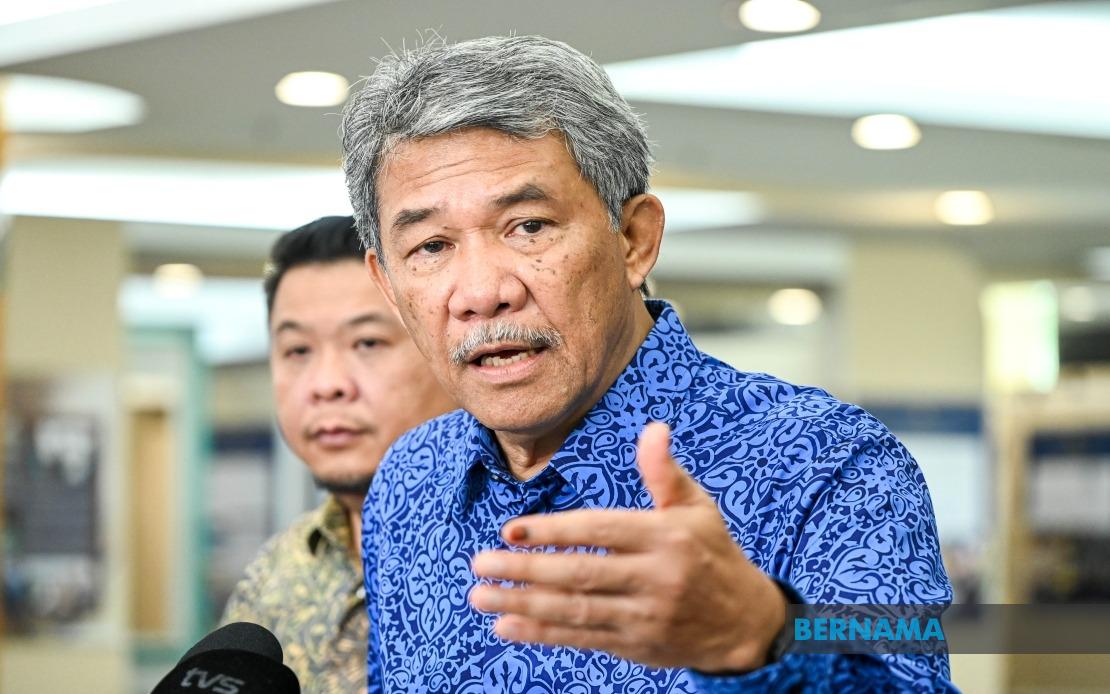
ASEAN regional cooperation has evolved considerably beyond diplomatic negotiations to encompass ambitious economic ambitions, according to Foreign Minister Datuk Seri Mohamad Hasan, who underscored the critical need to expand trade flows among member nations. Speaking at the 59th ASEAN Day celebration in Putrajaya on Monday, Mohamad stressed that the 10-nation bloc possesses realistic potential to clinch fourth-place ranking among global economic powerhouses within the coming decade, provided member states substantially amplify their commercial engagement with one another.
The bloc's current predicament reveals a striking paradox: whilst ASEAN constitutes a formidable economic aggregation, internal trade connections remain underdeveloped. Presently, commerce occurring between ASEAN members accounts for less than 25 per cent of the region's overall trade activity, a figure that Foreign Minister Mohamad characterised as considerably below what the bloc's combined resources and geographic proximity should support. This underutilisation of intra-regional commerce represents a tangible opportunity cost, with significant economic gains lying dormant across Southeast Asia.
The strategic recalibration of ASEAN's priorities reflects a deliberate pivot toward economic integration as the primary vehicle for regional advancement. Rather than concentrating exclusively on traditional political coordination, member states increasingly recognise that sustainable prosperity and regional influence depend fundamentally on deepening commercial interdependencies. This reorientation carries profound implications for individual ASEAN economies, including Malaysia, which stands to benefit substantially from enhanced supply chain linkages and reduced trade barriers throughout the region.
To address this challenge, ASEAN has already established foundational mechanisms designed to stimulate cross-border commerce. The "free movement of goods" framework represents a cornerstone initiative, substantially reducing tariff barriers and simplifying customs procedures across member territories. However, Foreign Minister Mohamad's acknowledgment that "we still have a lot of trade to build among member nations" suggests these existing instruments require strengthening and more robust implementation to generate meaningful expansion in bilateral and multilateral trade volumes.
Malaysia's stewardship of ASEAN during the previous year yielded tangible diplomatic fruit through several forward-looking proposals and resolutions. The Kuala Lumpur Declaration and accompanying initiatives established the intellectual and institutional scaffolding upon which subsequent economic developments continue to rest. These foundational documents provide the strategic blueprint for collaborative efforts aimed at dismantling remaining commercial impediments and facilitating smoother market access across Southeast Asia.
The Philippines, assuming ASEAN's rotating chairmanship for the current year, has inherited responsibility for advancing these economically-focused objectives. By adopting and extending the initiatives developed during Malaysia's tenure, the Philippines demonstrates continuity in pursuing regional economic integration whilst simultaneously building upon established momentum. This sequential handoff of leadership responsibilities ensures that ASEAN's economic agenda maintains political priority irrespective of which nation holds the rotating chair.
Malaysia's designation as Permanent Shepherd—or Permanent Auditor—of the ASEAN Community 2045 framework assigns the nation an enduring custodial role in tracking and facilitating progress toward the bloc's long-term vision. This institutional responsibility carries meaningful weight, positioning Malaysia as a consistent advocate for strengthening intra-ASEAN trade foundations and ensuring that member states remain aligned with established economic objectives. The permanent auditor function essentially transforms Malaysia into an institutional guardian of ASEAN's collective economic aspirations.
The 2030 fourth-largest economy milestone represents more than a statistical achievement; it symbolises the degree to which Southeast Asian nations can collectively transcend geographical fragmentation and historical commercial patterns to create genuinely integrated regional markets. Reaching this objective demands sustained commitment to dismantling non-tariff barriers, harmonising regulatory standards, and building transportation and logistics infrastructure connecting member states more seamlessly. Current trade patterns, whereby ASEAN members conduct substantially more commerce with external partners than with one another, suggest that untapped potential remains considerable.
For Malaysian policymakers and business communities specifically, this expansion of intra-ASEAN trade holds direct relevance. Enhanced regional commerce would deepen Malaysia's integration within Southeast Asian supply chains, potentially creating employment opportunities across manufacturing, services, and agricultural sectors. Malaysian enterprises would gain preferential access to markets totalling over 700 million consumers, whilst simultaneously gaining insulation from external economic volatility through more diversified regional partnerships.
The challenge extending forward involves translating rhetorical commitment into tangible commercial expansion. Despite existing frameworks for trade facilitation, structural impediments persist across ASEAN. Infrastructure deficiencies, inconsistent regulatory environments, and residual protectionist impulses in certain sectors continue constraining what should logically constitute the bloc's dominant commercial orientation. Overcoming these obstacles requires sustained political will combined with concrete investment in cross-border connectivity and market access initiatives.
Foreign Minister Mohamad's emphasis on the "foundation" represented by intra-ASEAN trade reveals sophisticated understanding that economic integration must be constructed methodically, with fundamental building blocks properly positioned before ambitious superstructure emerges. The current below-25-per-cent benchmark essentially represents baseline conditions from which meaningful advancement becomes possible. Reaching proportions substantially exceeding this threshold would constitute evidence of genuine regional economic maturation and member-state commitment to shared prosperity.

