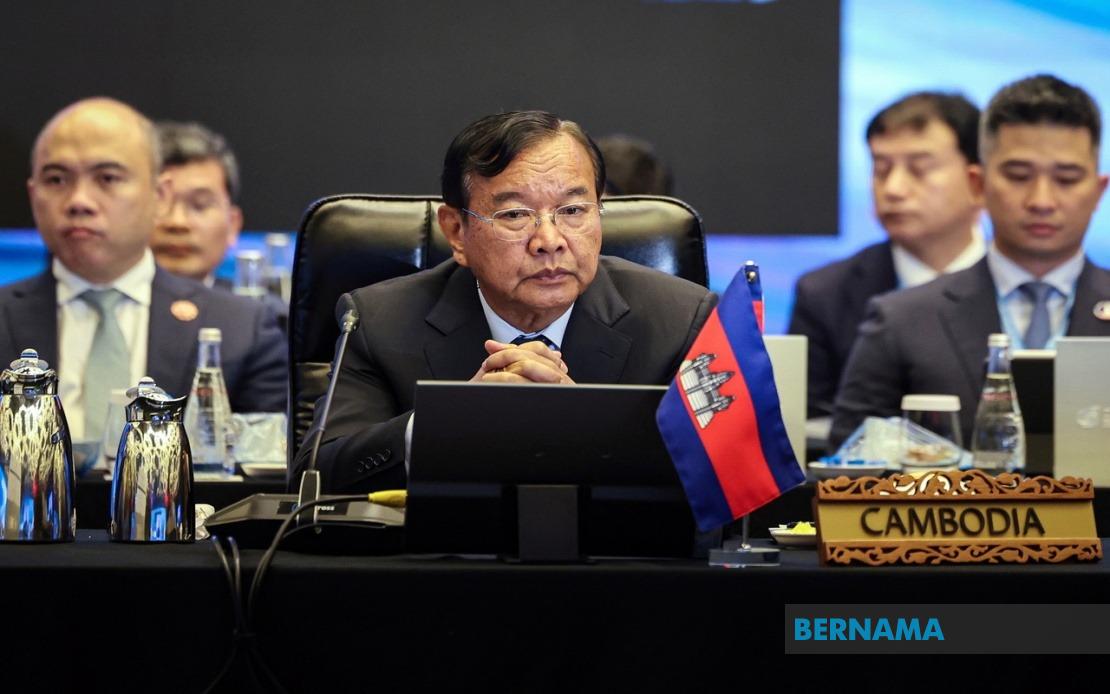
Cambodia's Foreign Affairs and International Cooperation Minister Prak Sokhonn has reaffirmed ASEAN's indispensable role as a stabilising force in Southeast Asia, warning that the region's 11 member states cannot afford to be passive observers in an increasingly turbulent global environment. Speaking during ASEAN's 59th anniversary commemoration on Friday, Sokhonn stressed that the bloc must remain anchored to its founding principles embodied in the ASEAN Charter and the Treaty of Amity and Cooperation, which continue to provide the institutional framework for regional engagement.
The significance of Sokhonn's remarks lies in their timing, as Southeast Asia navigates a geopolitical landscape marked by intensifying great-power competition, resurgent armed conflicts, and mounting pressures on the international rules-based order. By invoking ASEAN's nearly six-decade history of transforming the region from one characterised by division and suspicion into a space defined by dialogue and cooperation, Sokhonn anchored his argument in historical accomplishment. This transformation, beginning with the ASEAN Charter's adoption in 1967, represents an unusual achievement for a region home to diverse political systems, religious traditions, and competing national interests.
However, Sokhonn's core message departed from conventional celebratory rhetoric about ASEAN's past successes. Instead, he pivoted toward a sharper articulation of the challenges confronting the bloc in the contemporary period. The deterioration of global conditions—encompassing renewed armed conflicts in multiple regions, deepening geopolitical tensions particularly between major powers, and the erosion of multilateral institutions—creates what he characterised as an "uncertain environment" that demands more than passive management. This framing resonates particularly with Malaysian and broader Southeast Asian audiences who understand that regional stability cannot be taken for granted when external powers maintain competing strategic interests across the Indo-Pacific.
The distinction Sokhonn drew between reacting to change and actively shaping it carries profound implications for ASEAN's future strategic posture. For decades, the bloc has relied on what analysts term the "ASEAN Way"—a consensus-based approach prioritising non-interference and inclusive dialogue. Yet Sokhonn's assertion that ASEAN "must help shape" regional outcomes suggests a recognition that this traditionally cautious methodology may require recalibration. In an era where external actors increasingly seek to establish spheres of influence and where intra-ASEAN disagreements have become more visible on issues ranging from Myanmar's political crisis to South China Sea disputes, a more assertive regional voice may be necessary to preserve ASEAN's relevance and centrality.
Sokhonn, who also holds the rank of deputy prime minister in Cambodia's government, was well-positioned to deliver this message given his seniority within both the Cambodian government and ASEAN structures. His affirmation of Cambodia's commitment to strengthening ASEAN's unity and resilience—particularly coming from a nation that itself experienced profound instability and international isolation in previous decades—carries symbolic weight. Cambodia's accession to ASEAN in 1999, following its political rehabilitation after the Khmer Rouge era and subsequent civil conflict, represented an important moment for regional integration and demonstrates how ASEAN membership can facilitate reconciliation and reintegration.
The composition of modern ASEAN, now encompassing Brunei, Cambodia, Indonesia, Laos, Malaysia, Myanmar, the Philippines, Singapore, Thailand, Vietnam, and Timor-Leste, reflects the bloc's expansion and evolution. This membership diversity—spanning wealthy city-states, developing economies, and least-developed nations; including communist and non-communist governments; and spanning vastly different geographies from island nations to landlocked states—makes consensus-building genuinely difficult but also renders ASEAN's continued cohesion genuinely significant. Malaysian policymakers understand intimately that maintaining ASEAN unity requires constant diplomatic effort and skillful negotiation among members with sometimes divergent interests.
Sokhonn's invocation of the ASEAN Charter and the Treaty of Amity and Cooperation as foundational documents deserves deeper scrutiny. These instruments enshrine principles of non-interference, respect for sovereignty, and peaceful settlement of disputes—yet contemporary challenges including transnational terrorism, migration crises, environmental degradation, and pandemic response often require coordinated action that transcends traditional non-interference doctrines. The tension between preserving these founding principles and addressing modern transnational challenges remains unresolved within ASEAN's institutional framework, and Sokhonn's emphasis on "upholding the ASEAN Charter and the TAC in both principle and practice" may inadvertently highlight this ongoing dilemma.
The global context within which ASEAN operates has shifted dramatically since the bloc's inception. When ASEAN was founded in 1967 through the Bangkok Declaration, the Cold War dominated international affairs and regional conflicts were contained within Southeast Asia's borders. Today, ASEAN faces competition from external great powers seeking to advance their strategic interests through ASEAN member states, ranging from major infrastructure initiatives to security partnerships and technological influence. This external pressure, combined with internal vulnerabilities including economic inequality, governance challenges in certain member states, and unresolved territorial disputes, creates a complex operating environment that demands both institutional innovation and reaffirmed commitment to collective principles.
For Malaysian readers and policymakers, Sokhonn's remarks carry particular relevance given Malaysia's historical role as an ASEAN bridge-builder and mediator. Malaysia's experience in hosting ASEAN meetings, facilitating dialogue between contentious parties, and advocating for regional solutions to regional problems has positioned the nation as a custodian of ASEAN unity. The Cambodian minister's call for ASEAN to become more proactive rather than reactive aligns with perspectives that Malaysia has occasionally articulated—that Southeast Asian nations must collectively develop and implement strategies rather than becoming passive subjects of external powers' regional ambitions.
The path forward for ASEAN requires nuanced navigation. Sokhonn's framing suggests that member states must find ways to strengthen regional institutions and develop common positions on matters of mutual concern without compromising the principle of national sovereignty that undergirds the bloc. This might involve enhanced coordination on economic matters, greater transparency in defence spending and military posturing, and more robust mechanisms for addressing transnational challenges that inherently require cross-border cooperation. Whether ASEAN can achieve this balance while maintaining the consensus-based approach that has historically characterised its operations remains an open question.
Ultimately, Sokhonn's 59th-anniversary message reflects a maturing recognition within ASEAN leadership that the status quo—a reactive posture relying primarily on dialogue and consensus-building—may be insufficient for a region facing mounting external pressures and internal strains. His call for ASEAN to "shape" rather than merely "respond to" change suggests an evolving understanding that regional peace and stability require proactive institution-building, clearer articulation of collective interests, and willingness to stake out independent regional positions. For Malaysia and other Southeast Asian nations invested in preserving ASEAN's centrality in regional affairs, this reframing of ASEAN's strategic mission warrants serious consideration and sustained commitment.

