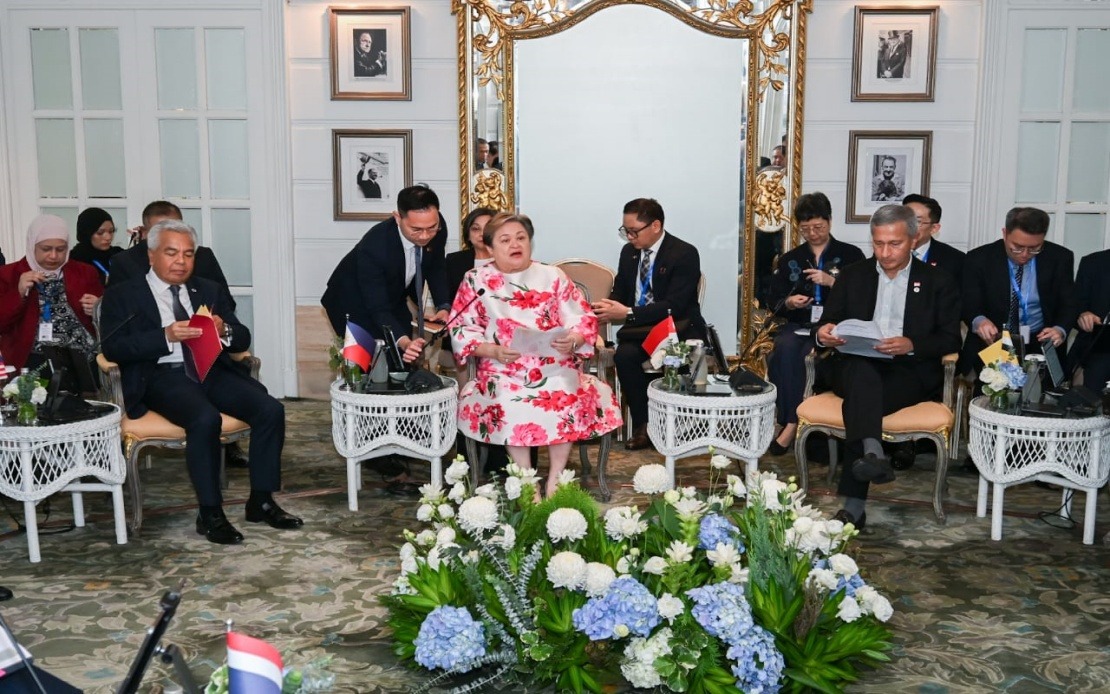
ASEAN has recommitted itself to the Five-Point Consensus as the cornerstone of its diplomatic engagement with Myanmar, signalling that the regional bloc intends to persist with this framework despite growing resistance from the junta government in Naypyidaw. At a series of meetings in Bangkok on Sunday convened by the Philippines in its capacity as ASEAN Chair, the organisation's foreign ministers underscored their determination to advance implementation of the peace plan, which has become increasingly contentious following Myanmar's parliament's recent motion to formally reject it.
The Five-Point Consensus, adopted in April 2021 during the immediate aftermath of Myanmar's military coup, represents ASEAN's most deliberate attempt to craft a roadmap for resolving the country's deepening political and humanitarian crisis. The framework encompasses five pillars: an immediate cessation of hostilities, initiation of dialogue involving all stakeholders, delivery of humanitarian assistance to affected populations, appointment of an ASEAN Special Envoy to facilitate mediation, and direct engagement with all parties to Myanmar's conflict. While ASEAN has framed the 5PC as a flexible, dialogue-oriented approach that respects Myanmar's sovereignty, the junta has grown increasingly dismissive of the plan, viewing it as external interference in internal affairs.
Maria Theresa Lazaro, the Philippines' Secretary for Foreign Affairs and the ASEAN Chair's Special Envoy on Myanmar, articulated the bloc's resolve during a joint press conference with Thailand's Foreign Minister Sihasak Phuangketkeow. Lazaro indicated that the 5PC has served as the foundational document guiding all ASEAN interactions with Myanmar's government and other relevant parties, emphasising that the organisation remains steadfast in this approach irrespective of whether Naypyidaw accepts or rejects it. Her remarks suggested a calculated effort by ASEAN to maintain diplomatic pressure on the military regime whilst avoiding a complete breakdown in engagement, a balancing act that has defined the bloc's Myanmar policy since 2021.
The Bangkok meetings resulted in ASEAN articulating three specific expectations for Myanmar's trajectory forward. First, the regional organisation has prioritised an expansion of humanitarian assistance reaching vulnerable civilian populations, with the Philippines planning a dedicated humanitarian mission to identify pathways for scaling up aid distribution and improving access to medical care and food supplies. This emphasis on humanitarian dimensions reflects ASEAN's recognition that Myanmar's economic and social infrastructure has deteriorated substantially under military rule, creating urgent needs particularly in conflict-affected regions. Second, ASEAN has called with renewed emphasis for a demonstrable reduction in violence perpetrated against civilian populations, acknowledging that indiscriminate military operations have undermined the conditions necessary for any meaningful political dialogue.
The third expectation centres on establishing more comprehensive political dialogue aimed at national reconciliation, an objective that necessitates cultivating a genuinely inclusive environment for political discussion and securing the unconditional release of detained political prisoners held by the junta. This demand strikes at the heart of Myanmar's crisis: without meaningful inclusion of opposition voices and civil society actors in political processes, any settlement remains fundamentally incomplete. Lazaro characterised the meetings as representing significant diplomatic progress, noting they constituted the first in-person gathering between ASEAN foreign ministers and Myanmar's foreign minister since the coup erupted in February 2021, suggesting that the immediate diplomatic deep-freeze has thawed somewhat despite the 5PC's rejection.
Thailand's Foreign Minister Sihasak articulated a nuanced understanding of ASEAN's position, characterising the regional bloc's engagement strategy as calibrated rather than maximalist, implying that the organisation calibrates its pressure based on Naypyidaw's responsiveness. Critically, he framed this engagement as reciprocal in nature, essentially signalling that ASEAN expects Myanmar to demonstrate tangible movement on the 5PC rather than merely acknowledging it rhetorically. Sihasak's formulation that "calibrated engagement is a two-way street" suggests ASEAN is attempting to incentivise compliance by implying that obstruction will trigger recalibration of the bloc's approach, though he did not specify what such recalibration might entail or what additional measures ASEAN might pursue.
The question of implementation timelines has emerged as a critical tension point in ASEAN's Myanmar diplomacy. When queried about whether ASEAN had imposed specific deadlines for Myanmar to address the bloc's concerns, Sihasak indicated that the organisation would undertake a comprehensive assessment of progress at the ASEAN Summit scheduled for later in 2021, suggesting that any significant decisions regarding Myanmar policy will be deferred until that gathering. This approach effectively grants Myanmar several months of breathing room, potentially limiting immediate diplomatic pressure and reflecting the deep divisions within ASEAN regarding how forcefully to press the junta on compliance with the 5PC.
The composition of the meeting itself offers instructive details about ASEAN's internal cohesion on Myanmar policy. The gathering included foreign ministers from all ASEAN member states with the notable exception of Cambodia, which sent no representative despite the long-standing relationship between Phnom Penh and Naypyidaw. Malaysia's participation, represented by Foreign Ministry Secretary-General Tan Sri Amran Mohamed Zin rather than the Foreign Minister, suggested varying levels of engagement across the bloc. This uneven representation underscores persistent disagreements within ASEAN about the appropriate balance between maintaining dialogue and applying diplomatic pressure, with some members advocating stronger measures against the junta whilst others prioritise non-interference and preservation of diplomatic channels.
For Malaysia and other Southeast Asian nations, ASEAN's reiteration of commitment to the 5PC carries substantial implications for regional stability and the bloc's credibility. Myanmar's integration into ASEAN, whilst sometimes troubled, remains foundational to regional security architecture and economic interdependence. The junta's explicit parliamentary rejection of the 5PC effectively challenged ASEAN's collective authority and raised questions about the organisation's capacity to influence major crises within its membership. Malaysia's diplomatic stake in this situation extends beyond regional governance concerns; Myanmar's instability has produced humanitarian refugee flows that affect Malaysian border regions and contributes to regional security challenges including human trafficking and irregular migration patterns.
The persistence of the Five-Point Consensus as ASEAN's primary framework reflects both organisational determination and underlying weakness. The framework's longevity demonstrates ASEAN's commitment to remaining engaged with Myanmar despite the junta's intransigence, yet its repeated reaffirmation without demonstrable progress suggests the mechanism may have exhausted its diplomatic utility. ASEAN faces a fundamental strategic question: whether continued emphasis on the 5PC represents pragmatic persistence or ineffectual repetition of a failed approach. The bloc's decision to assess progress at the ASEAN Summit provides a potential inflection point, though whether ASEAN possesses either the collective will or the coercive instruments necessary to move beyond rhetorical commitment remains profoundly uncertain.
Looking forward, the trajectory of ASEAN's Myanmar engagement will substantially influence the bloc's broader credibility and effectiveness as a regional organisation. If the 5PC framework continues to be acknowledged but not implemented without ASEAN pursuing alternative strategies, the organisation risks being perceived as a toothless entity unable to manage internal crises. Conversely, any escalation beyond the 5PC might fracture ASEAN's fragile consensus on Myanmar policy, potentially splitting the bloc along familiar lines between maximalist and minimalist approaches to external pressure. For regional actors including Malaysia, navigating this delicate balance whilst advancing legitimate concerns about Myanmar's humanitarian crisis and political trajectory represents an ongoing diplomatic challenge that will likely persist through the remainder of 2021 and beyond.

