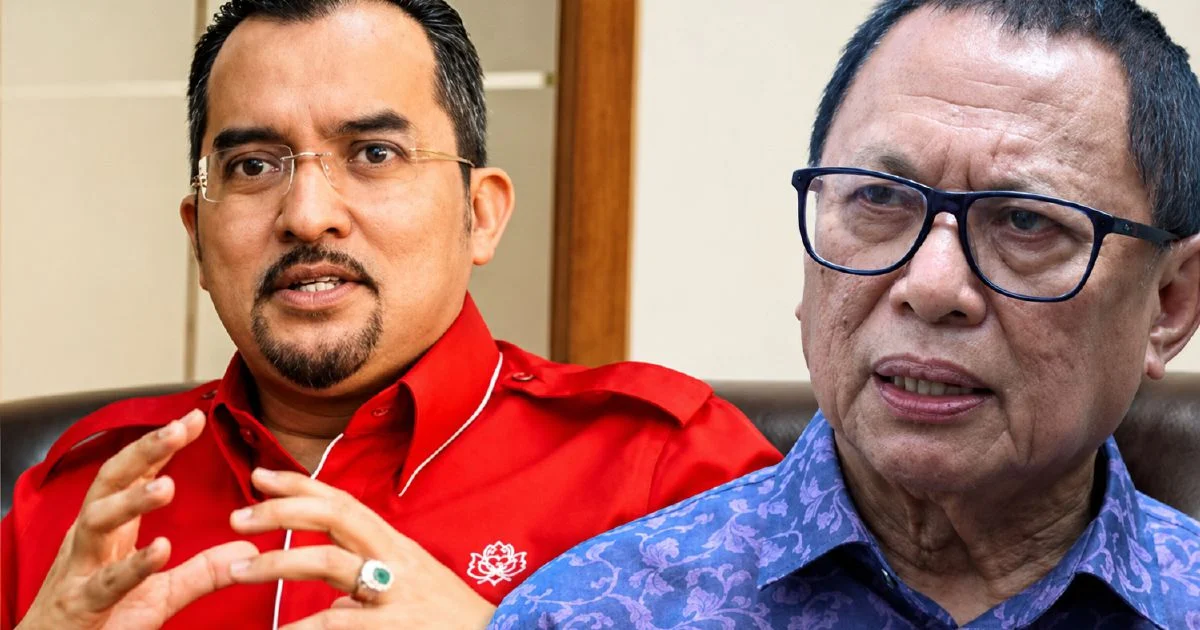
The political landscape within the United Malays National Organisation continues to be marked by internal friction, with senior party figures engaging in public disputes that expose deeper divisions over governance and decision-making processes. In Johor Baru, Datuk Dr Asyraf Wajdi Dusuki, serving as UMNO's secretary-general, has responded with pointed criticism to statements made by Datuk Dr Mohd Puad Zarkashi, who has recently departed from the party. The exchange underscores ongoing tensions within Malaysia's oldest political formation, which has held considerable sway in the federal government and numerous state administrations.
Puad Zarkashi's exit from UMNO triggered a series of assertions about the party's operations and the mechanisms through which crucial decisions are formulated. His public statements appear to have made insinuations regarding the involvement of royal institutions in matters of party management and leadership selection. For a party that traces its heritage to the independence struggle and maintains strong historical ties to the Malay-Muslim establishment, any suggestion about unconventional decision-making channels carries significant weight and requires urgent clarification from party leadership.
Ashraf Wajdi's counter-response demonstrates the severity with which the party's administrative hierarchy views such allegations. The secretary-general position, traditionally one of the most crucial bureaucratic roles in UMNO, places its holder at the intersection of internal party operations and public representation. His direct engagement with these claims suggests that the party considers Puad Zarkashi's statements sufficiently damaging to warrant immediate and unambiguous rebuttal from a figure of his institutional standing.
The nature of Puad Zarkashi's claims concerning palace involvement touches upon sensitive constitutional and political territory in Malaysia. The relationship between political parties and the institution of the Yang di-Pertuan Agong, as well as state sovereigns, remains carefully circumscribed by constitutional convention and political practice. Any implication that royal institutions are making determinations that rightfully belong to party structures and democratic processes within party organisation strikes at fundamental principles of both constitutional monarchy and party autonomy that Malaysians hold dear.
Within the context of UMNO's contemporary challenges, this dispute also reflects broader questions about the party's trajectory and leadership philosophy. The organisation has faced multiple internal crises over recent years, including leadership transitions, questions about governance standards, and shifting allegiances among its membership base. Internal disagreements about how the party should navigate these challenges—whether through consensus-building, hierarchical decision-making, or consultation with external stakeholders—clearly divide prominent figures within the party.
Puad Zarkashi's departure represents a notable loss of parliamentary and administrative experience from UMNO's ranks. His decision to leave suggests that fundamental disagreements exist over either the direction the party is taking or the methods through which decisions are being implemented. Such defections, particularly when accompanied by public criticism, can accelerate momentum among other party members who harbour similar grievances, creating potential cascading effects on party stability and cohesion.
The public nature of this dispute carries implications beyond internal UMNO management. For the coalition government and the various state administrations where UMNO holds significant influence, any demonstration of party fragmentation raises questions about the stability and unity of governing structures. Malaysia's federal system and the complex nature of coalition governments mean that party discipline and internal coherence directly impact governmental effectiveness and policy implementation at multiple levels.
Ashraf Wajdi's role in defending the party's honour and decision-making processes is particularly significant given his position. As secretary-general, he serves as custodian of party constitutional norms and organisational procedures. His response necessarily involves not only defending specific decisions or processes but also upholding the legitimacy of the party's institutional frameworks and the appropriateness of current leadership's authority to make binding decisions affecting party membership and direction.
For UMNO members observing this dispute, the exchange raises fundamental questions about party governance standards and the transparency of decision-making processes. Members may reasonably expect clarity regarding how party leadership operates, how major decisions are reached, and whether external influences inappropriately shape internal party matters. The ability of senior leaders to address these concerns effectively determines whether members retain confidence in their party's institutional integrity and leadership competence.
The broader Malaysian political context adds another layer of significance to this episode. UMNO's health and cohesion remain crucial to the stability of the federal government and numerous state administrations. Any indication of serious internal dysfunction, unresolved governance disputes, or fundamental disagreements about decision-making authority inevitably affects perceptions of the government's overall stability and the reliability of coalitional arrangements that depend on UMNO's consistent participation and discipline.
Looking forward, how the party resolves such disputes—whether through formal disciplinary procedures, transparent explanation of contested decisions, or institutional reforms addressing governance concerns—will substantially influence both UMNO's internal dynamics and its political standing more broadly. The exchange between Asyraf Wajdi and Puad Zarkashi represents more than a simple disagreement between former colleagues; it reflects deeper questions about how UMNO intends to rebuild trust in its institutions and demonstrate that its governance structures can withstand internal scrutiny while maintaining organisational cohesion and effectiveness in serving its members' interests.

