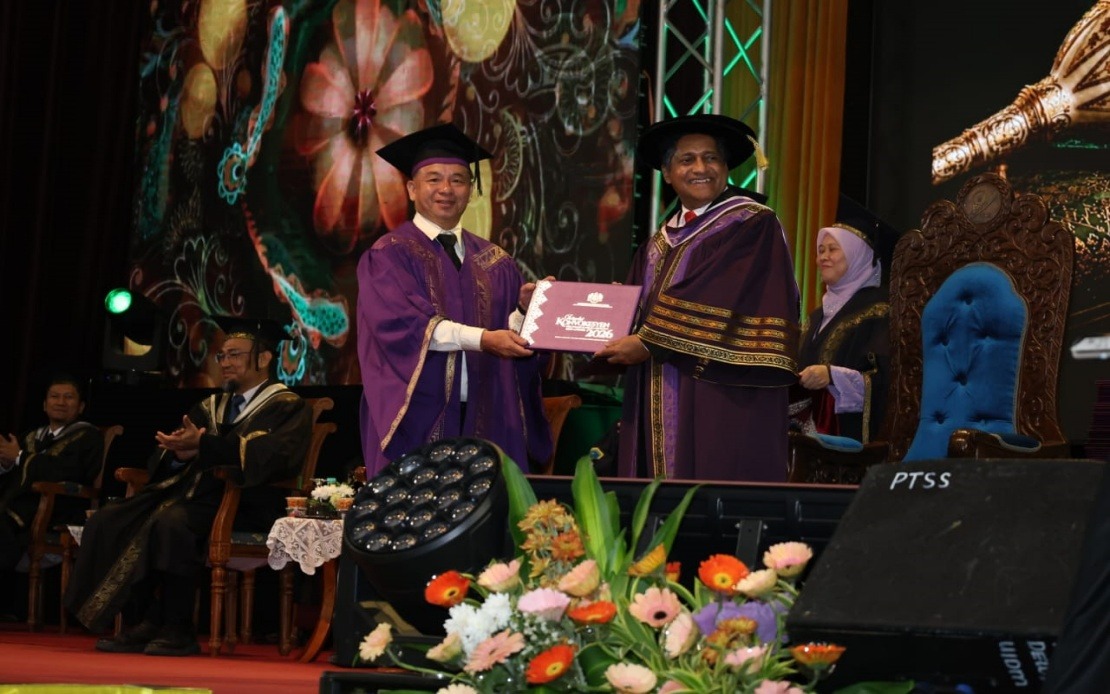
Heng Meng Lai has shattered expectations about when life's major milestones must occur, earning his Diploma in Electrical and Electronic Engineering at age 57 and etching his name into the annals of Seberang Perai Polytechnic as its oldest graduate. The achievement, marked during the PSP Convocation Ceremony 2026 in Bukit Mertajam, represents far more than a personal triumph—it stands as a quiet rebuke to conventional timelines and a powerful statement about the Malaysian education system's capacity for inclusion.
The journey that led Heng to this moment stretches back decades, to a childhood marked by unexpected hardship that would shape his entire worldview. When his father passed away during his ninth year, the responsibility for sustaining the family fell squarely on his mother's shoulders. Working long hours in a sewing factory, she embodied the kind of perseverance that would later characterise her son's own path. Growing up as the third of seven children in such circumstances meant that formal education, while valued, had to be postponed in favour of survival and livelihood. Yet rather than extinguishing his aspirations, these early hardships ignited within him a determination to eventually claim the educational opportunities he had been forced to relinquish.
For nearly five decades, Heng navigated the world of work, climbing gradually from a position as a storekeeper into roles that demanded greater technical responsibility. His employment at an electronics factory proved pivotal, offering him hands-on exposure to the very field that would eventually form the basis of his formal studies. This practical experience did not merely fill time or provide income; it cultivated within him a genuine intellectual curiosity about electrical and electronic systems, transforming what could have remained abstract vocational interest into a burning desire to understand the theoretical foundations underpinning the machines he operated.
When Heng finally made the decisive choice to enrol at Seberang Perai Polytechnic, he stepped into a learning environment where he stood apart from his peers in the most obvious way imaginable. Being substantially older than classmates typically creates distance and awkwardness, yet his account of his polytechnic years reveals something unexpectedly different. The institution's lecturers, rather than viewing his age as an anomaly or obstacle, provided consistent guidance and encouragement that allowed him to integrate meaningfully into the academic community. This supportive institutional culture proved essential, transforming what could have been an alienating experience into one he describes as genuinely meaningful.
The decision to pursue electrical and electronic engineering, rather than some other field, reflects Heng's pragmatic approach to education. He was not returning to polytechnic to pursue some abstract intellectual curiosity disconnected from his livelihood. Instead, he deliberately selected a discipline that both aligned with his existing professional experience and promised genuine career advancement. This grounding in practical reality—the knowledge that his studies would directly enhance his capacity to contribute meaningfully in the workplace—likely sustained him through the considerable demands of completing a technical diploma while managing other responsibilities.
Heng's stated intention to continue advancing his education beyond the diploma level, ultimately pursuing a bachelor's degree, indicates that this graduation represents not a conclusion but rather a waypoint in an extended learning trajectory. This perspective fundamentally challenges the assumption that education operates within rigid chronological windows. For most Malaysians, the traditional pathway sees individuals complete their tertiary education in their early twenties, then transition to the working world for the next four decades. Heng's alternative approach—establishing himself professionally, then returning to formalise and deepen his knowledge through structured learning—offers a viable model for others similarly situated.
The institutional perspective matters equally here. Mohd Ruzi Hamzah, PSP's director, articulated a vision of education as a right belonging to all segments of society, regardless of age or background. This commitment to lifelong learning aligns with Malaysia's broader national aspirations regarding human capital development and workforce skilling. In an era of rapid technological change, where industries transform and job roles evolve unpredictably, the capacity to return to formal education becomes increasingly valuable. Heng's achievement provides concrete evidence that institutions like Seberang Perai Polytechnic can operationalise this commitment in practice.
The timing of Heng's graduation carries particular significance within Malaysia's broader policy context. The government has repeatedly emphasised the importance of developing highly skilled workers capable of competing in knowledge-intensive industries. Yet this aspiration often focuses narrowly on younger workers entering the labour force for the first time. Heng's example demonstrates that reskilling and upskilling opportunities for mid-career workers represent an equally vital component of national human resource strategy. Many Malaysians in their fifties and sixties possess decades of practical experience but lack formal qualifications in their fields. Creating accessible pathways for such individuals to formalise and expand their knowledge could unlock significant economic value while providing workers themselves with enhanced job security and mobility.
Beyond the policy implications, Heng's personal narrative offers something even more valuable: visible proof that personal transformation remains possible regardless of age. In a society where many individuals feel locked into trajectories established in their twenties, his journey radiates a quiet hopefulness. The obstacles he faced—poverty in childhood, limited early educational access, competing work demands across decades—would seem to place higher education permanently out of reach. Yet through sustained commitment and the availability of institutions willing to accommodate non-traditional learners, those barriers dissolved. His diploma now hangs not merely as a credential, but as tangible evidence that circumstances need not be permanent and that returning to education, however delayed, remains genuinely feasible.
The ripple effects of Heng's achievement will likely extend beyond his own career prospects. His former classmates at Seberang Perai Polytechnic, many still in their late teens and early twenties, witnessed daily a mature student managing coursework while drawing on decades of professional experience. That living example probably shifted their perceptions about learning and growth, potentially expanding their own sense of what educational and professional trajectories could include. Similarly, other mature Malaysians contemplating returning to formal study now possess a concrete reference point, proof that the polytechnic system can accommodate them without stigma or marginalisation.
Looking forward, Heng's plan to apply his newly acquired knowledge in the workplace before pursuing a bachelor's degree suggests he envisions education not as a single chapter but as an ongoing engagement spanning multiple years. This extended timeline, rather than representing academic dilatoriness, actually reflects considerable wisdom about learning and professional development. By working first with his diploma-level knowledge, he will deepen his understanding through application, making him better positioned to extract maximum value from subsequent bachelor's-level studies. He will also bring richer professional context to those more advanced studies, enabling him to contribute more meaningfully to classroom discussions and understand theoretical concepts through lived experience.
Ultimately, Heng Meng Lai's achievement transcends the congratulatory framing that such stories often receive. His 57-year-old graduation from Seberang Perai Polytechnic functions as a practical demonstration of Malaysian institutional flexibility and a powerful statement about educational inclusion. It suggests that the nation's polytechnic system, despite resource constraints and competing demands, retains the capacity to serve non-traditional learners. Most importantly, it proves that the belief he articulated—that learning truly has no age limit—is not merely inspirational rhetoric but achievable reality for those with determination and access to supportive institutions.

