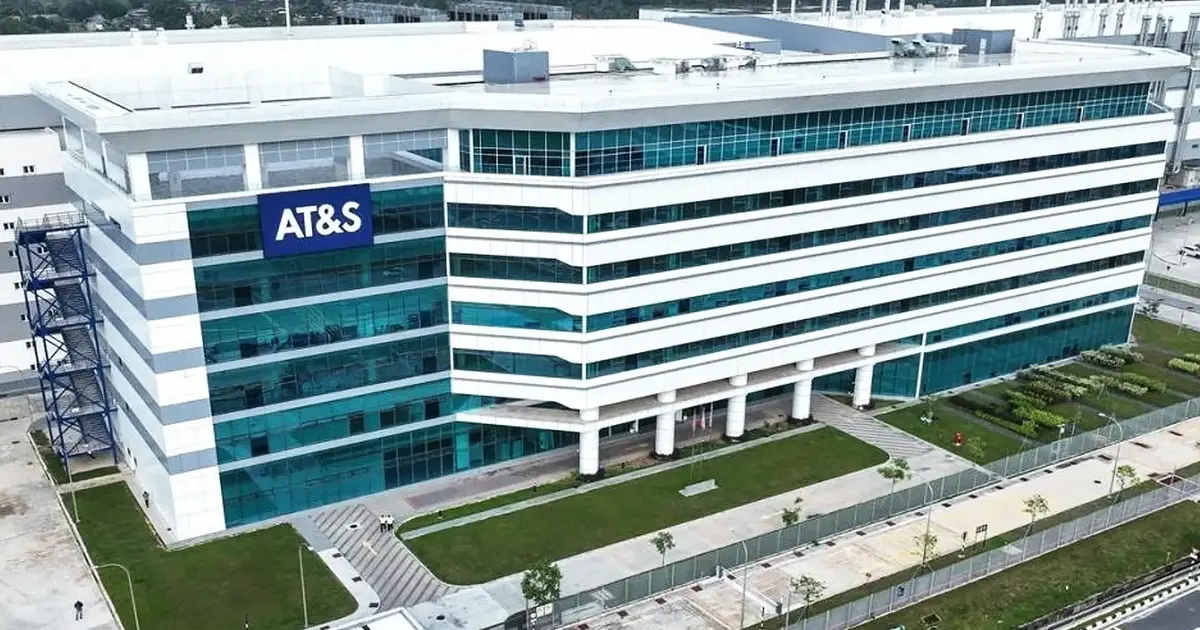
Austria's AT&S has committed RM9.4 billion to establish manufacturing operations in Kulim, marking a substantial injection of capital into Malaysia's semiconductor ecosystem. Prime Minister Anwar Ibrahim characterised the investment as a validation of Malaysia's economic credentials and institutional strength, reflecting how the country continues to attract major international manufacturers despite global supply chain volatility.
The timing of AT&S's decision carries particular significance for Malaysia's technology sector, which has spent the past two years navigating competitive pressures from neighbouring jurisdictions and supply constraints that disrupted global electronics production. By choosing Kulim—an established industrial hub in Kedah with proximity to Penang's existing semiconductor cluster—AT&S signals confidence that the region offers tangible advantages including infrastructure maturity, workforce availability, and policy stability.
AT&S operates as one of Europe's leading printed circuit board manufacturers, serving automotive, industrial, and telecommunications clients across multiple continents. The company's investment demonstrates that even established European manufacturers are willing to expand significantly in Southeast Asia, a shift partly driven by efforts to reduce dependence on single-source suppliers and geographic concentration risks that the pandemic exposed. Kulim's selection over competing locations in Thailand, Vietnam, or India underscores Malaysia's continuing appeal despite higher labour costs and competition from lower-wage alternatives.
Prime Minister Anwar Ibrahim's emphasis on governance reflects a deliberate messaging strategy aimed at institutional investors who increasingly scrutinise political stability and regulatory transparency. Malaysia has worked to rehabilitate its international image following earlier governance concerns, and major foreign investment commitments like AT&S's serve as third-party endorsements of reform progress. The framing of the announcement around governance quality rather than tax incentives suggests confidence that Malaysia can compete on fundamentals rather than through incentive packages alone.
The Kulim investment must be contextualised within Malaysia's broader semiconductor ambitions. The country has long positioned itself as a manufacturing and assembly hub rather than a design or fabrication centre, a division that has proven resilient but increasingly vulnerable as global competition intensifies. AT&S's footprint in printed circuit boards—a critical component in electronics assembly—aligns with Malaysia's existing strengths in contract manufacturing while potentially offering pathways into higher-value applications, particularly in electric vehicle and renewable energy sectors where demand is accelerating.
Penang, located adjacent to Kulim, already hosts substantial semiconductor operations from companies including Intel and Bosch, creating ecosystem advantages through clustering effects and labour mobility. The arrival of AT&S enhances this clustering by attracting related service providers—logistics operators, precision tool suppliers, quality assurance specialists—that strengthen the entire regional ecosystem. This network effect explains why manufacturers continue selecting Malaysia's northwest corridor despite cheaper alternatives elsewhere in Asia.
The investment also addresses demographic and employment considerations for northern Malaysia, where economic diversification beyond agriculture and tourism remains an ongoing policy priority. Kulim's manufacturing operations would generate skilled and semi-skilled employment across multiple tiers, from assembly line workers to process engineers, with potential wage premiums that typically exceed regional averages. Training and skills development arrangements often accompanying such investments create spillover benefits across the local labour market.
However, the semiconductor sector's vulnerability to cyclical downturns warrants realistic assessment. Recent global chip demand has moderated from pandemic peaks, and overcapacity in certain segments has triggered price competition and production cutbacks at major manufacturers. While AT&S's commitment appears robust, economic cycles could affect expansion timelines or employment intensity. Policymakers must balance optimism about confirmed investment with prudent diversification across industries to avoid over-dependence on electronics manufacturing.
The announcement carries implications for Malaysian economic policy positioning relative to regional competitors. Thailand and Vietnam have aggressively courted semiconductor investments through subsidies and regulatory streamlining, yet AT&S's choice of Malaysia suggests that institutional quality and established infrastructure networks retain competitive value. This supports arguments for maintaining discipline in governance and rule of law rather than engaging in subsidy races that erode fiscal space for other development priorities.
Looking forward, AT&S's Kulim facility may serve as an anchor investment attracting complementary suppliers and service providers to the region. The pattern observed in Penang demonstrates that successful industrial clustering creates self-reinforcing dynamics where each major investor makes subsequent investors more likely to choose the same location. If Kulim follows this trajectory, RM9.4 billion in direct capital could catalyse substantially larger ecosystem development.
The investment also reflects longer-term shifts in global supply chain architecture as manufacturers implement geographic diversification strategies. Rather than concentrating production in single countries or regions, leading companies now prefer maintaining facilities across multiple jurisdictions to hedge geopolitical and pandemic risks. Malaysia's inclusion in these diversified networks—alongside Vietnam, Thailand, and India—positions the country for sustained relevance in semiconductor manufacturing even if individual investment cycles fluctuate.