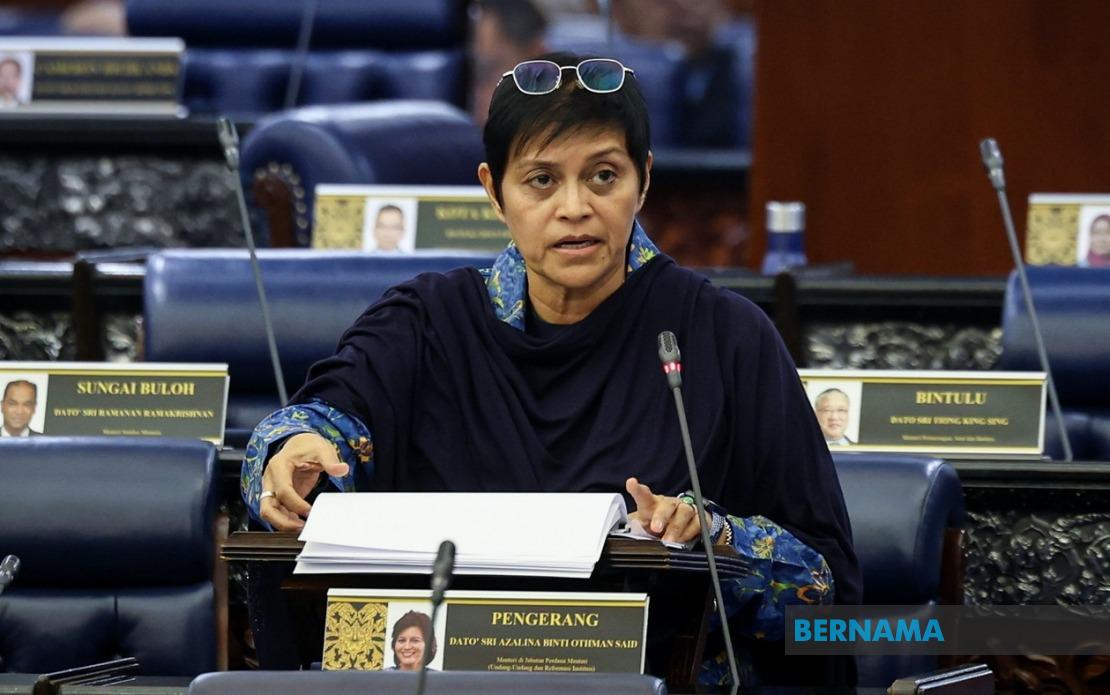
Parliament is set to receive a landmark report tomorrow that would fundamentally restructure Malaysia's prosecutorial framework by divorcing the roles of Attorney General and Public Prosecutor—a development described by the government as pivotal to restoring public faith in the judiciary. Minister in the Prime Minister's Department (Law and Institutional Reform) Datuk Seri Azalina Othman Said characterised the submission of the Special Select Committee's findings as a watershed moment for the MADANI administration's wider push to overhaul the country's institutional architecture.
The seven-member committee undertook an extensive review process, convening seven times to formulate recommendations that would fundamentally alter how Malaysia's chief prosecuting officer operates. Rather than serving dual roles under one official, the proposed framework envisions a standalone Public Prosecutor position insulated from executive interference, a structural separation long advocated by rule-of-law advocates who argue that prosecutorial independence is essential to fair trials and public confidence in justice.
Central to the committee's blueprint is a reconfigured appointment mechanism that substantially weakens executive dominance in prosecutorial selection. Under current arrangements, the Prime Minister exercises considerable influence over who holds the office. The proposed system would empower the Judicial and Legal Service Commission (SPKP) to recommend candidates directly to the Yang di-Pertuan Agong without prime ministerial or Cabinet involvement—a critical safeguard against partisan influence. This reflects international best practice in democracies where separating the prosecution service from day-to-day government control is viewed as essential to maintaining prosecutorial credibility.
The committee's seven substantive proposals address multiple dimensions of institutional fragility. Beyond appointment reforms, the recommendations include establishing enforceable ethical standards through a dedicated Code of Ethics, imposing a fixed seven-year non-renewable tenure to insulate the office-holder from reappointment pressure, and strengthening parliamentary oversight mechanisms. These layered protections collectively aim to create an institutional environment where the Public Prosecutor can pursue cases on legal merit rather than political calculation—a distinction that has acquired heightened salience in Malaysia given previous concerns about selective prosecution.
Parliamentary involvement assumes particular importance in this redesigned architecture. The SPKP would forward its recommended candidate to the Speaker of the Dewan Rakyat, who would then present the name for examination by a House Select Committee before returning a recommendation to the commission. This two-stage parliamentary vetting process mirrors mechanisms employed in established democracies and provides an additional filter against unsuitable appointments. The Yang di-Pertuan Agong, acting on the SPKP's advice informed by parliamentary scrutiny, would then make the final appointment, preserving constitutional propriety while substantially constraining executive manipulation.
Towards this end, the government has already drafted constitutional amendments targeting Article 145A, Clause (18) of the Federal Constitution to formally embed these procedural changes. Constitutional amendments require supermajority parliamentary support, underscoring the government's intention to entrench these safeguards against future reversal. Such permanence signals confidence that the proposed measures command sufficient cross-party backing, though the amendment process will inevitably invite vigorous parliamentary debate about institutional design and executive prerogatives.
The separation logic extends beyond appointment procedures to operational autonomy. Azalina's statement emphasises that the reform transcends mere administrative reorganisation; rather, it seeks to construct prosecutorial institutions characterised by demonstrable independence, transparency, and accountability. These three pillars respond directly to erosions of confidence that accompanied periods when prosecutors appeared politically captured. For Southeast Asian observers, Malaysia's institutional reckoning carries implications for regional perceptions of judicial reliability, particularly among investors and civil society actors who assess investment risk and democratic quality partly through lens of prosecutorial impartiality.
The timing of this institutional overhaul occurs within the broader context of the MADANI Government's self-positioning as a reformist administration committed to strengthening democratic fundamentals. By advancing prosecutorial independence, the government signals willingness to constrain executive authority—a potentially costly political decision that distinguishes this reform from purely performative institutional tinkering. Critics have long contended that Malaysia's judiciary suffered from executive capture, particularly during periods of political instability, and the proposed separation represents an attempt to address those structural vulnerabilities.
For ordinary Malaysians navigating the court system, clearer prosecutorial independence could translate into greater confidence that criminal proceedings proceed on legal grounds rather than political considerations. The reputational dimension looms large; countries perceived as having politically influenced prosecution services struggle to attract foreign direct investment and face criticism from international governance indices. Malaysia's regional standing as a major Southeast Asian economy depends partly on perceptions that its institutions function with integrity, and prosecutorial reform directly addresses one critical vulnerability.
The seven-year non-renewable term deserves particular attention, as it addresses a persistent structural weakness. Renewable tenures create implicit pressure on office-holders to accommodate executive preferences to secure reappointment, a dynamic the committee clearly sought to eliminate. By ensuring the Public Prosecutor knows they will exit office after a set period regardless of performance evaluations, the reform removes incentives to cultivate executive favour. This represents a significant departure from Malaysian governance norms, where patronage relationships and career advancement expectations typically condition bureaucratic behaviour.
The committee's establishment of a dedicated Code of Ethics addresses the professional standards dimension that appointments and tenure reforms cannot fully capture. Ethical frameworks provide explicit guidance about permissible prosecutorial conduct, offer grounds for disciplinary action against misconduct, and signal to the broader profession the standards expected of senior office-holders. Code provisions typically address conflicts of interest, impartiality obligations, and transparency requirements—provisions that become enforceable metrics rather than aspirational principles.
As parliament prepares to debate these recommendations, several analytical questions will likely surface. Will opposition parties support constitutional amendments required to entrench these protections? How will the detailed legislation implementing these reforms address transitional questions regarding existing prosecutorial office-holders? Will accompanying institutional changes—including potential restructuring of prosecutorial offices and training regimes—adequately support a genuinely independent service? These implementation questions will ultimately determine whether the framework materialises into substantive change or remains a well-intentioned constitutional provision awaiting genuine operationalisation.

