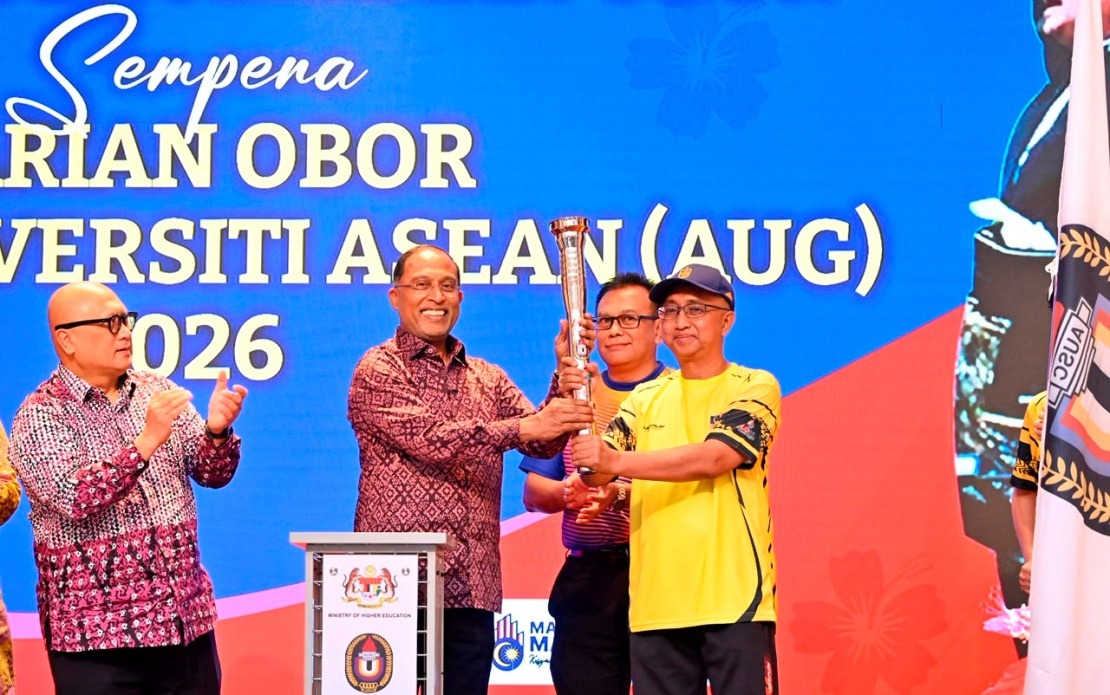
Malaysia has launched an official torch run to commemorate the forthcoming ASEAN University Games (AUG) 2026, a symbolic gesture underscoring the country's readiness to host what will be the region's premier university sports competition. The ceremony took place at the Ministry of Higher Education (MOHE) headquarters in Putrajaya, where Higher Education Minister Datuk Seri Dr Zambry Abd Kadir formally handed the torch to Prof Dr Mohammad Ismail, Deputy Vice-Chancellor of Universiti Malaysia Kelantan, who leads Malaysia's contingent of competing athletes.
The torch run carries particular significance as Malaysia prepares to welcome thousands of university athletes from across Southeast Asia in December. Beyond the ceremonial aspect, the initiative reflects a deliberate effort by the government to inspire domestic sports talent and reinforce the message that competing athletes represent far more than individual institutions—they embody national aspirations and pride. Dr Zambry's remarks during the handover ceremony emphasised that athletes carry a dual responsibility: achieving personal and team success while safeguarding Malaysia's reputation across the ASEAN region.
The initial leg of the torch journey traversed government institutions, moving from the Ministry of Higher Education to the Ministry of Tourism, Arts and Culture (MOTAC) before returning to MOHE. This route through key government departments underscores the multi-ministerial coordination required to deliver a successful international sporting event. The subsequent phases of the relay will extend the symbolic torch run to Malaysia's leading universities, including Universiti Kebangsaan Malaysia, Universiti Putra Malaysia, Universiti Pertahanan Nasional Malaysia, Universiti Malaya, and Universiti Teknologi MARA. This broad institutional participation signals a nationwide commitment to the games.
Four accomplished national athletes accompanied the torch run, serving as ambassadors for the competition. Long jumper Andre Anura Anuar and shot putter Nani Sahirah Maryata both represent Universiti Putra Malaysia, while karate competitor Thevendran Kaliana Sundram competes under the colours of Universiti Pertahanan Nasional Malaysia. Taekwondo athlete Lee Hui Yee represents Sultan Salahuddin Abdul Aziz Shah Polytechnic. The inclusion of athletes from both traditional universities and polytechnic institutions reflects the games' inclusive scope and demonstrates that excellence in university sports transcends institutional boundaries across Malaysia's higher education ecosystem.
The scale of the AUG 2026 gathering is substantial by regional standards. The games will convene approximately 4,669 participants across December 10 to 19, comprising 2,849 athletes and officials representing 11 countries, supplemented by 700 referees and competition officials alongside 920 volunteers. This logistical undertaking requires meticulous coordination across multiple host cities and venues. Competitions will span four locations—Shah Alam, Kuala Lumpur, Serdang, and Bangi—distributing sporting activities across the greater metropolitan region and leveraging existing sports infrastructure throughout the Klang Valley area.
Nineteen sports disciplines will feature in the competition schedule, providing diverse opportunities for university athletes to showcase their capabilities. The thematic framework governing the games, "HOLISTIC.EXCELLENCE," signals an intention to promote not merely athletic achievement but comprehensive development of student-athletes. This emphasis on holistic excellence aligns with contemporary international perspectives on university sports, which increasingly prioritise the educational and personal development dimensions alongside competitive outcomes.
From Malaysia's regional positioning perspective, hosting the ASEAN University Games represents a significant soft power opportunity. The event elevates Malaysia's profile as a capable organiser of multinational sporting competitions while fostering people-to-people connections across Southeast Asia through university sport. For Malaysian athletes, competing before home crowds and within familiar venues offers psychological and logistical advantages, potentially contributing to strong medal performances that could enhance national prestige within the region.
The torch run also serves a practical recruitment and inspiration function. By parading accomplished athletes through universities and government institutions, the initiative cultivates awareness among younger students of the possibilities available through university sports pathways. This visibility can prove instrumental in encouraging talented young people to pursue athletic excellence while maintaining their academic commitments, contributing to a more robust domestic pipeline of university-level competitors.
Looking ahead, Malaysia's successful hosting of AUG 2026 will likely influence how ASEAN nations perceive Malaysian institutional capacity and organisational competence in managing complex international events. Strong execution could position Malaysia favourably for consideration of future regional sporting competitions, establishing the country as a reliable and capable host within the Southeast Asian sporting community. The torch run, though ceremonial in nature, represents the opening chapter of what promises to be a defining moment for Malaysian university sports on the ASEAN stage.

