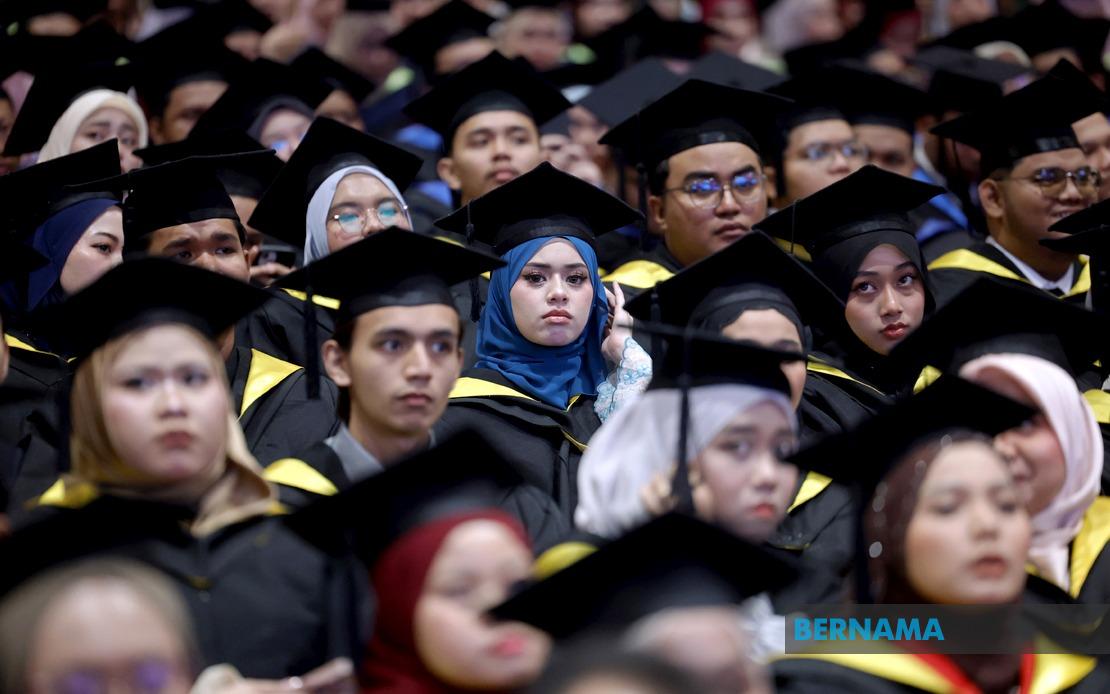
The Malaysian government's decision to repeal the Universities and University Colleges Act (AUKU) 1971 represents a significant policy shift aimed at modernising higher education governance in line with global standards and contemporary needs. Prime Minister Datuk Seri Anwar Ibrahim announced the government's intention to proceed with full repeal rather than continued piecemeal amendments, setting the stage for discussion at the Cabinet meeting scheduled for the following Wednesday. This announcement has prompted substantive responses from academic observers, institutional leaders, and student representatives, offering varying perspectives on what constitutes one of Malaysia's most consequential decisions affecting university autonomy in recent years.
Academic experts argue that the repeal should be understood not as a dismantling of university governance structures but as a deliberate recalibration of the regulatory framework governing higher education institutions. Associate Prof Dr Abd Razak Zakaria, a senior lecturer at Universiti Malaya's Faculty of Education, has emphasised that dismantling AUKU does not entail removing the foundational legal architecture upon which Malaysian universities operate. Instead, the move seeks to craft a more robust and contemporary legislative framework capable of addressing the complexities and demands of twenty-first-century higher education. According to his analysis, provisions addressing student political engagement represent only a narrow slice of AUKU's comprehensive regulatory scope, suggesting that concerns about wholesale deregulation misunderstand the targeted nature of the reform.
The substance of institutional continuity forms a critical reassurance for those concerned about administrative disruption. Zakaria outlined that essential protective mechanisms remain firmly in place following repeal, including protocols governing the selection and appointment of university leadership, oversight of financial resources and budgetary allocation, the constitutional authority of institutional senates and boards of directors, and the fundamental principle of academic freedom. These elements comprise the institutional backbone of Malaysian universities and will persist under the reformed legislative architecture, preserving the checks and balances that have characterised university governance. The move towards comprehensive legislative replacement rather than incremental amendment reflects a strategic judgment that Malaysia's universities require a fundamentally reimagined regulatory framework suited to future challenges rather than perpetual Band-Aid adjustments to decades-old legislation.
The historical trajectory of AUKU amendments demonstrates a pattern of incremental liberalisation spanning more than five decades. Since its introduction in 1971, the statute has undergone seven distinct amendment cycles, with modifications occurring in 1975, 1983, 1996, 2009, 2012, and most recently in 2024. These successive interventions have progressively expanded student agency and institutional flexibility. The 2012 amendment proved particularly significant by permitting student participation in political party activities conducted beyond campus precincts, establishing important new boundaries for political engagement. More recently, 2024 amendments transferred disciplinary decision-making authority from vice-chancellors to newly constituted Student Disciplinary Committees, while simultaneously expanding student representative bodies' fundraising capacities and flexibility in soliciting financial support.
Ahmad Faisal Mohamed Fiah, a senior lecturer at Universiti Teknologi MARA's Faculty of Communication and Media Studies and former member of the AUKU Amendment Main Committee (2021-2023), has characterised the repeal decision as pragmatically justified rather than radical. His institutional experience during the recent amendment process positions him to observe that successive legislative refinements had already substantially shifted AUKU from its original restrictive posture toward a more permissive framework. He argues that the trajectory of amendments had effectively liberalised student involvement without requiring complete legislative abandonment. However, he contends that comprehensive repeal offers strategic advantages by signalling a definitive break from the regime's historical restrictions and creating expanded institutional space for student maturation and autonomous development. His perspective suggests that legal form carries symbolic weight beyond its technical provisions, and the psychological transition from amending toward replacing represents meaningful institutional transformation.
Critically, Faisal emphasises that AUKU never functioned as an absolute prohibition on student political engagement, contrary to popular perception. Rather, successive amendments progressively carved out exceptions and expanded permissible conduct. This corrective observation challenges prevailing narratives that characterise AUKU as monolithically repressive, suggesting instead that the statute evolved through contested political processes into a more permissive instrument. The distinction matters for understanding what the repeal actually accomplishes: not liberation from total prohibition but rather formalisation of freedoms already recognised through amendment. This framing positions the government's repeal decision within a continuity narrative rather than portraying it as dramatic reversal, thereby potentially reducing institutional anxiety regarding the transition period.
Student leadership has cautiously welcomed the reform agenda while raising practical implementation concerns. Aiman Izzat Shamsuddin, president-elect of Universiti Malaya Students' Union for the 2025-2026 academic session, affirmed student support for the repeal initiative but highlighted the necessity for transparent timelines and methodical transition planning. His intervention reflects student perspectives that legal architecture matters less than the substantive freedoms available for campus political organising and expression. His specific concern regarding "cut-and-paste" restrictions in successor legislation suggests anxiety that nominal repeal might merely transfer problematic provisions into a renamed statute, thereby accomplishing little substantive change. This apprehension underscores that students view the repeal as meaningful only insofar as it produces genuine expansion of political rights and freedoms rather than cosmetic legislative repackaging.
The timing of this reform initiative intersects with broader regional and international conversations regarding university autonomy and student agency in Asia-Pacific higher education contexts. Malaysia's decision to repeal its foundational university statute reflects diplomatic and educational currents pushing Southeast Asian governments toward recognising institutional self-governance and student voice as prerequisites for global research competitiveness and educational quality. Regional universities increasingly face pressure to demonstrate alignment with international standards emphasising participatory governance and academic freedom. By repositioning its regulatory approach, Malaysia signals commitment to these global norms while managing domestic political sensitivities regarding student activism. The repeal therefore serves multiple audiences simultaneously: international higher education observers evaluating Malaysia's commitment to scholarly standards, student constituencies demanding meaningful political space, and institutional leaders requiring administrative flexibility.
The relationship between this policy reform and Malaysia's broader economic and social development strategy deserves scrutiny. Education policymakers have consistently articulated that nurturing future leaders capable of navigating complex global challenges requires educational environments fostering critical thinking, democratic participation, and civic responsibility. Zakaria's framing of the repeal as enabling the country to develop a "competitive and future-ready generation with leadership qualities" connects institutional governance reform to national competitiveness objectives. This logic suggests that students restricted from political engagement or organisational experience may emerge less prepared for leadership responsibilities in private and public sectors. The repeal thus functions not merely as symbolic acknowledgment of student rights but as instrumental policy aimed at human capital development.
Transition management will prove decisive in determining whether repeal achieves intended outcomes or merely creates confusion and regulatory gaps. The emphasis by both student leaders and academic observers on implementation timelines reflects legitimate concerns regarding the vulnerability period between repeal and replacement legislation. Malaysian universities require certainty regarding applicable rules governing student conduct, disciplinary procedures, and administrative authority. The Cabinet discussion following announcement will presumably address transition mechanisms, presumably specifying effective dates for repeal and enacting replacement statutes. The absence of clear transition planning could paradoxically undermine the repeal's legitimacy by creating perceptions of administrative improvisation.
The substantive content of replacement legislation will ultimately determine whether this reform achieves the progressive outcomes that advocates envision. Experts have outlined the essential protections requiring continuity, including academic freedom, institutional autonomy, and governance structures. However, the precise language governing student political activities, protest rights, assembly procedures, and institutional liability for student conduct remains to be drafted. The process through which replacement legislation is developed, including stakeholder consultation and parliamentary scrutiny, will shape the legislation's ultimate character. Students' concerns regarding potential restrictive provisions being incorporated into successor statutes highlight the continued relevance of legislative drafting processes even after initial repeal.
Regionally, Malaysia's approach to this fundamental university governance question will likely influence conversations among neighbouring Southeast Asian nations regarding higher education autonomy and student engagement. Several regional governments grapple with similar tensions between institutional autonomy demands and political anxieties regarding student organising. Thailand, Indonesia, and the Philippines have all confronted periodic conflicts regarding university governance and student activism. Malaysia's experience implementing AUKU repeal and transitioning to reformed governance frameworks may either validate reform pathways that other regional governments might cautiously emulate or serve as cautionary example of institutional disruption risks accompanying major legislative reconstruction.
The broader significance of this reform extends beyond technical governance modifications toward fundamental questions regarding the role universities occupy in democratic societies. The repeal of AUKU represents implicit acknowledgment that Malaysia's universities should function as spaces fostering informed citizenship, political engagement, and leadership development rather than institutions primarily tasked with managing and restricting student political behaviour. This philosophical repositioning, if consistently implemented and supported by replacement legislation and institutional culture, could meaningfully alter the character of Malaysian higher education. However, translating policy intention into institutional reality requires sustained commitment from government, university leadership, and student constituencies throughout an extended implementation period.

