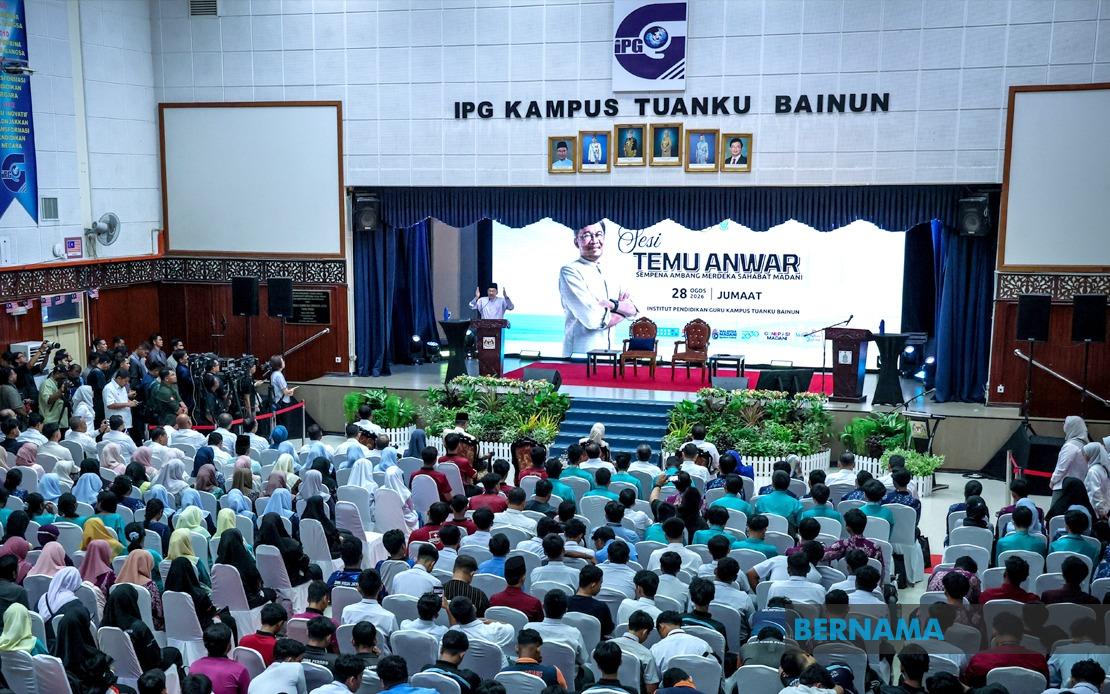
Prime Minister Datuk Seri Anwar Ibrahim has defended the government's decision to scrap the Universities and University Colleges Act 1971 (AUKU), framing the controversial repeal as essential to nurturing an informed and intellectually engaged generation. Speaking at a Temu Anwar session in Bukit Mertajam on August 28, Anwar positioned the abolition as a necessary step to dismantle outdated restrictions that have constrained student expression for over five decades.
The AUKU, enacted during Malaysia's early post-independence era, has long been criticised by civil liberties advocates and student groups as an anachronistic constraint on freedom of association and political participation. Anwar's intervention represents a significant policy shift from the historical approach of containing student activism, which many observers traced to concerns about campus radicalism during earlier political eras. The Prime Minister contended that the contemporary context demands a fundamentally different philosophy, one premised on trust in young Malaysians rather than suspicion of their intentions.
At the crux of Anwar's argument lies a straightforward demographic and civic logic. He emphasised that Malaysian students, having attained the age of 18, possess the legal capacity to vote and hold citizenship responsibilities equivalent to other adults. In this light, he posed a direct challenge to the paternalistic framework underpinning AUKU: if young citizens are entrusted with electoral participation, why should their campus speech and association face statutory prohibition? The reasoning appeals to consistency within liberal democratic principles, even as it sidesteps more complex debates about institutional governance and university autonomy.
Beyond the removal of legal restrictions, Anwar positioned the AUKU repeal as instrumental to fostering intellectual development and creative expression among undergraduates. He articulated a pedagogical vision in which students are encouraged not merely to absorb established knowledge but to interrogate assumptions, propose alternative perspectives, and engage in substantive debate. This framing aligns with contemporary educational philosophy emphasising critical thinking and problem-solving as essential competencies for knowledge economies. For Malaysian universities seeking to enhance their international standing and research output, such an environment may indeed facilitate the kind of open intellectual exchange increasingly valued in global academic rankings.
The Prime Minister acknowledged that student voices will not always prove correct or persuasive. Rather than interpreting this as grounds for restriction, he presented it as an inherent feature of genuine democratic discourse. Errors and misconceptions, in this view, are best addressed through counter-argument and evidence rather than administrative prohibition. This reflects a confidence in the marketplace of ideas—a belief that rigorous debate ultimately produces better collective understanding than top-down suppression of dissenting views.
Education Minister Datuk Seri Fadhlina Sidek's presence at the session underscored governmental alignment on this policy direction, though broader stakeholder perspectives remain contested. University administrators have raised practical concerns about managing campus order and institutional operations without the regulatory tools AUKU previously provided. Alumni and conservative voices have expressed apprehension about potential disorder, while student activists and civil society organisations have largely welcomed the reform as overdue recognition of democratic freedoms.
For Malaysia, the AUKU repeal carries implications extending well beyond university campuses. The decision signals a willingness by the current administration to dismantle security-focused frameworks installed in previous decades, trusting social and political stability to institutional processes rather than legal suppression. In a region where several governments maintain restrictive speech laws and limits on student organising, Malaysia's step stands as notable, though its implementation will test whether rhetorical commitments to freedom translate into substantive protection.
The timing of Anwar's remarks reflects broader conversations within Malaysian governance about balancing development, security, and democratic opening. As the nation aspires to position itself as a progressive regional player attracting international talent and investment, an environment conducive to intellectual innovation and youthful participation becomes strategically valuable. Conversely, critics worry that removing regulatory scaffolding without concurrent strengthening of institutional governance frameworks or civil society norms could create vacuums filled by extremism or sectarian mobilisation.
Implementing the AUKU repeal will require coordinated action across multiple agencies. Universities must develop new internal policies and disciplinary procedures appropriate to a less restrictive legal environment. Student organisations will need to establish their own governance structures and accountability mechanisms. Government agencies responsible for security and public order must calibrate responses to campus activism within constitutional protections for expression and assembly. The transition from a restrictive statute to a more permissive framework is inherently complex and will likely generate ongoing tension and clarification through practice.
For Malaysian students and their families, the AUKU repeal represents both opportunity and responsibility. Greater freedom to organise, speak, and advocate creates space for meaningful political participation and civic engagement during formative years. It also places emphasis on students themselves to exercise these rights thoughtfully, recognising that institutional and societal acceptance of broader freedoms depends partly on their judicious exercise. Educational institutions, in turn, must invest in fostering the critical thinking and ethical reasoning capacities that make expanded freedom genuinely productive rather than merely permissive.
The broader trajectory of this policy development will influence Malaysia's trajectory on democratic governance and institutional reform. If the AUKU repeal proves successful in enhancing intellectual vibrancy while maintaining social stability, it may embolden further review of restrictive legislation. Conversely, if implementation generates significant institutional friction or security concerns, political pressure may mount to restore some regulatory constraints. The experiment underway thus carries significance far beyond the immediate campus context, shaping how Malaysia negotiates the relationship between liberty and order in its ongoing democratic development.

