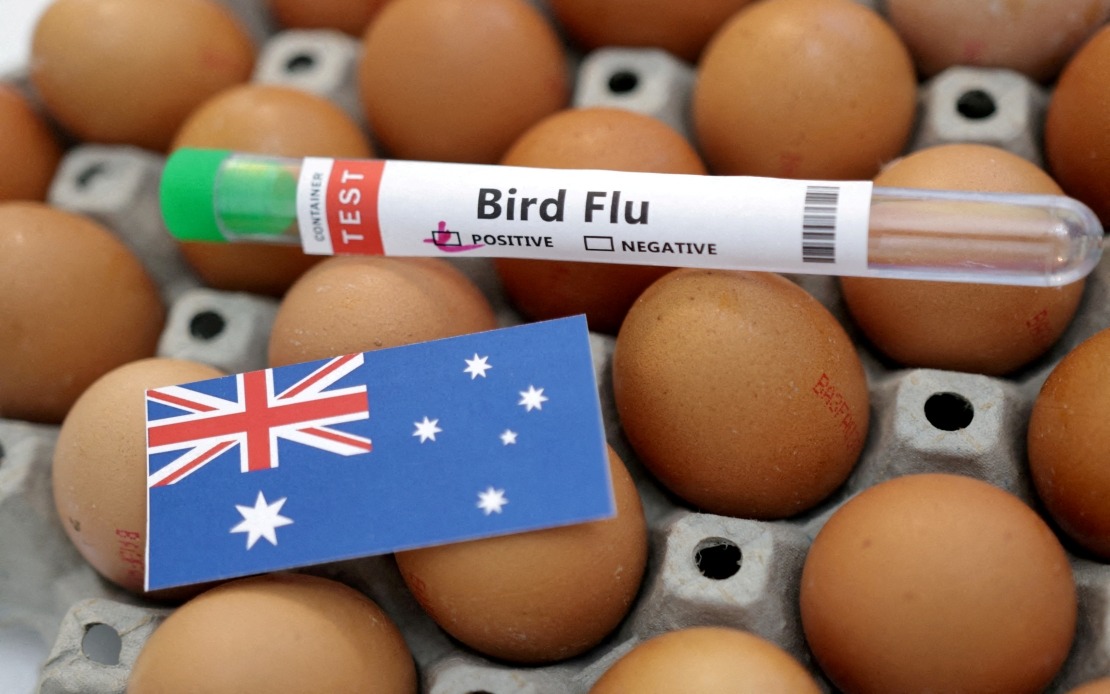
Australia's agriculture authorities have confirmed a significant milestone in the country's battle against avian influenza: the detection of H5N1 in a locally-present bird species rather than migratory visitors from distant regions. Minister for Agriculture Julie Collins announced on Friday that a greater crested tern discovered deceased near Robe in South Australia had tested positive for the highly pathogenic strain, representing the first such finding in Australia's resident wildlife population.
This development marks a critical shift in the epidemiological profile of H5N1 in the Australian context. Prior to this discovery, every confirmed case on the Australian mainland had been traced to migratory bird populations originating from the sub-Antarctic region, suggesting the virus arrived seasonally through natural bird movement patterns. The detection in a non-migratory species now indicates that the pathogen has established a foothold amongst birds that remain in Australian waters year-round, fundamentally altering the risk calculus for public health authorities throughout the region.
The implications for Southeast Asia, where Australia's biosecurity challenges have direct relevance, are noteworthy. The H5N1 strain has circulated in East and Southeast Asian poultry populations for over two decades, and the virus's successful adaptation to Australian coastal ecosystems demonstrates its capacity to persist and spread across vastly different geographical and ecological contexts. For Malaysian authorities, who maintain active surveillance networks and regular information-sharing with regional partners, this Australian case reinforces the importance of sustained vigilance at ports, farms, and wildlife habitats.
Minister Collins emphasised that enhanced surveillance measures have been deployed in the immediate area where the infected tern was found, while scientific teams have begun investigating the transmission pathway that led to the bird's infection. Understanding how the virus moved from migratory species to this sedentary population remains a priority for epidemiologists, as such knowledge will inform future prevention strategies and help predict where the virus might establish itself next.
The announcement came as authorities revealed that two additional H5N1 cases have been confirmed in South Australia and one further case in Western Australia, bringing the total number of confirmed infections on the Australian mainland to twelve. This accumulation of cases across multiple states, combined with the shift from migratory to resident bird species, suggests the virus may be becoming more entrenched in Australian wildlife ecosystems than previously anticipated.
Australia had held the distinction of being the sole continent without a documented H5N1 case in its wildlife until June of this year, when the first detection occurred in Western Australia. The subsequent discoveries across multiple states over the following weeks have compressed a timeline that public health officials had hoped would be much longer. The speed with which the virus has spread geographically and crossed ecological boundaries has surprised some observers and underscores the pathogen's evolutionary flexibility.
Collins framed the discovery within Australia's broader biosecurity framework, characterising it as evidence that the nation's detection systems are functioning effectively rather than a failure of preventive measures. She stressed that while the development presents legitimate concern, it aligns with epidemiological expectations given the virus's global prevalence and the impossibility of completely insulating any nation from wildlife-borne pathogens. This messaging seeks to balance public reassurance with honest acknowledgment of the threat.
For Malaysian authorities and regional counterparts in Southeast Asia, the Australian experience offers practical lessons. The greater crested tern incident demonstrates that even non-migratory seabirds—species that might seem inherently lower-risk because they do not travel across international borders—can become infected and potentially serve as vectors for continued spread. This argues for comprehensive surveillance extending beyond the obvious conduits of international bird migration to encompass resident populations in areas of known or suspected H5N1 activity.
The investigation into transmission pathways will prove particularly instructive as it unfolds. If the greater crested tern contracted H5N1 from contact with migratory birds during a specific seasonal overlap, the finding would support existing models and suggest that timing of migration events remains a critical variable in Australian H5N1 epidemiology. Conversely, if the infection appears to have originated through contact with infected poultry or other domestic species, it would signal a concerning expansion of the virus's ecological niche that would demand urgent policy responses.
Regional governments, including Malaysia's Ministry of Agriculture, will undoubtedly monitor the Australian investigation closely and assess whether findings have applicability to their own contexts. Southeast Asia's proximity to major bird migration routes, combined with its significant poultry industries and subsistence farming practices, creates conditions that differ substantially from Australia's primarily wildlife-based exposure. Nevertheless, the principle that H5N1 can adapt to diverse ecological circumstances remains universally relevant.
Looking forward, the Australian authorities' commitment to sustained surveillance in affected areas and their collaborative approach with scientific institutions should serve as a model for regional coordination. The virus's presence in Australian resident birds does not pose an immediate direct threat to human populations, as wild bird-to-human transmission remains rare. However, the precedent that the virus can establish itself in local wildlife populations raises the possibility of eventual spillover to domestic poultry or, in the most concerning scenario, adaptation that would increase human transmissibility.
The confirmation that Australia's biosecurity systems detected this case and are now implementing appropriate responses offers some reassurance, but also underscores the perpetual vigilance required to manage zoonotic threats in an interconnected world. For Malaysia and other Southeast Asian nations accustomed to H5N1's endemic presence, the Australian case serves as a reminder that sustained commitment to surveillance infrastructure, prompt reporting of suspected cases, and coordinated regional communication channels remain essential components of effective pandemic preparedness.

