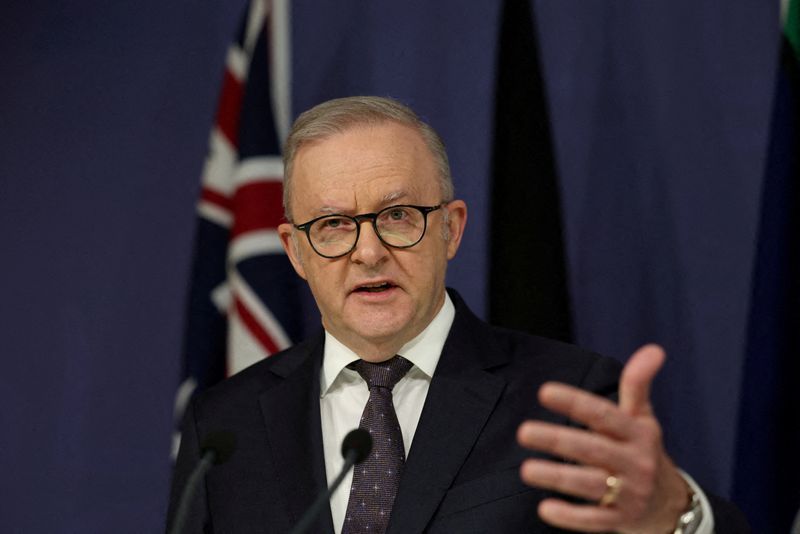
Australia is taking a significant step toward managing artificial intelligence at the national level by establishing a dedicated Office of AI within the Department of the Prime Minister and Cabinet. The announcement, expected from Prime Minister Anthony Albanese in a major policy address in Sydney, signals the government's commitment to developing a cohesive framework for AI governance that extends across all federal ministries and agencies. This centralised approach represents a departure from Australia's previous piecemeal handling of AI issues, which have been addressed separately by different sectors and departments without coordinated oversight.
The establishment of this office reflects growing recognition that artificial intelligence requires the same comprehensive governmental attention that previous transformative technologies demanded. Albanese is expected to draw historical parallels, noting that just as the government developed coordinated responses to civil aviation in the 1920s and genetic technology in the 1990s, modern governance must similarly adapt to the rapid development and deployment of AI systems. This framing acknowledges that fragmentary regulation across different sectors creates gaps, duplication, and uncertainty that ultimately hamper both responsible innovation and effective risk management.
For Australia's economic positioning, the move carries significant strategic weight. By establishing clearer approval pathways and a more unified compliance framework, the government intends to enhance the country's attractiveness as a destination for artificial intelligence investment and development. Tech companies and venture capital investors often require regulatory certainty before committing substantial resources to new markets. A streamlined, whole-of-government approach signals to international and domestic investors that Australia offers both a business-friendly environment and credible oversight mechanisms—a combination that many jurisdictions struggle to achieve simultaneously.
The regulatory vacuum surrounding artificial intelligence has become increasingly untenable as the technology proliferates across Australia's economy. Currently, the country lacks any dedicated AI legislation, instead relying on a patchwork of existing privacy laws, consumer protection statutes, and a voluntary AI ethics framework. This approach has proven inadequate as AI systems move from experimental applications into mainstream commercial and governmental use. The voluntary framework, while well-intentioned, cannot adequately address emerging challenges where compliance incentives are weak or where competitive pressures push companies toward less cautious practices.
Concerns about artificial intelligence's economic and social impacts have intensified in recent months, creating political momentum for more robust regulatory action. Labour displacement represents a primary anxiety, with workers and unions increasingly vocal about potential job losses across sectors ranging from professional services to manufacturing. Beyond employment, critics worry that the vast computational resources required to train and operate advanced AI models will generate unsustainable energy demands and strain water resources, particularly as data centre expansion accelerates across Australia. These environmental concerns are especially acute in a country already grappling with water scarcity in many regions.
Safety and security risks accompanying AI deployment have also drawn heightened attention. As these systems become embedded in critical infrastructure, financial systems, and health services, the potential consequences of failures or malicious exploitation increase substantially. Additionally, intellectual property concerns loom large as generative AI systems trained on copyrighted content raise questions about creator compensation and copyright protection. The cumulative effect of these concerns has pushed the government toward demonstrating concrete action rather than relying solely on voluntary industry compliance.
Australia's initiative arrives amid a global rush to establish AI governance frameworks. Other developed nations have pursued varying regulatory philosophies, from the European Union's comprehensive AI Act to lighter-touch approaches in other jurisdictions. Australia's decision to create a centralized coordinating office reflects lessons learned from watching how other countries have navigated these challenges. By situating the office within the Prime Minister's department rather than within a specific sectoral ministry, the government ensures that AI governance remains insulated from the particular interests of any single industry or portfolio, enhancing the likelihood of balanced policymaking.
The implications for Southeast Asia and the broader Indo-Pacific region are noteworthy. As Australia establishes precedents for AI governance, neighbouring countries including Malaysia, Singapore, and others will closely observe the approach's effectiveness. Regional economies with significant technology sectors and ambitions to become innovation hubs may adopt or adapt elements of Australia's model. The success or failure of Australia's Office of AI could influence how governments across the region choose to regulate artificial intelligence, making this announcement relevant far beyond Australia's borders.
However, significant questions remain about the office's actual authority and resources. Creating an office within the Prime Minister's department confers prestige and theoretical influence, but its practical power depends on whether it can compel cooperation from powerful departments, corporations, and other stakeholders. The office must also navigate the inherent tension between promoting Australia as an attractive investment destination and implementing restrictions that some investors may find burdensome. Achieving genuine coordination across diverse government agencies accustomed to operating independently presents substantial institutional challenges that extending formal authority cannot fully overcome.
Looking forward, the Office of AI's initial priorities will likely focus on developing clearer standards for AI safety, transparency, and accountability while establishing consultation mechanisms with industry, academia, and civil society. The office will probably work to harmonise approaches across different sectors rather than imposing uniform rules that might stifle beneficial innovation in lower-risk applications. This calibrated approach—avoiding both unregulated free-for-all scenarios and overly prescriptive rules—remains the central challenge for any national AI governance framework in the contemporary technology landscape.

