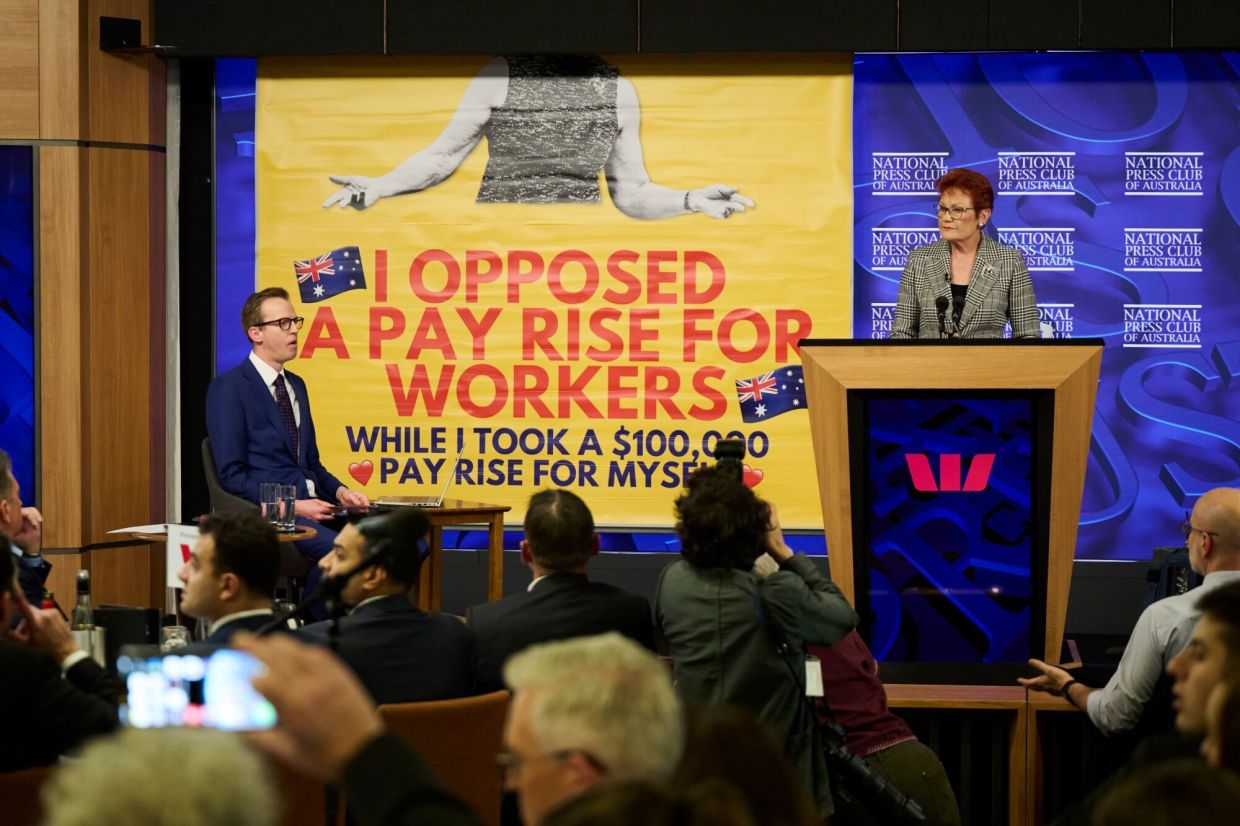
Pauline Hanson, leader of Australia's hard-right One Nation party, has declared that her nation must become fundamentally monocultural, positioning a dramatic departure from the country's long-established multicultural framework at the centre of political debate. Speaking at the National Press Club in Canberra on Wednesday, Hanson rejected what she characterised as a failed policy direction spanning several decades, instead advocating for a unified cultural framework that would govern the entire nation. Her intervention, delivered during her first appearance at the prestigious venue across three decades of political involvement, represents a significant escalation in her party's positioning on identity and belonging.
The One Nation leader drew a sharp distinction between racial and cultural composition when articulating her vision for Australia's future. While acknowledging that Australia would necessarily remain a multiracial nation given its demographic reality, Hanson insisted that cultural assimilation must become the governing principle. She framed this as placing all Australians beneath what she termed "the one cultural umbrella," a metaphor suggesting that despite ethnic diversity, a singular dominant culture should supersede minority cultural practices and expressions. This framing attempts to reconcile the practical impossibility of creating an ethnically homogeneous nation with a vision of cultural conformity that she presents as essential for national cohesion.
Hanson's speech explicitly linked Australia's housing affordability crisis to immigration policy, claiming that exceptionally high migration levels have directly exacerbated shortages in residential supply and driven up property prices. She has pledged that her party would substantially reduce migration numbers if given governing power, a position that resonates with voters struggling to purchase homes in an increasingly unaffordable market. By connecting immigration to a tangible, personal economic grievance affecting millions of Australians, Hanson has identified what political analysts recognise as a potent electoral vulnerability for incumbent governments, regardless of their actual policy orientation.
The speech also targeted what Hanson characterised as dangerous ideological imports arriving through immigration pathways. She specifically called for restrictions on entry from regions that she described as "immersed in extremism like radical Islam," a framing that conflates geographical origin with religious radicalism and that has long been central to One Nation's positioning on security and cultural preservation. This rhetorical move appeals to anxieties about terrorism and religious extremism that periodically surge in public consciousness following international incidents, translating diffuse security concerns into opposition to immigration from particular regions.
One Nation's surge in electoral support over the preceding year provides context for understanding Hanson's willingness to articulate such provocative positions. The party has capitalised on the centre-right coalition's electoral collapse in May of the previous year, capturing voters who felt abandoned by traditional conservative politics. This momentum has accelerated as the party has consolidated its positioning as a vehicle for expressing grievances that established parties have either dismissed or inadequately addressed, at least according to One Nation's supporters and sympathisers.
The broader economic environment has substantially advantaged One Nation's electoral positioning. Australian households have endured an accumulation of economic pressures in recent months, including resurgent inflation that erodes purchasing power, rising interest rates that increase mortgage costs for property buyers and borrowers, and surging fuel prices that have cascaded through supply chains and consumer costs. These economic headwinds, partly attributable to geopolitical tensions including the Iran situation affecting global oil markets, have created a receptive audience for political messaging that identifies clear culprits responsible for these challenges. Hanson's framing of immigration and green energy costs as driving forces behind economic distress offers voters a comprehensible narrative that transforms complex macroeconomic dynamics into political targets.
Prime Minister Anthony Albanese's Labor government has attempted to provide relief to households through targeted interventions, including a temporary reduction in fuel excise taxes and broader tax reform initiatives intended to alleviate housing affordability pressures. These measures reflect Labor's diagnosis that economic pain points require concrete policy responses, yet their limited scope and duration mean they cannot address the structural factors driving long-term housing unaffordability or permanently insulate the economy from international commodity price volatility.
Albanese has characterised the One Nation phenomenon more broadly as symptomatic of a political environment where "simplistic grievance-based politics" flourishes when economic systems cease functioning equitably for ordinary citizens. This analysis suggests that One Nation's growth reflects not ideological conversion among voters but rather deepening disillusionment with established political institutions' capacity to deliver material improvements in living standards. From this perspective, the substance of One Nation's policy proposals matters less than their function in channeling genuine frustration into a coherent political force.
For Malaysia and other Southeast Asian nations observing Australian politics, Hanson's ascendance carries implications worth monitoring. Australia maintains significant diplomatic and economic relationships throughout the region, and any government influenced by One Nation's ideology would likely recalibrate bilateral engagement and regional positioning. Additionally, One Nation's success in weaponising immigration and cultural anxiety as electoral tools offers lessons—both cautionary and instructive—for populist movements elsewhere in Asia grappling with similar dynamics of rapid change, economic dislocation, and demographic transformation. The extent to which such movements can sustain electoral momentum or translate sentiment into governing capacity remains an open question with considerable relevance across the region.