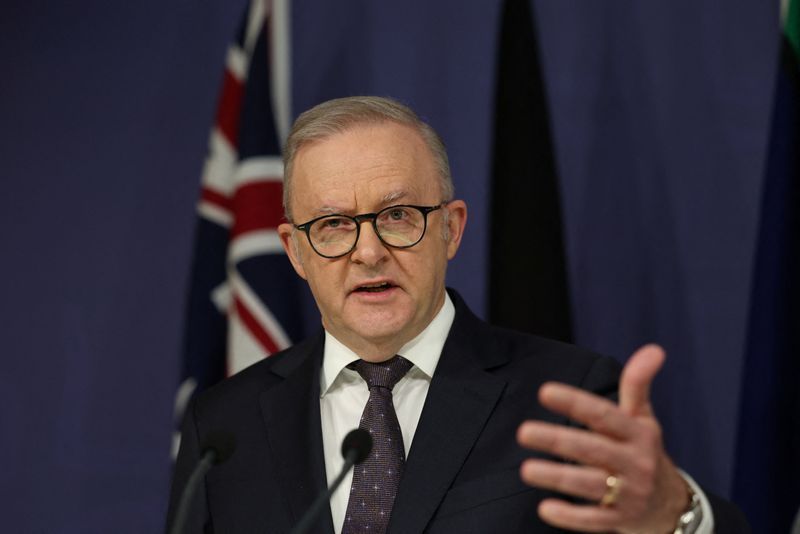
Australia has achieved a historic milestone in its defence export sector by securing a A$2.5 billion contract with Canada to supply advanced radar technology designed for long-range missile detection. The transaction, announced on Monday, represents the country's most substantial defence trade agreement to date and signals growing strategic alignment between the two nations on surveillance capabilities in the Arctic region. Prime Minister Anthony Albanese characterised the accord as a watershed moment, emphasising how it would establish a framework for sustained and mutually advantageous defence industry cooperation between Canberra and Ottawa.
The centrepiece of this agreement is the Over-the-Horizon Radar technology, marking the first international sale of this sophisticated system developed by Australia. The system's capabilities are formidable: Australia's Jindalee Operational Radar Network, which forms the basis of the export configuration, can identify and monitor aircraft, vessels, and missile systems across ranges extending to 3,000 kilometres. This detection range places it among the most advanced surveillance platforms available, giving Canada unprecedented ability to observe and track military movements across vast distances.
Canada's strategic interest in acquiring this technology stems from acute geopolitical realities in the Arctic. The country's Arctic territory comprises approximately 40 per cent of its total landmass, yet remains sparsely settled with minimal infrastructure development. This geographic expanse creates substantial monitoring challenges, particularly given proximity to Russia's Arctic territories, which account for roughly a fifth of that nation's total landmass and face directly toward Canada and the American state of Alaska. The Arctic region has assumed heightened strategic importance globally as climate change opens new shipping routes and resource extraction opportunities, intensifying competition among Arctic nations.
Stephen Fuhr, Canada's secretary of state for defence procurement, outlined how the radar acquisition slots into a broader continental strategy. The system will anchor what Ottawa describes as an integrated Arctic surveillance and communications network, enhancing the country's capacity to monitor developments, gather intelligence, and formulate timely responses to activities across its Arctic territories. Rather than a standalone acquisition, the deal represents a foundational component of comprehensive infrastructure development designed to extend Canadian awareness and operational reach across one of the world's most challenging operational environments.
The economic dimensions of this agreement carry significance for Australia's defence manufacturing base. The contract will generate approximately 300 jobs domestically, providing sustained employment in high-skilled sectors. More critically, officials have characterised this transaction as the inaugural stage of an expanded bilateral relationship encompassing radar systems and related defence technologies. Such framing suggests Ottawa and Canberra are contemplating deeper integration of defence capabilities, potentially including joint development initiatives or technology-sharing arrangements extending beyond the immediate radar sale.
This deal reflects evolving patterns in Indo-Pacific defence relationships. Australia has progressively positioned itself as a critical technology supplier to Western democracies, leveraging indigenous expertise and manufacturing capabilities to support strategic partners confronting shared security challenges. The Canadian transaction demonstrates how regional security dynamics—in this instance Arctic geopolitics—increasingly intersect with broader Western alliance considerations. For Malaysia and other Southeast Asian nations, the precedent is instructive: it underscores how advanced defence technology transfers between allied nations serve strategic objectives while simultaneously creating commercial opportunities for supplier nations.
From a regional perspective, Australia's expanding defence export profile has implications for Southeast Asia's own security architecture. The success of this transaction may embolden further Australian technology sales across allied nations, potentially including regional partners. It also highlights the growing importance of indigenous technological capabilities in addressing transnational security challenges, from surveillance to maritime domain awareness—concerns equally pertinent to Southeast Asian states managing contested waters and extensive maritime zones.
The agreement also illuminates shifting patterns in defence procurement among developed democracies. Rather than concentrating technological development within traditional defence giants, nations increasingly source specialised capabilities from partners with particular expertise. Australia's success in exporting radar technology reflects decades of investment in this specific domain, creating competitive advantages that transcend traditional defence supplier hierarchies. For Australian industry, this validation of homegrown capabilities opens markets and establishes Australia as a provider of choice for advanced surveillance systems globally.
The Canadian acquisition furthermore occurs against background of NATO expansion concerns and Western efforts to strengthen surveillance across northern territories. As Russia maintains substantial military capabilities in Arctic regions, allied nations perceive enhanced monitoring as essential for early warning and strategic stability. Australia's contribution through radar technology export strengthens collective Western capabilities, creating networks of interoperable systems spanning continents. This interconnected approach to defence—where Australian technology enhances Canadian capabilities, which in turn support broader Western coordination—represents contemporary alliance management.
Looking forward, the deal establishes precedent for expanded Australian defence technology exports. Success with Canada may encourage similar arrangements with other allies and partners seeking advanced surveillance capabilities for specific strategic challenges. The agreement also validates Australian government policy favouring defence industry development and export promotion, suggesting continued emphasis on nurturing high-technology manufacturing sectors capable of competing internationally. For Australian companies, this validation of capability and market access creates commercial momentum extending beyond the immediate Canadian contract.

