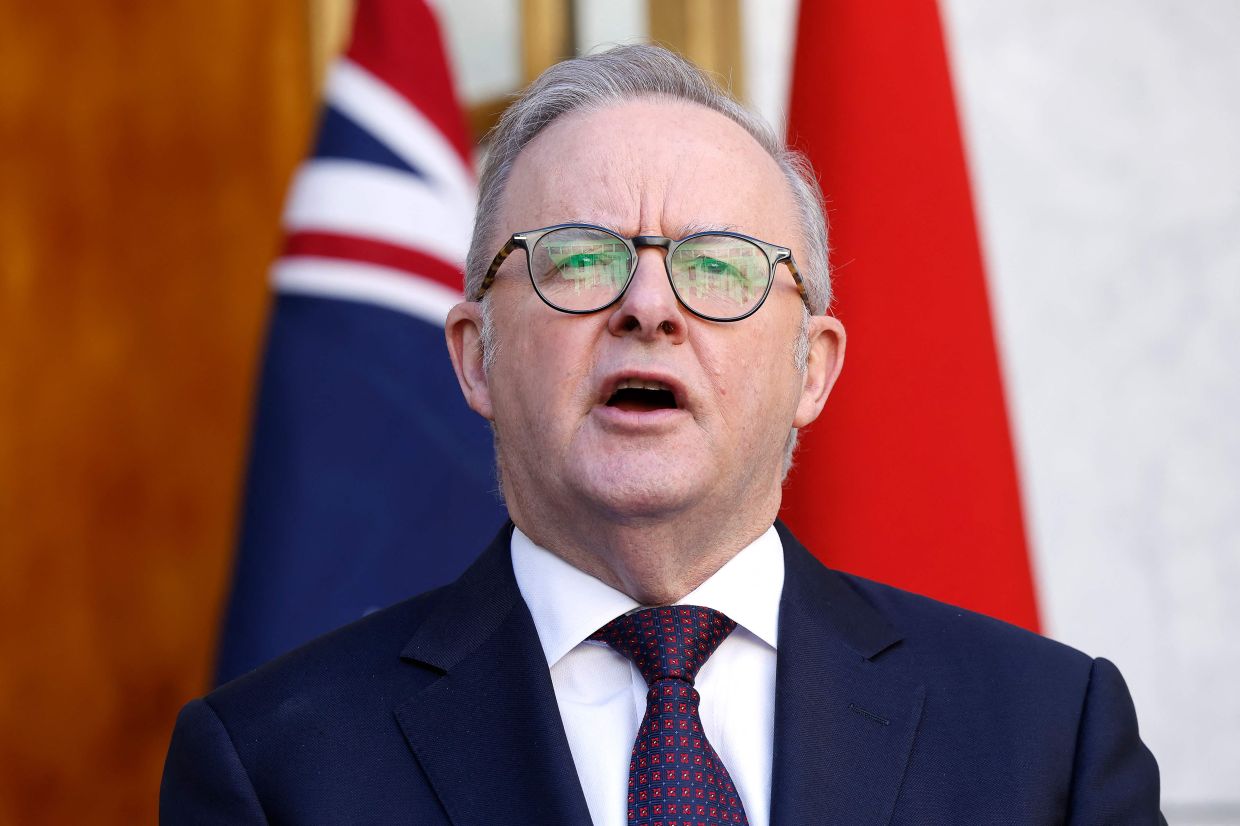
Australian Prime Minister Anthony Albanese has faced mounting pressure to apologise for crude remarks about Japanese Prime Minister Sanae Takaichi, following the release of podcast footage from an earlier radio interview. The controversy emerged this week after a clip surfaced showing Albanese engaged in banter with podcast host Nikki Osborne at his official residence, during which he made light of a premium melon gifted by Takaichi during her May visit to Australia. Rather than offering contrition, Albanese rejected the notion that his behaviour warranted any formal apology, insisting he had done nothing wrong.
This latest diplomatic misstep represents the second controversy in recent days for the Australian leader. Earlier, Albanese had already offered a public apology following an outcry over comments made during the same Bush Deep podcast interview, in which he made crude sexual remarks about Australian singer Kylie Minogue. That incident prompted significant domestic backlash and forced the Prime Minister to formally walk back his statements. The emergence of the separate melon-related comments suggests a broader pattern of unguarded commentary during the extended podcast conversation, raising fresh questions about his judgment in informal settings.
The specifics of the exchange reveal the problematic nature of the banter. When host Nikki Osborne enquired whether Takaichi had managed to bring the fruit through Australian customs without difficulty, Albanese responded with suggestive gestures and remarks about having "a couple of melons." Osborne then compounded the ribaldry by quipping that Takaichi had "come in looking like Pamela Anderson," a reference laden with objectifying undertones. The entire exchange appeared designed to be humorous within the informal podcast setting, yet translated poorly when exposed to broader public scrutiny and international diplomatic sensitivities.
The cultural significance of the gift itself adds another layer to the controversy. In Japan, premium melons represent far more than simple fruit; they occupy an elevated status as luxury gift items commanding extraordinary prices. Japan's former ambassador to Australia has noted that such melons can retail for more than AUS$270 (approximately US$190), underscoring their role as prestigious diplomatic presents. Takaichi's choice to offer such a valuable gift reflected the respect and importance Japan places on its relationship with Australia, making light of it particularly tone-deaf from a diplomatic perspective.
Opposition politicians swiftly seized upon the footage to criticise the Prime Minister's conduct. Australia's opposition leader formally called for Albanese to apologise, characterising the remarks as "insulting" and fundamentally disrespectful to both Takaichi personally and to Japan as a nation. The opposition framed the incident not merely as crude humour but as a serious breach of the standards expected of a serving head of government. In parliament on Tuesday, opposition members pressed Albanese directly on whether he would offer an apology for what they termed "disrespectful behaviour."
Albanese's response proved combative rather than conciliatory. When asked in parliament whether he would apologise, the Prime Minister flatly rejected the premise of the question itself. "I reject the assertion in the question," he stated, refusing to engage with the substance of the criticism. He then attempted to reframe the narrative by emphasising his positive relationship with Takaichi and Japan more broadly. "Prime Minister Takaichi is a friend of Australia and a friend of mine," he asserted, suggesting that the true measure of his regard lay in their bilateral relationship rather than in casual remarks made during a podcast.
Foreign Minister Penny Wong moved swiftly to provide diplomatic cover for her Prime Minister. In parliamentary remarks, Wong sought to characterise the controversy as a matter of misinterpretation by political opponents rather than genuine diplomatic insult. "The prime minister has been clear that he did not mean for those comments to be interpreted in the way they have been by those opposite," Wong stated, drawing a distinction between stated intent and actual impact. Her intervention reflected the government's broader strategy of deflecting rather than acknowledging the substance of the criticism.
The refusal to apologise carries potential implications for Australia's relationship with Japan at a time when bilateral ties hold strategic significance. Japan, as one of Australia's most important security and economic partners, maintains elevated expectations regarding respectful diplomatic conduct. While Takaichi has not publicly responded to the controversy, the incident risks creating diplomatic friction at a sensitive moment. Australia has increasingly relied on Japan as a counterweight to Chinese influence in the Indo-Pacific region, making relationship management particularly delicate.
The controversy also reflects broader questions about standards of conduct expected from senior politicians in an age of proliferating digital media. The Bush Deep podcast interview occurred in an informal setting designed to showcase the relaxed, personable side of political leaders, yet the unguarded banter reveals the risks of such formats. What may seem amusing in a casual conversational context can translate into serious diplomatic embarrassment once amplified through social media and news cycles. For Malaysian and Southeast Asian observers, the incident underscores how informal remarks by regional leaders can inadvertently damage carefully cultivated bilateral relationships.
Albanese's handling of the controversy stands in sharp contrast to his earlier swift apology over the Kylie Minogue comments, suggesting a selective approach to accountability. The Prime Minister's defiant posture on the melon joke may reflect his assessment that the incident carries less political weight domestically than the previous sexual commentary. However, the international dimension introduces additional complexity, as other regional leaders may view the refusal to apologise as indicative of a declining commitment to diplomatic civility. The incident ultimately illustrates how casual irreverence can undermine carefully constructed diplomatic relationships, a lesson particularly relevant for Australian leaders engaging with their Japanese and broader Asian counterparts.
Looking forward, the controversy highlights the mounting challenges facing contemporary leaders in managing their public personas across multiple platforms and audiences. The proliferation of informal media spaces creates constant pressure to appear relatable and candid, yet such informality carries significant risks when remarks are eventually exposed to broader scrutiny. For the Australian government, the episode represents a test of its commitment to maintaining respectful relationships with key partners, even when faced with domestic political pressure to downplay or dismiss critical incidents.

