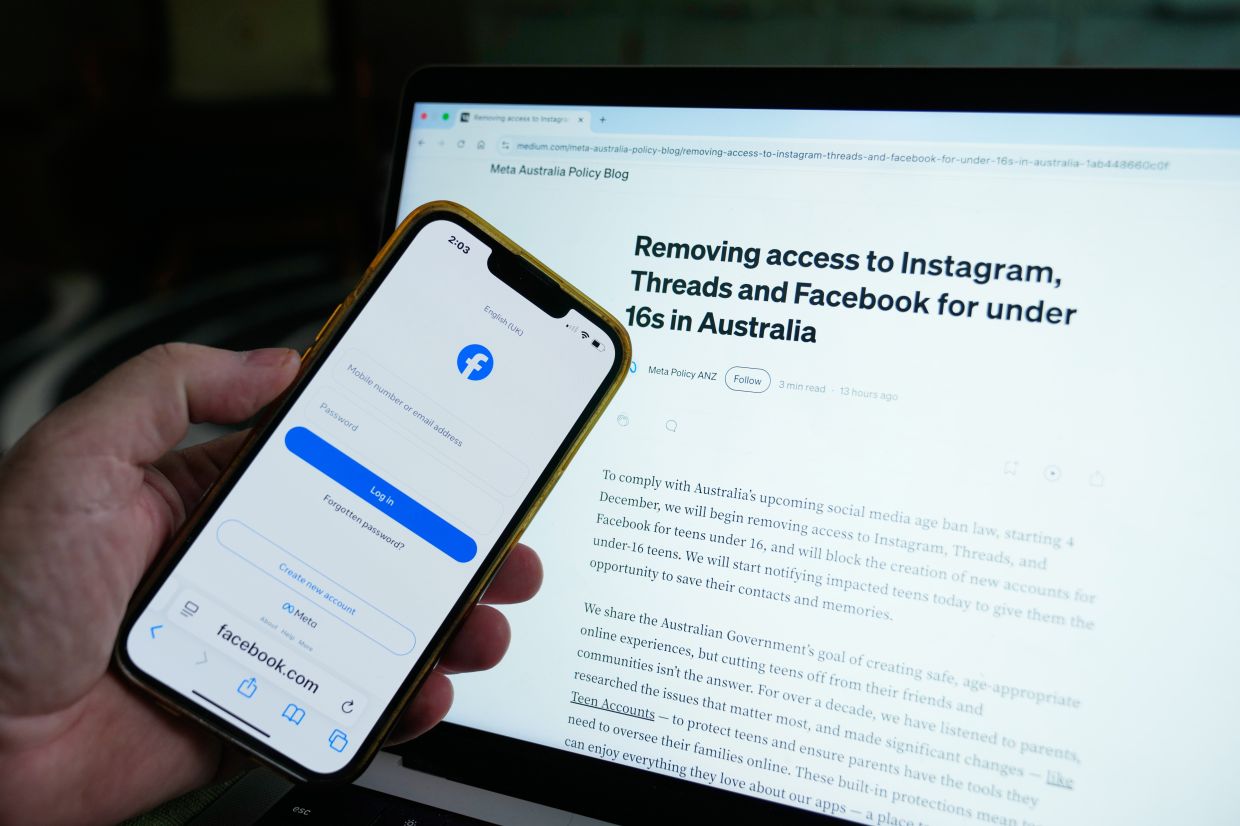
Australia's government has moved to intensify enforcement of its landmark social media ban on users under 16, but efforts to strengthen the regulatory framework face unexpected parliamentary obstacles. The Labour administration introduced amendments to Parliament that would substantially expand the enforcement toolkit available to Julie Inman Grant, the eSafety Commissioner responsible for overseeing compliance with the December 2023 prohibition affecting major platforms including Facebook, Instagram, YouTube, TikTok, and Snapchat. The proposed changes represent a critical escalation in Australia's struggle to make the ban effective after early implementation proved far more challenging than anticipated.
Under the current regime, Inman Grant holds only the authority to request information from social media companies about their exclusion efforts. The amendments would fundamentally reshape this dynamic by granting her the power to compel platforms to submit documents and detailed evidence of their age-verification mechanisms and exclusion processes. This distinction carries profound practical importance: mandatory document production would create a verifiable audit trail and prevent platforms from simply refusing cooperation or providing selective information. Additionally, the legislation would extend Inman Grant's investigative reach to third-party technology providers, such as age assurance companies, allowing her to independently verify claims platforms make about the effectiveness of their age-checking systems.
Yet progress toward these enhanced powers has stalled. On July 2, the opposition Liberal Party and the minor Australian Greens referred the draft amendments to an eight-week Senate inquiry, a procedural move that effectively delays consideration of the strengthened enforcement measures. This development carries particular significance because the Labour government lacks a Senate majority, meaning it cannot unilaterally advance legislation without securing support from crossbench senators or the major opposition parties. Prime Minister Anthony Albanese expressed sharp frustration with the delay, arguing to the Australian Broadcasting Corporation that postponement would undermine enforcement strategy. He contended that platforms could use the intervening weeks to systematically delete communications and compliance records that would otherwise become subject to the commissioner's investigative demands once the law changes.
The financial stakes of compliance have also increased substantially. The amendments would double the maximum penalty for platforms failing to implement reasonable age-exclusion measures from approximately A$50 million to A$99 million, equivalent to roughly US$68 million or RM276.56 million. This escalation reflects growing government frustration with what officials characterise as inadequate industry compliance despite the ban's passage with overwhelming parliamentary support in 2024. The legislation itself granted platforms more than a year to implement age-verification systems and exclusion protocols before the ban took effect, yet compliance has proven deeply problematic.
Evidence of implementation failure has mounted steadily since December. Initially, the government reported that enforcement actions had resulted in more than 5 million account removals, deactivations, or restrictions across the targeted platforms. However, this apparent success masked a more troubling reality. An eSafety Commission assessment conducted in March revealed that approximately seven in every ten children who maintained accounts on restricted platforms on December 10, the ban's effective date, remained active on Facebook, Instagram, Snapchat, and TikTok. This persistence rate indicates that despite substantial account actions, circumvention has remained widespread, likely through methods including age misrepresentation, parental account transfers, and technical workarounds.
Consequently, Inman Grant escalated her own enforcement response in April by considering legal action against the major platforms and YouTube, alleging systematic non-compliance with the requirement to implement reasonable age-exclusion measures. This represents an unprecedented regulatory development in Australia's digital governance landscape and signals the commissioner's assessment that voluntary cooperation had fundamentally failed. The commissioner had expressed satisfaction with implementation efforts by a secondary tier of platforms including X, Kick, Reddit, Threads, and Twitch, suggesting that compliance varies considerably across services and that some organisations have responded more constructively to regulatory expectations.
Opposition to the enforcement amendments comes from unexpected quarters, revealing ideological fractures in Australian digital policy. Greens Senator David Shoebridge, who has consistently opposed the social media ban itself on civil liberties grounds, questioned the relevance of doubling penalties that have never been deployed. His scepticism reflects a broader philosophical objection to age-based digital prohibition, though it sits awkwardly alongside the practical reality of non-compliance. Conversely, opposition Liberal Party communications spokesperson Senator Sarah Henderson adopted a markedly different position, arguing that the proposed amendments remain insufficiently stringent. Henderson characterised the original ban legislation as badly designed, hastily implemented, and fundamentally ineffective, contending that more aggressive enforcement mechanisms would be necessary to achieve meaningful compliance.
This fragmentation within parliamentary opposition complicates the government's legislative agenda and reveals deep disagreement about whether Australia's approach represents the optimal regulatory model. The original ban passed with bipartisan support in 2024, suggesting broad political consensus around the policy objective. However, consensus on implementation mechanisms has evaporated as the practical difficulties of enforcement became apparent. Communications Minister Anika Wells acknowledged receiving monthly progress reports from the eSafety Commission since March and concluded that measurable improvement remained absent, indicating stalled enforcement momentum nearly eight months into the prohibition.
Australia's experience carries significance well beyond its own borders. Multiple countries and jurisdictions worldwide have observed the implementation trajectory carefully while developing their own age-restriction frameworks. Some nations including the United Kingdom have incorporated lessons from Australia's rollout, while others remain in deliberative stages. The disconnect between ban passage and effective enforcement has demonstrated that legislative prohibition alone proves insufficient without robust monitoring infrastructure, substantial penalties, and technological cooperation from platforms invested in maximising user engagement. The extended Senate inquiry into enforcement amendments may ultimately serve as a cautionary example of how parliamentary delay can undermine regulatory effectiveness when platforms possess both financial incentives and technical capacity to circumvent compliance obligations during periods of uncertainty.
Regional policymakers across Southeast Asia, where social media penetration rates among youth populations are exceptionally high, will scrutinise the outcomes of Australia's enforcement efforts as they contemplate their own regulatory responses to concerns about childhood screen time, mental health impacts, and online safety. The demonstrated difficulty of maintaining effective age-based prohibitions when platforms deploy circumvention techniques and maintain engagement incentives may inform whether other democracies pursue similarly comprehensive age restrictions or adopt more targeted regulatory approaches focused on specific harmful content categories rather than blanket platform exclusion. Australia's legislative stalemate thus represents not merely a domestic political disagreement but a potential inflection point in how liberal democracies will approach digital governance for minors.

