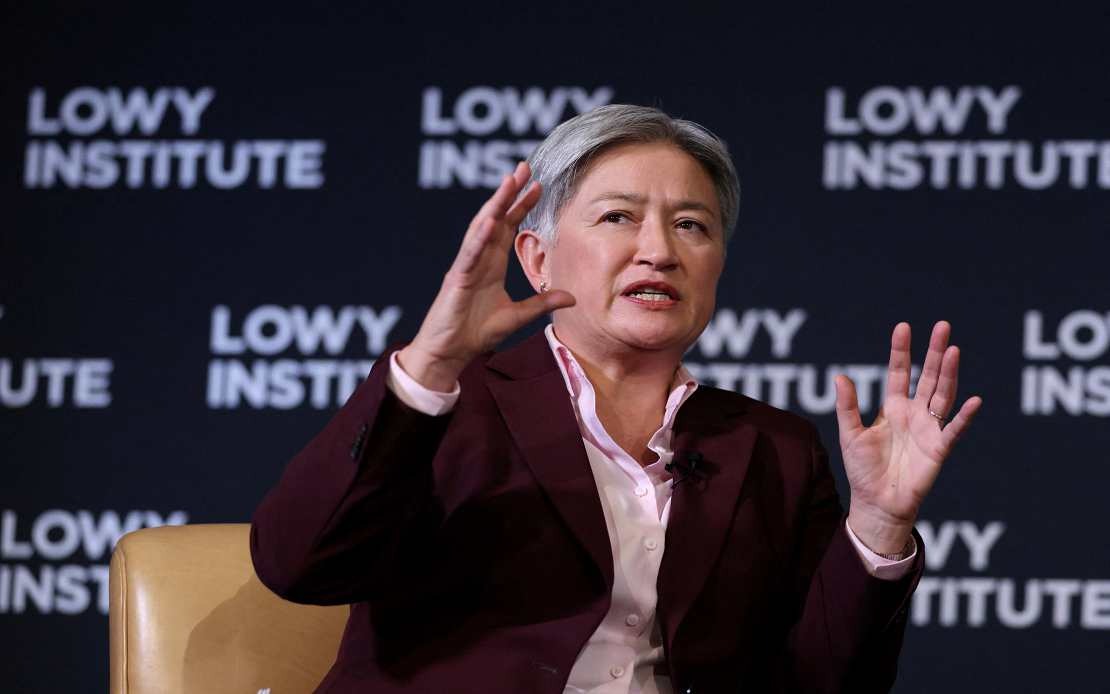
Australia's Foreign Affairs Minister Penny Wong has issued a stark warning about the political risks of monoculturalism, arguing that abandoning the country's multicultural foundation would fundamentally weaken its global standing and economic prospects. Speaking at the Lowy Institute in Sydney on Friday, Wong directly challenged populist narratives that position cultural homogeneity as a solution to Australia's challenges, framing such positions instead as a retreat from the strengths that have defined the nation's identity and success.
Wong's intervention reflects growing concern within Australia's political establishment about the rising influence of right-wing populist movements that explicitly reject multiculturalism as government policy. The Foreign Minister characterised the appeal of monoculturalism as a "melancholic fantasy"—a phrase that encapsulates her view of such policies as both emotionally driven and fundamentally disconnected from contemporary reality. She emphasised that Australia's entire modern history has been shaped by multicultural character, suggesting that abandoning this principle would represent a dramatic departure from established national practice rather than a return to tradition.
The catalyst for Wong's remarks was Senator Pauline Hanson, whose One Nation party has become an increasingly significant force in Australian politics. Hanson publicly advocated in June for Australia to function as a monocultural society, a position that directly contradicts the bipartisan consensus that has broadly held since the 1970s. Hanson's party platform extends beyond cultural nationalism to encompass strict immigration controls, reduced international aid commitments, and withdrawal from multilateral organisations—proposals that would fundamentally reshape Australia's role in regional and global affairs.
Wong articulated the practical consequences of monocultural policies with precision, arguing that such an approach would force Australia to "curtail our choices and to cut off our connections." Her framework emphasises that rejecting multiculturalism would entail isolation across multiple dimensions: diplomatic isolation from global partners, trade isolation that would damage economic interests, and lost opportunities for growth that emerge from international collaboration. This positioning transforms the debate from abstract questions of cultural identity into concrete concerns about national economic wellbeing and geopolitical influence.
The political backdrop to this debate is particularly significant for regional observers. Recent polling suggests that One Nation's support has surged dramatically, with a YouGov Australia survey conducted in July revealing that 26 per cent of respondents indicated intention to vote for Hanson's party at the next general election scheduled for 2028. This represents a nearly fourfold increase from the 6.4 per cent of votes One Nation received at the 2025 election, indicating substantial shifts in voter sentiment across the country. The scale of this growth has moved what might once have been considered fringe political positioning into mainstream electoral consideration.
The broader polling landscape reveals significant volatility across Australia's political spectrum. The governing Labour Party, which Wong represents as Foreign Minister, has experienced declining support, falling from 34.5 per cent at the 2025 election to 28 per cent in current polling. The conservative Coalition has fared worse, dropping from 31.8 per cent to just 20 per cent. These figures suggest that One Nation's gains have partly come at the expense of traditional centre-right politics, potentially indicating a realignment of Australian conservatism around nationalist and protectionist themes rather than classical liberal internationalism.
Public opinion data on immigration itself provides context for understanding the political environment in which Wong made her statement. The annual Lowy Institute poll released in June 2026 found that 55 per cent of Australians believe migration levels are too high—a proportion that has grown consistently over successive years from 48 per cent in 2024 and 53 per cent in 2025. This upward trajectory suggests deepening public anxiety about immigration despite relatively stable migration policy settings, indicating that concerns may be driven more by cultural perception and economic anxiety than by changes in actual immigration levels.
For Malaysia and other Southeast Asian countries, the Australian political debate carries particular significance. Australia remains a major regional power with substantial economic, security, and diplomatic influence across the Indo-Pacific. A potential shift toward more protectionist and isolationist policies would directly affect regional trade relationships, investment flows, and security partnerships. Malaysia's economic relationship with Australia, particularly in education, investment, and services sectors, could face disruption if Australian policy shifted toward restricting international engagement and reducing aid commitments that underpin various bilateral initiatives.
Wong's intervention represents an attempt by Australia's government to defend the international liberal order against nationalist challenges that have gained traction across multiple democracies in recent years. Her argument that multiculturalism strengthens rather than weakens Australia implicitly contests the narrative that cultural diversity creates social fragmentation or economic disadvantage. This positioning aligns Australia with other liberal democracies that have sought to defend immigration and multicultural integration as sources of economic dynamism and social stability rather than liabilities.
The timeframe to the 2028 election provides a window for this debate to develop further, with both established parties and One Nation competing for voter support around questions of national identity and international engagement. Wong's speech signals that the government intends to contest the nationalist narrative directly rather than concede ground on cultural questions. Whether such messaging proves effective in stemming One Nation's rise remains uncertain, but the intensity of political debate around multiculturalism suggests this issue will remain central to Australian politics through the election cycle.

