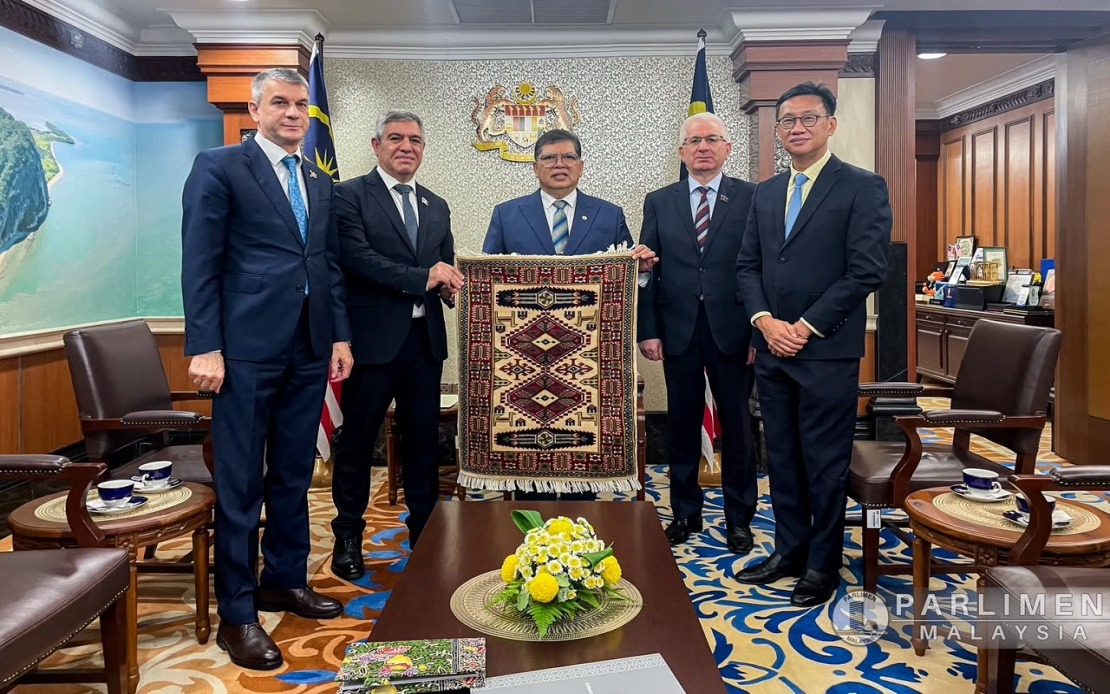
A parliamentary delegation from Azerbaijan has completed a working visit to Malaysia aimed at consolidating diplomatic and economic relationships between Baku and Kuala Lumpur. The visit underscores growing efforts by both nations to deepen engagement beyond traditional state-to-state mechanisms, reflecting a broader trend in Southeast Asian diplomacy toward people-centred and institution-based dialogue. Vugar Bayramov, who heads the Working Group for Azerbaijani-Malaysian Interparliamentary Relations in the Azerbaijani Parliament, led the mission alongside fellow Member of Parliament Bakhtiyar Aliyev.
The timing of the delegation's arrival carries significance for regional diplomacy. Malaysia has been positioning itself as a bridge-builder within Asia, and Azerbaijan's outreach through parliamentary channels signals its interest in expanding footprints in Southeast Asia beyond traditional Middle Eastern and post-Soviet spheres of influence. For Malaysia, such visits present opportunities to diversify partnerships and explore fresh avenues for economic cooperation with nations outside its immediate neighbourhood, contributing to the country's strategic resilience and economic diversification goals.
During their time in Kuala Lumpur, the Azerbaijani parliamentarians held substantive engagements with Malaysia's legislative institutions. Dewan Rakyat Speaker Tan Sri Johari Abdul received the delegation in a courtesy call, signalling the seriousness with which Malaysia's parliament views the bilateral relationship. Beyond ceremonial exchanges, the visitors engaged with Wong Chen, chairman of the Special Select Committee on International Relations and International Trade, positioning economic and trade dimensions as central to the dialogue. These structured conversations with parliamentary committees indicate both sides are considering the relationship through a lens of concrete benefits rather than symbolic gestures alone.
Parallel engagement with Zahir Hassan, chairman of the West Asia Friendship Group within Malaysia's parliament, demonstrates the institutional infrastructure being mobilised to support Azerbaijan-Malaysia relations. The existence of dedicated parliamentary friendship groups reflects how legislatures increasingly function as platforms for bilateral relationship-building. For Malaysia, such groups serve dual purposes: they maintain diplomatic channels that complement formal diplomatic relationships, while also allowing parliamentarians to cultivate personal relationships that can prove invaluable during periods of governmental transition or policy shifts.
Meetings with Dewan Negara President Datuk Awang Bemee Awang Ali Basah provided the delegation with access to Malaysia's upper house, ensuring parliamentary engagement operated at comprehensive institutional levels. The exchange of views on furthering parliamentary relations suggests both nations are considering mechanisms for sustained cooperation, potentially including legislative exchanges, capacity-building programmes, or joint parliamentary bodies focused on issues of mutual concern. Such institutional frameworks typically outlast individual administrations, creating durable foundations for bilateral relationships.
Economic dimensions featured prominently throughout the visit, reflecting Azerbaijan's priority to expand trade partnerships and Malaysia's ongoing search for investment sources and business opportunities. The delegation's engagement with the Malaysian National Chamber of Commerce and Industry, alongside representatives of more than twenty Malaysian business entities, transformed the visit into a business facilitation mission. This multi-stakeholder approach recognises that modern parliamentary diplomacy extends beyond legislative halls into private sector engagement, where actual economic value is created and sustained.
The substance of business discussions touched on foundational elements necessary for bilateral economic expansion. Both sides explored mechanisms to strengthen trade flows, examining how Azerbaijan and Malaysia might identify sectors where complementary advantages could generate mutual benefit. Investment collaboration represents another frontier, with Malaysian companies potentially finding opportunities in Azerbaijan's energy sector and post-conflict reconstruction, while Azerbaijani investors might explore opportunities in Malaysia's established financial and digital economies. The emphasis on business-to-business ties acknowledges that government-to-government relationships prove most durable when supported by economic interdependence.
Tan Sri Johari's public reflection on the visit added a diplomatic layer emphasising the human dimension of international relations. His observation that people-centred initiatives serve as reminders of diplomacy's fundamentally human character contrasts with transactional approaches to statecraft. This framing appeals to Malaysian audiences increasingly concerned with meaningful engagement rather than merely utilitarian partnerships. It also suggests how parliamentary diplomacy offers advantages over purely executive-branch engagement: it creates multiple touchpoints, involves broader constituencies, and can generate public support for diplomatic initiatives through transparency and inclusivity.
The Azerbaijani delegation's visit occurs within a context of Azerbaijan's broader regional repositioning following the 2020 Nagorno-Karabakh conflict and subsequent developments in the South Caucasus. By extending diplomatic reach into Southeast Asia, Azerbaijan signals its determination to become a truly global actor, moving beyond regional fixations. For Malaysia, receiving such delegations reinforces its status as a significant Muslim-majority democracy and an attractive destination for diplomatic engagement from diverse partners seeking to establish or strengthen Asian partnerships.
The structured nature of the visit—combining parliamentary exchanges, legislative committee engagements, and business forums—demonstrates sophistication in bilateral diplomacy. Rather than treating the visit as a singular event, both nations appear to be treating it as a foundation for ongoing institutional relationships. The involvement of multiple parliamentary committees and business organisations suggests commitment to developing multi-dimensional engagement that can sustain cooperation across different governmental and private sector actors.
Moving forward, the relationships forged during this visit may materialise in concrete forms: parliamentary delegations flowing in both directions, sectoral trade agreements, joint business ventures, or collaborative positions on international issues. The groundwork established through these conversations creates possibilities for deeper engagement that transcends ceremonial diplomacy. For Malaysia specifically, diversifying partnerships with nations like Azerbaijan contributes to the country's positioning as a non-aligned player in an increasingly competitive global environment, maintaining relationships across diverse regions and systems without exclusive alignment.
The parliamentary exchange format employed during the visit reflects evolving approaches to statecraft that recognise legislatures as valuable diplomatic instruments. Rather than concentrating all diplomatic activity within foreign ministries, countries increasingly leverage parliamentary structures to build relationships. This approach generates multiple communication channels, involves broader segments of the political class, and can create constituencies within legislatures invested in successful bilateral relationships. For Malaysian parliamentarians, such engagements also provide valuable exposure to international affairs and opportunities to shape foreign policy positions through their legislative roles.

