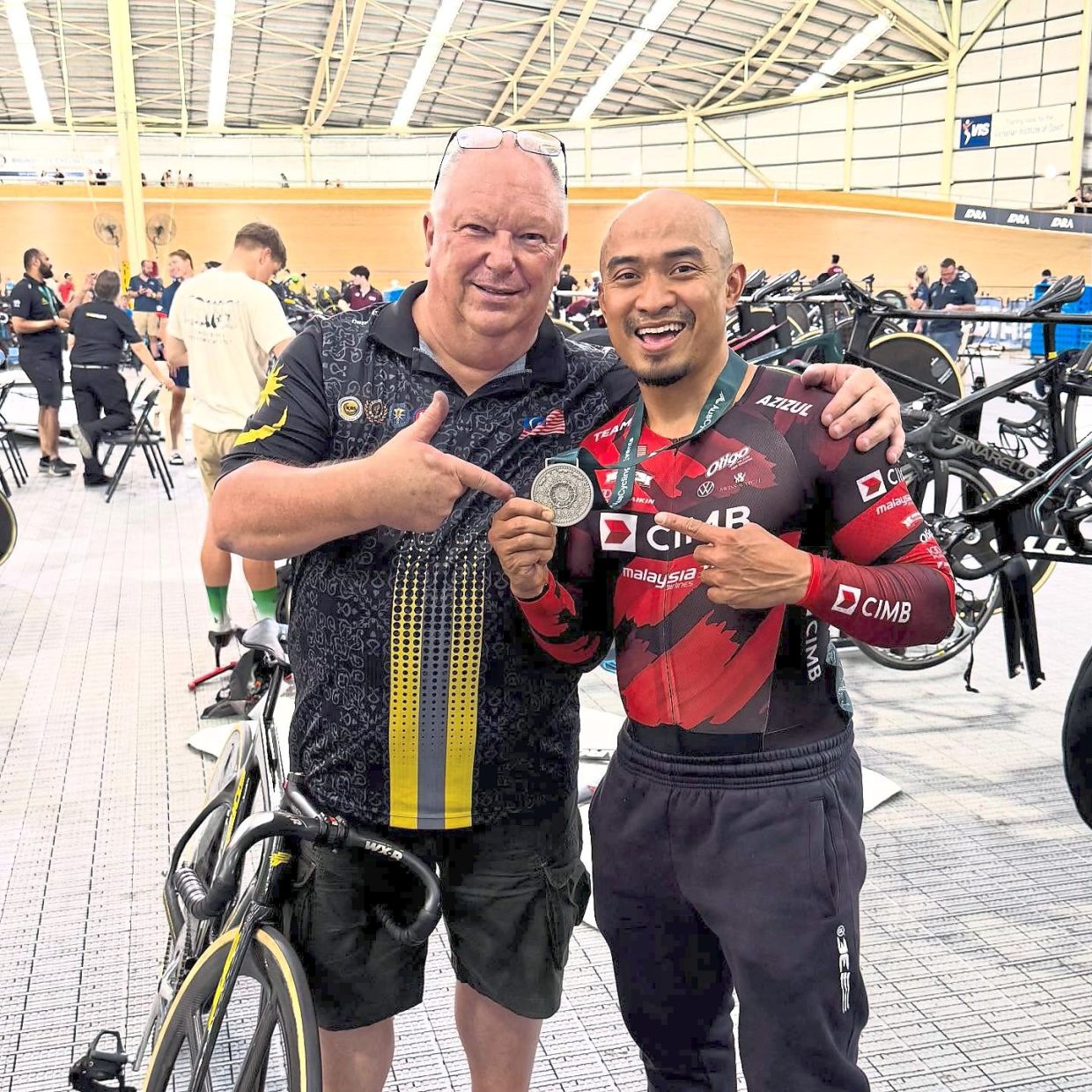
Azizulhasni Awang, Malaysia's decorated track cycling talent with two Olympic medals to his name, has openly acknowledged the consequences of his decision to publicly support technical director John Beasley, recognising that such a stance may attract unwanted scrutiny and attempts to undermine both him and his coach. Speaking from Petaling Jaya, the athlete indicated his awareness that aligning himself with Beasley during a period of heightened scrutiny could expose him to retaliatory criticism from various quarters, should Malaysia's performance at the upcoming Commonwealth Games and Asian Games fall short of expectations.
The two-time Olympic medallist's defence of the Australian coach comes at a delicate juncture for Malaysian track cycling. Beasley, whose two-decade contribution to developing the national cycling programme has been instrumental in producing world-class athletes, has faced public criticism from certain quarters. Yet Azizulhasni's willingness to step into this contested territory demonstrates both loyalty to his mentor and a degree of confidence in weathering potential consequences. His decision reflects the intricate dynamics within Malaysian sports administration, where defending individuals against public criticism can paradoxically become a liability if results do not materialise.
When asked about the risks inherent in his public endorsement, Azizulhasni articulated a clear-eyed assessment of the situation. He anticipated that detractors may use his advocacy for Beasley as leverage against him personally, particularly if the national cycling contingent underperforms at the forthcoming major tournaments. The athlete recognised that media narrative could shift swiftly, transforming him from a patriotic defender into a convenient scapegoat should Malaysia's medal tallies disappoint observers and stakeholders.
Despite this calculated understanding of potential fallout, the Tokyo 2020 Olympics silver medallist expressed conviction grounded in personal faith. Rather than adopting a defensive crouch, Azizulhasni articulated a philosophical stance centred on divine will and personal integrity. He invoked Islamic doctrine, explaining that his confidence stems from trust in Allah's guidance of human affairs, enabling him to prioritise speaking truthfully and defending those he believes have genuinely contributed to Malaysia's sporting development over self-protective caution.
The broader context surrounding Beasley's position involves legitimate questions about technical leadership and accountability within Malaysian cycling. The Australian's extensive track record of developing elite cyclists cannot be separated from contemporary management challenges within the sport. However, Azizulhasni's intervention suggests that dismissing Beasley's contributions entirely would represent an overcorrection that overlooks substantial positive impact accumulated over twenty years of institutional involvement.
Azizulhasni's reaffirmation of focus on immediate preparation for the Commonwealth Games and Asian Games signals an effort to elevate discussion beyond internal disputes toward achievement on the international stage. His framing positions the controversy as peripheral to what should be the central concern: providing athletes and national teams with optimal support systems for competitive success. This perspective implicitly critiques the divisive trajectory of recent public discourse within Malaysian cycling administration.
The Malaysia National Cycling Federation's disciplinary response to criticism of Beasley, involving show-cause letters to two individuals from state affiliates, underscores the institutional dimension of this dispute. The federation's assertion that public criticism without recourse to official administrative channels damages the national body's reputation represents a particular interpretation of organisational protocol. Yet such disciplinary measures may paradoxically intensify scrutiny on federation governance structures and the space permitted for internal dissent and accountability.
Azizulhasni's position also illuminates the pressure faced by individual athletes when institutional controversies arise. Elite performers occupy a unique space where their athletic credibility can be mobilised to defend or challenge institutional leadership. His decision to publicly defend Beasley despite foreseeable reputational risks suggests he has prioritised loyalty and perceived truth over institutional self-protection, a choice that carries implications for his own career trajectory should results disappoint.
For Malaysian sports observers, this episode reflects broader tensions within national federation structures between centralised authority, individual accountability, and productive dialogue about institutional direction. The forthcoming Commonwealth Games and Asian Games will serve as a critical test of whether the support systems underpinning Malaysian track cycling, regardless of internal controversies, can deliver competitive results that validate continued investment in the programme.
Azizulhasni's articulation of readiness to face consequences if performance targets are unmet suggests he understands that ultimately, athletic outcomes on the international stage will shape evaluation of both his own career and Beasley's continuing role within Malaysian cycling. His faith-centred perspective on risk acceptance, meanwhile, may resonate differently across Malaysia's diverse population, reflecting broader cultural and spiritual frameworks that inform how athletes process professional uncertainty and public controversy.

