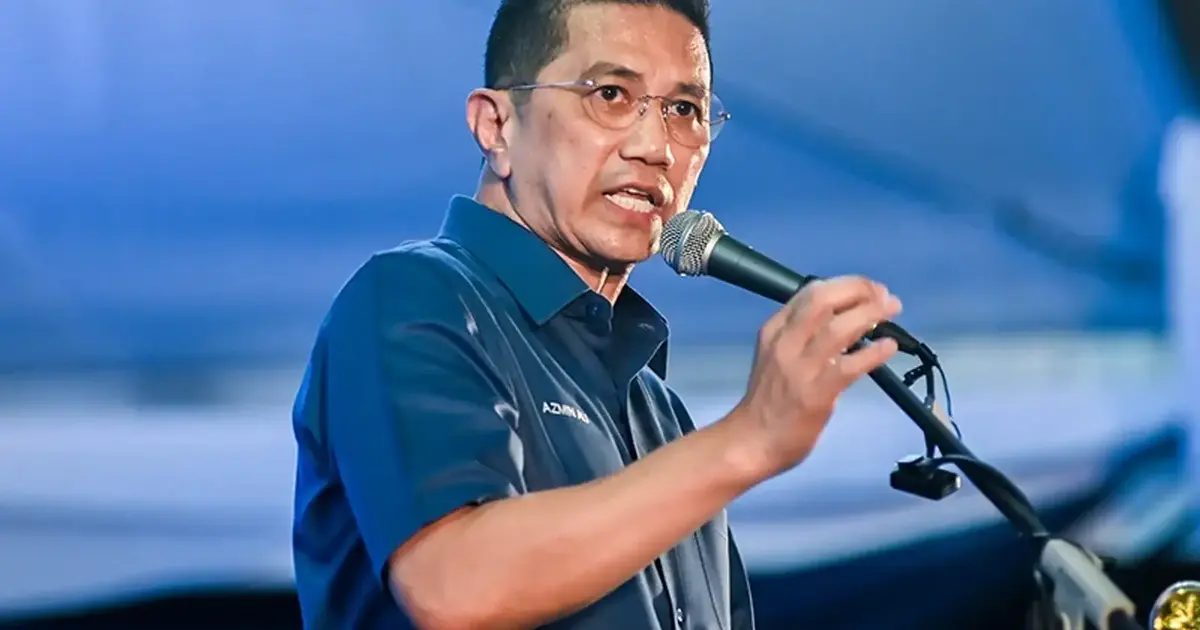
Political analysts are increasingly viewing Azmin Ali, Bersatu's secretary-general, as a potential bridge figure who could facilitate rapprochement between his party and the Pakatan Harapan coalition, particularly if Bersatu chairman Muhyiddin Yassin were to relinquish his leadership role. The assessment underscores the delicate positioning of Azmin within Malaysia's fractious political landscape, where party realignments continue to reshape the nation's governance structure. His trajectory across Malaysia's competing political factions has positioned him as someone with credibility across ideological and organisational divides.
Azmin's unique standing derives substantially from his ten years as deputy president of Parti Keadilan Rakyat, a foundational period that established deep relationships within the party and gave him genuine familiarity with Pakatan Harapan's institutional culture. During this extended tenure, he worked across party structures and developed connections with senior figures who remain influential within the coalition. His transition to Bersatu, which occurred amid broader political upheaval, did not entirely sever these relationships, leaving him with both feet partially planted in PKR's ecosystem. This structural positioning is precisely what analysts believe could make him valuable in any future negotiation scenario.
The hypothesis about Azmin's bridging role reflects broader speculation about potential shifts in Malaysia's political alignments. Since Bersatu's formation in 2016 and its subsequent entry and exit from various coalitions, the party has remained somewhat on the periphery of major political formations. Its current relationship with Pakatan Harapan remains complicated by historical antagonisms, particularly stemming from Muhyiddin's previous leadership of the coalition and subsequent departures. Should circumstances change—whether through internal party dynamics, electoral pressures, or strategic reassessment—Bersatu would require interlocutors capable of negotiating with Pakatan Harapan without appearing opportunistic or ideologically compromised.
Azmin's background as a long-serving PKR figure gives him credibility that other Bersatu figures might lack in such discussions. Unlike those who switched parties in more recent years, his decade in PKR's second-highest position provides historical legitimacy within the PKR community. Colleagues from that era, including current and former senior figures, might view him as someone who understands PKR's institutional values and could represent Bersatu's interests authentically in hypothetical merger or cooperation talks. This matters because political realignments require figures whose past associations lend weight to proposed arrangements.
The timing of such analyses also reflects the evolving political environment in Malaysia. With electoral cycles approaching and coalition stability perpetually in question, analysts monitor potential succession scenarios within major parties and potential repositioning of political organisations. Bersatu's internal dynamics, including questions about Muhyiddin's continued leadership and the party's strategic direction, naturally invite speculation about how leadership transitions might alter the party's external relationships. Azmin's positioning within that conversation suggests that observers view him as having sufficient stature and institutional knowledge to influence such outcomes.
However, the notion that Azmin could function as a bridge relies on assumptions about future political circumstances. His actual influence within Bersatu remains defined by his current role as secretary-general, a position that makes him responsible for party administration and organisation rather than strategic direction or coalition negotiation. Should any realignment discussions occur, his formal authority might be subordinate to Bersatu's leadership decision-making bodies and its appointed or elected negotiating teams. Yet his background and relationships would still position him as someone whose counsel senior leaders might value during such deliberations.
The broader implication for Malaysian politics is that experienced figures with established credentials across multiple parties retain considerable value in an era of fluid coalitions. Azmin's case illustrates how individual political trajectories can create unique strategic assets. His tenure in PKR was substantial and substantive, not a brief posting, which distinguishes his PKR experience from that of recent defectors. This depth of prior involvement allows analysts to plausibly cast him as someone who understands both Pakatan Harapan's structure and Bersatu's strategic interests, making him theoretically positioned to articulate common ground if circumstances warranted.
For Malaysian observers and regional watchers, Azmin's positioning also reflects the contingent nature of Malaysian political arrangements. No major coalition is assumed permanent, and succession planning inevitably considers future relationship scenarios. Analysts regularly assess which figures might facilitate cooperation between currently separate or antagonistic political formations. Azmin's presence in these discussions indicates that his combination of experience, relationships, and institutional standing gives him a plausible role in any future political reconfiguration, even if such scenarios remain hypothetical.
The conversation about Azmin's potential bridging role will likely persist as long as questions about Bersatu's leadership and strategic direction remain unresolved. Whether such scenarios materialise depends on developments within Bersatu itself, broader electoral outcomes, and the coalition's evolution. What the analysis does establish clearly is that experience and relationship depth matter significantly in Malaysian politics, and figures like Azmin who have navigated multiple major party structures possess distinct advantages in fluid political environments.

