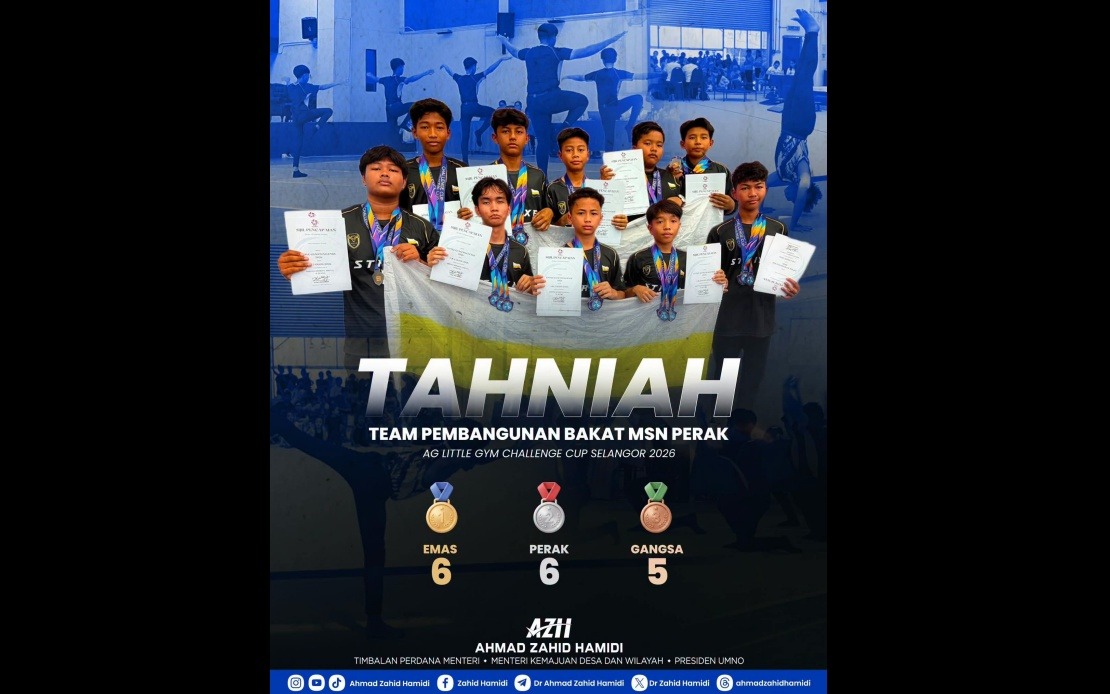
A gymnastic team from Bagan Datuk has etched its name in the district's sporting annals by securing six gold medals at the AG Little Gym Challenge Cup Selangor 2026, a significant regional competition held in Kajang on August 1. The young athletes' haul also included six silver and five bronze medals, representing a dominant performance across multiple categories at the event.
Deputy Prime Minister Datuk Seri Dr Ahmad Zahid Hamidi, who serves as the Member of Parliament for Bagan Datuk, took to social media to celebrate the achievement, signalling the importance of the result at the parliamentary level. His public endorsement underscores how sporting accomplishments in smaller districts have gained political prominence, particularly when they enhance the profile of constituencies represented by national leaders.
In his Facebook announcement, Ahmad Zahid conveyed his satisfaction at witnessing the young competitors demonstrate excellence beyond academic pursuits. He framed the medal haul as evidence that Bagan Datuk's youth possess the capacity to compete at meaningful levels in athletics when provided with appropriate infrastructure, professional coaching, and parental encouragement. This characterisation reflects a broader Malaysian policy narrative that emphasises developing talent across multiple disciplines rather than concentrating resources solely on education.
The Deputy Prime Minister extended recognition to the entire ecosystem surrounding these athletes, including their coaches, families, and supporting personnel. This inclusive acknowledgment highlights an understanding that individual sporting success depends substantially on institutional and familial backing—a lesson relevant to how Malaysia might approach grassroots sports development more systematically across its less urbanised regions.
The Bagan Datuk Generasi Muda Gymnastics Club, the organisation overseeing these athletes, shared its own celebration on social platforms, offering perspective on how the coaches and club management view the accomplishment. Rather than treating the medal count as a definitive endpoint, the club positioned the Kajang results as a waypoint in a longer competitive journey. This mindset suggests maturity in the programme's leadership, recognising that sustained development and incremental improvement matter more than isolated victories.
The club's statement emphasised the character traits visible in the athletes' performances—determination, resilience, and work ethic—rather than fixating solely on medal counts. By highlighting discipline and training hours behind the scenes, the Generasi Muda club provided insight into how sports programmes operating outside major urban centres must build cultures of commitment and excellence to compete effectively. For young gymnasts in smaller Malaysian towns, this commitment often requires overcoming logistical challenges in accessing facilities and expert instruction that their counterparts in Kuala Lumpur and Selangor metropolitan areas take for granted.
Gymnastics, as a sport requiring significant technical precision and years of foundational training, depends heavily on early identification and consistent coaching. The Bagan Datuk contingent's success suggests that coaching capacity in the district has improved or that talented individuals have received transfer to clubs with better resources. This pattern of talent movement between localities reflects how Malaysian sports development sometimes concentrates expertise geographically, with athletes needing to relocate or travel extensively to access elite instruction.
The AG Little Gym Challenge Cup itself, operating within Selangor's competitive landscape, likely attracts participants from multiple districts across the state. Bagan Datuk's performance against this broader regional field demonstrates that success is achievable for programmes operating in Perak, even when Selangor—with its greater population density and higher concentration of sporting infrastructure—appears to hold structural advantages. Such cross-boundary achievements can inspire other communities to invest in grassroots sports programmes.
For Malaysian sports administrators overseeing gymnastic development, the Bagan Datuk result offers a practical case study in how consistent investment at the district level generates tangible results. The combination of six gold medals with comparable silver and bronze finishes suggests breadth across age groups and apparatus, indicating a programme with depth rather than relying on one or two exceptional athletes. This structural strength bodes well for sustained competitiveness if funding and coaching continuity remain stable.
The achievement also reflects broader demographic and developmental patterns within Perak. Bagan Datuk, located in Perak Darul Ridzuan, has traditionally been less prominent in national sports narratives than constituencies in the Klang Valley or Penang. Gymnastics medals from the district, particularly at the quantity achieved in Kajang, represent a modest but genuine shift in the geographic distribution of sporting achievement across Malaysia's regions.
Parental involvement, which Ahmad Zahid's statement acknowledged, remains critical to sustaining youth gymnastics programmes. Unlike football or badminton, which benefit from extensive school-based infrastructure and cultural familiarity, gymnastics in smaller districts often depends more substantially on parents willing to transport children regularly to training facilities, manage competition schedules, and absorb costs associated with equipment and facility rental. The Bagan Datuk success story likely reflects families who have made significant logistical and financial commitments.
Looking forward, the Generasi Muda club's declaration that this represents "another milestone" rather than a final achievement establishes realistic expectations for continued development. The language of coming back "stronger" suggests planning for future competitions, whether within Selangor's network of challenges or at state-level championships. For young gymnasts, the pathway from district success to national representation typically requires progression through multiple competitive tiers and increasing training intensity.
The recognition from the Deputy Prime Minister carries potential implications for resource allocation and political support for sports in Bagan Datuk. In Malaysia's political economy, when national-level politicians publicly celebrate local sporting achievements, they occasionally catalyse increased funding from parliamentary constituency development allocations toward sports facilities and coaching programmes. Whether Ahmad Zahid's public endorsement translates into concrete investment in Bagan Datuk's gymnastics infrastructure remains to be observed, but the precedent of publicising such achievements creates political accountability for supporting continued development.

