Bahrain is maintaining financial resilience by declining to activate a substantial currency support arrangement even as it grapples with the fallout from escalating regional hostilities, according to the country's Minister of Sustainable Development. Speaking in an interview this week, Noor bint Ali Alkhulaif disclosed that the kingdom has not drawn upon the $5.3 billion swap facility negotiated with the United Arab Emirates in April, a decision that underscores official confidence in Bahrain's capacity to weather current economic headwinds without resorting to external liquidity assistance.
The geopolitical context surrounding Bahrain's situation remains precarious. The island nation, positioned strategically in the Persian Gulf and home to significant maritime and financial infrastructure, has emerged as one of the Gulf Cooperation Council economies most vulnerable to the consequences of deteriorating Iran-United States relations. Fresh Iranian military actions directed at Bahrain over recent days have reinforced the unpredictability of the security environment in which policymakers must operate. These tensions materialised just as regional capitals were attempting to restore stability following months of elevated threat levels.
The economic toll has been substantial. International ratings agency S&P Global projects that the current conflict will contract Bahrain's economy by approximately three percent during 2024, while simultaneously generating a fiscal deficit approaching eight and a half percent of gross domestic product. These figures illustrate the magnitude of the challenge facing a nation that was already managing one of the Gulf region's more demanding public debt portfolios before hostilities intensified. When Alkhulaif spoke to journalists, she acknowledged the disconnect between official planning and present realities, noting that policymakers had envisioned 2024 as a year devoted to constructing institutional and economic foundations for a transformed Bahrain. Instead, the government has been compelled to focus energy on managing crisis-driven disruptions.
Despite these headwinds, official narratives emphasise recovery momentum. Alkhulaif highlighted that major international manufacturing and logistics operators have successfully identified alternative shipping routes that bypass the contested Strait of Hormuz, enabling trade flows to persist despite security concerns. More significantly for Bahrain's vital tourism sector, visitor numbers from neighbouring Gulf states—which comprised roughly ninety percent of the fifteen million tourist arrivals recorded in the preceding year—have rebounded to approximately pre-conflict levels. This resilience in intra-regional travel suggests that tourist confidence, at least among GCC nationals, has stabilised.
The decision to forego the UAE currency swap deserves particular scrutiny given Bahrain's foreign exchange position. Official reserves have declined sharply and now stand near their lowest levels since the coronavirus pandemic, hovering around the three billion dollar mark. Such depleted reserve buffers would typically prompt governments to activate emergency liquidity facilities, yet Bahrain's reluctance to tap the swap indicates either extraordinary confidence in near-term revenue prospects or a preference for preserving financial flexibility for unforeseen shocks. Alkhulaif, who also serves as a board member of Bahrain's central bank—the institution that negotiated the swap arrangement—explicitly confirmed that the facility remained undrawn based on information available to her.
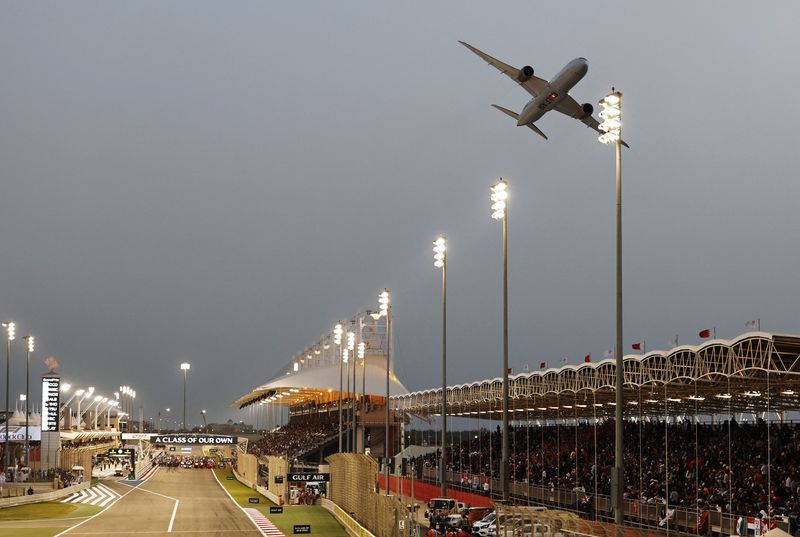
Beyond currency support, Bahrain's government is pursuing another significant symbolic and economic objective: restoration of the Formula One Grand Prix to the international racing calendar. The prestigious event, cancelled in March when regional tensions first escalated, was shelved alongside the Saudi Arabian Grand Prix as organisers assessed security implications. Now, with negotiations actively underway, officials are seeking to reintegrate the race into the 2024 season. Formula One specialists have identified the weekend of October third through fourth as the most plausible scheduling option, a slot that would position Bahrain between the Azerbaijan Grand Prix in Baku and the Singapore Grand Prix scheduled for October eleventh.
Restoring the Bahrain Grand Prix carries tangible economic significance. The event typically draws approximately one hundred and five thousand spectators to the Sakhir circuit, with international attendees—characterized by elevated spending patterns—representing between ten and fifteen percent of total attendance. Beyond immediate ticket revenues, hosting duties generate ancillary income from hospitality, retail, and hospitality sectors across the broader economy. Alkhulaif acknowledged ongoing discussions about potentially rescheduling cancelled races, though she emphasised the absence of definitive confirmations at present. The persistence of regional hostilities remains a prerequisite for any final determination.
Forula One authorities have indicated that scheduling decisions must crystallise relatively soon to permit teams adequate preparation time for logistical arrangements, technical preparations, and driver briefings. The compressed timeline for decision-making reflects the intricate choreography required to integrate races into an already densely scheduled professional motorsport calendar. Industry observers note that postponing a final determination beyond the coming weeks could render the October option impractical, effectively pushing any Bahrain race to the 2025 season.
Looking further ahead, Bahrain's positioning within the F1 calendar faces structural advantages. Ramadan's earlier occurrence in subsequent years creates scheduling possibilities that could position Bahrain as the season-opening Grand Prix for the 2026-27 campaign, a designation that carries prestige within motorsport's hierarchy and generates substantial media attention. The kingdom would presumably also reclaim hosting responsibilities for pre-season testing operations, activities that, while less visible to mainstream audiences, generate employment and revenue throughout the local motorsport ecosystem. Realising these longer-term ambitions, however, remains contingent upon resolution or meaningful de-escalation of regional security dynamics that continue to shape decision-making across the Gulf.

